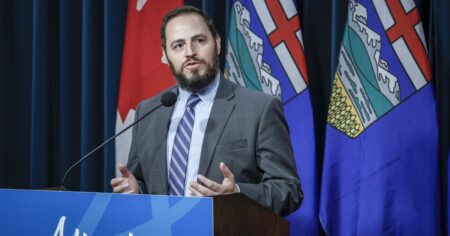




OTTAWA – The decision to stop Environment Canada’s work on banning thermal coal exports came from the political level, department officials told MPs on the House of Commons environment committee on Thursday.
Megan Nichols, the department’s assistant deputy minister for environmental protection, said she could not say why the Liberals made the call. She said the department has committed to explaining the decision in its official response to the environment commissioner’s October report, which we covered in our story on Ottawa quietly dropping the work.
That report found Environment Canada abandoned the work without notifying the public and without any record of being directed to do so. Asked why no record existed, Nichols said it was a verbal decision.
“It was communicated to me via the deputy minister at the time. But then that was communicated to the deputy minister from the political level. So I don’t know who it came from at that point,” Nichols said.
She said staff were told to reallocate resources to other priorities after sharing their analysis. That analysis found that even if Canada stopped exporting thermal coal, the effect on global emissions would be small because Canadian exports are about two per cent of global supply. Nichols said trade risks were also weighed, including agreements with the United States.
Of all thermal coal shipped from Canadian ports in 2025, 61 per cent came from the United States, largely from Washington, Oregon and California, shipped north by train to terminals in British Columbia. Nichols said she was not aware of any pressure from the U.S. government to stop Canada from following through on the ban.
Canada committed in 2021 to ban thermal coal exports by 2030. The commissioner’s audit found Environment Canada worked for three years to find a way to enforce the ban, and that the work stopped altogether in November 2024 after lobbying from the coal industry.
Between October 2021 and February 2024, officials tried to use existing laws, including regulating coal as a toxic substance. By February 2024 the effort had shifted to non-regulatory approaches such as voluntary agreements with terminals. The audit said those decisions were not consistently backed by documented senior management approvals.
The Liberals have said only that the decision was made by the previous government. Environment Minister Julie Dabrusin was parliamentary secretary to her predecessor at the time. Dabrusin defended Canada’s climate record at COP31 last week, as we reported in our earlier story.
If you find reporting like this useful, consider supporting Canada News Media, an independently owned Canadian newsroom.
Source: The Canadian Press, first published Nov. 19, 2026.
Follow Canada News Media
Get the day's top Canadian stories and our two daily 60-second news videos wherever you scroll.
X Threads Facebook Instagram LinkedIn TikTok YouTube Pinterest Reddit Substack Flipboard Newsletter RSS