




Car insurance prices in Alberta were 21.0% higher in October 2026 than a year earlier, the largest 12-month increase of any province and more than five times the national rise of 4.1%, our analysis of Statistics Canada’s consumer price index shows. All prices in Alberta rose 3.3% over the same period.
The province’s index for passenger vehicle insurance premiums has climbed faster than 20% a year in every month since February 2026, peaking at 29.4% in July. That is the steepest annual pace in Alberta since July 2003, when the index was up 33.4%. Measured from October 2019, before the pandemic, the Alberta index has risen 92.9% (from 226.7 to 437.4), while the national index rose 29.9% and overall consumer prices in Canada rose 24.7%.
Home insurance tells a similar story across most of the country. Statistics Canada’s index for homeowners’ home and mortgage insurance rose 52.7% nationally from October 2019 to October 2026, roughly double the rate of inflation. Alberta again led, up 77.4%, followed by Saskatchewan (62.9%), Nova Scotia (56.6%), British Columbia (54.6%) and Manitoba (54.3%). The smallest increases were in Newfoundland and Labrador (28.7%) and Prince Edward Island (30.2%). Over the latest year, home insurance rose fastest in Saskatchewan (9.1%), Nova Scotia (7.2%) and Newfoundland and Labrador (6.6%). Tenants’ insurance, measured only nationally, rose a more modest 16.0% since 2019 and 0.9% in the past year.
Car insurance moved very differently from one province to the next. Over the past year the index rose 9.4% in New Brunswick, 9.2% in Prince Edward Island, 8.2% in Newfoundland and Labrador and 8.0% in Nova Scotia. It was unchanged in Ontario, where the index has stayed between 244 and 252 all year, and unchanged in British Columbia, where it has not moved since July 2025. It fell 3.5% in Quebec. Since October 2019, British Columbia’s index is down 4.4%, the only province lower than before the pandemic; it dropped sharply in 2021, the year the province’s public insurer moved to its Enhanced Care model. Saskatchewan, which also has a public insurer for basic coverage, is up 15.8%. Manitoba, the third province with a public basic insurer, is up 29.3%, close to Ontario’s 27.3%, so public delivery alone does not explain the gaps.
In Alberta, where private insurers sell all coverage, the provincial government has capped increases for drivers with clean records. A Sept. 24, 2025 government release said good drivers would continue to have a 7.5% rate cap through 2026, made up of 5% plus 2.5% tied to natural disasters such as the 2025 Calgary and Brooks hailstorms, and that the limit on insurers’ average rate changes would rise from 10% to 12.5%. From Jan. 1, 2027, a new cap will limit insurers’ average increases to 5% and an average driver’s increase to 10% at renewal, according to a May 14, 2026 release, and the province’s Care-First auto insurance system, delivered by private insurers, starts the same day.
The price index cannot be compared directly with those caps. The caps apply to an individual good driver’s renewal or to each insurer’s average approved rate, while the index tracks what a fixed set of policies costs across insurers over 12 months, including drivers the caps do not cover. Nothing in the records we reviewed shows any insurer exceeded a cap, and the index does not show the dollar amount any household pays. Statistics Canada’s tables also do not give reasons for the increases. Explanations offered publicly in the industry and by governments include repair and parts costs, vehicle theft, hail and other severe weather claims, injury claim costs and, in Alberta, the transition to a new system, but this analysis does not test any of them.
For drivers and homeowners, the practical point is that renewal notices in several provinces have been rising faster than other bills. Alberta drivers can compare insurers’ approved rate changes with the Automobile Insurance Rate Board’s rate change lookup, and complaints about a policy can go to the insurer’s ombudsman or the General Insurance OmbudService. This story is part of our continuing look at prices that are rising faster than inflation.
How we checked: We downloaded Statistics Canada table 18-10-0004-01 (Consumer Price Index, monthly, not seasonally adjusted, 2002=100) with data to October 2026 and pulled the series for passenger vehicle insurance premiums, homeowners’ home and mortgage insurance, tenants’ insurance premiums and all items, for Canada and each province. Each change is one index value divided by another, minus one; for example, Alberta car insurance 437.4 ÷ 361.5 − 1 = 21.0%. To find the steepest pace since July 2003, we computed the 12-month change for every month of the Alberta series back to 1979. The index measures price change, not premium levels, so it cannot say which province pays the most. Territorial capitals are not included in this comparison. Policy facts on Alberta’s caps and Care-First system come from the Government of Alberta pages linked above. No insurer or government is accused of wrongdoing in this analysis.
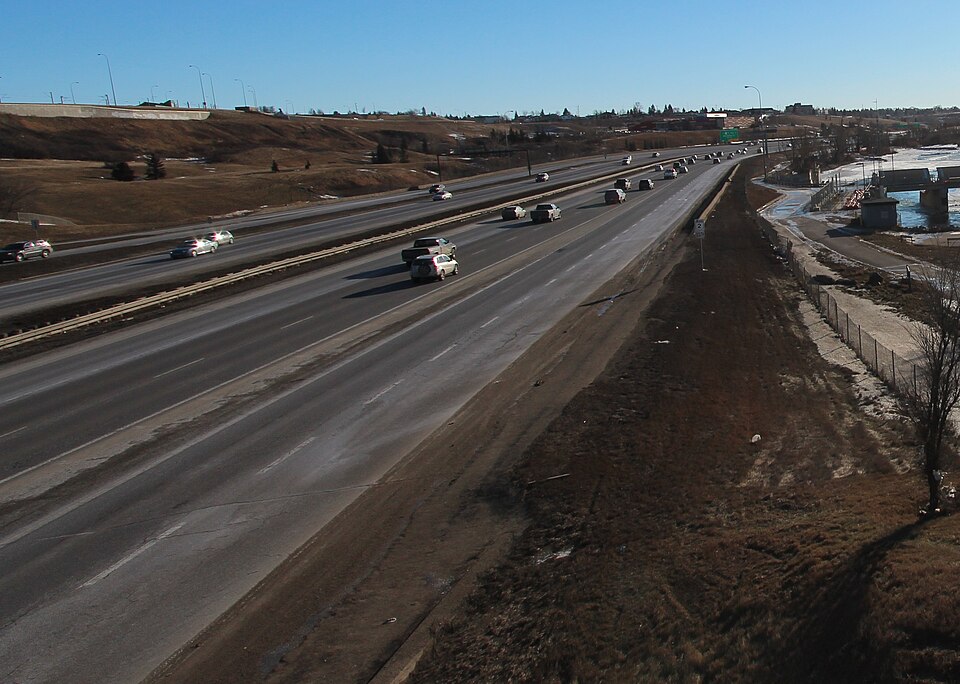
File photo: traffic on southbound Deerfoot Trail in Calgary (davebloggs007, CC BY 2.0, via Wikimedia Commons). The vehicles shown are not connected to this story.
Follow Canada News Media
Get the day's top Canadian stories and our two daily 60-second news videos wherever you scroll.
X Threads Facebook Instagram LinkedIn TikTok YouTube Pinterest Reddit Substack Flipboard Newsletter RSS