


Transportation and warehousing businesses filed for insolvency at twice their pre-pandemic pace this year, even as total business insolvencies in Canada eased slightly from 2025, according to our count of filings recorded by the Office of the Superintendent of Bankruptcy.
From January to September 2026, 332 businesses in transportation and warehousing, the industry group that includes trucking, couriers and storage, filed for bankruptcy or made a proposal to creditors. That is up 11.4% from 298 in the same months of 2025 and more than double the 161 filed in January to September 2019. Outside 2024, when 438 filed, it is the highest nine-month total for the industry since 2009. The industry’s share of all business insolvencies rose from 5.8% in 2019 to 9.1% this year.
Across all industries, 3,646 businesses filed in the first nine months of 2026, down 1.9% from 3,718 a year earlier and 24.9% below the 4,856 of 2024, the year small businesses faced the January deadline to repay federal pandemic loans (Canada Emergency Business Account) and keep the forgivable portion. But this year’s total is still 31.5% above the 2,773 of January to September 2019, and apart from 2024 it is the highest for those months since 2010.
The rise is concentrated in a handful of industries. Accommodation and food services, mostly restaurants, had 542 insolvencies, up 12.4% from 2025 and 37.2% above 2019. Manufacturing had 319, up 6.3% from last year and 32.9% above 2019. Construction, the largest group, had 587, up 2.4% from 2025 and 10.5% above 2019. Some industries improved: retail trade fell 24.0% to 345, and professional, scientific and technical services fell 14.5% to 271.
Regionally, Ontario’s business insolvencies rose 5.6% from last year to 1,078, 54.7% above its 2019 level of 697. Quebec, which has long accounted for about half of all business filings in the national count, had 1,927, down 4.6% from 2025 but 21.8% above 2019. Alberta’s filings fell 15.2% to 229 but remain 38.0% above 2019, and British Columbia’s 212 is roughly double its 2019 total of 104. In transportation and warehousing, Quebec went from 89 filings in January to September 2019 to 181 this year, Ontario from 42 to 89, Alberta from 12 to 32 and British Columbia from 3 to 20.
The filings fit a broader pattern in Statistics Canada’s data. As we reported earlier this week, more businesses closed for good than opened in 2025, and transportation and warehousing had the largest net loss of any industry. Insolvency filings capture only part of that: most small firms that close simply stop operating without a formal bankruptcy or proposal, and filings under the Companies’ Creditors Arrangement Act and receiverships are counted separately and are not included here. Household finances show a parallel strain, with consumer insolvencies rising even in provinces where unemployment fell.
The records do not say why businesses failed. Competing explanations include the end of pandemic loan relief, higher borrowing costs after the Bank of Canada’s 2022 and 2023 rate increases, weaker freight demand and U.S. tariffs affecting cross-border trade, higher insurance and fuel costs, and, in some industries, more competition from larger firms. The data also do not show the size of the businesses that filed, how much they owed or how many jobs were lost, and no company is named or accused of anything here.
This story is part of our series on competition and small business in Canada.
How we checked: We downloaded the Office of the Superintendent of Bankruptcy’s historical insolvency statistics by industry (NAICS), monthly, file dated September 2026, which counts business bankruptcies and proposals filed under the Bankruptcy and Insolvency Act each month since January 1987, by province and industry. We added January to September for each year so that 2026 could be compared with the same months of earlier years; for example, transportation and warehousing 332 ÷ 161 − 1 = 106% above 2019. We checked that the provincial industry rows add up to the national rows. Monthly figures can be revised in later releases. The Office’s statistics page has the latest monthly reports. Counts are of filings, not of distinct companies or owners.
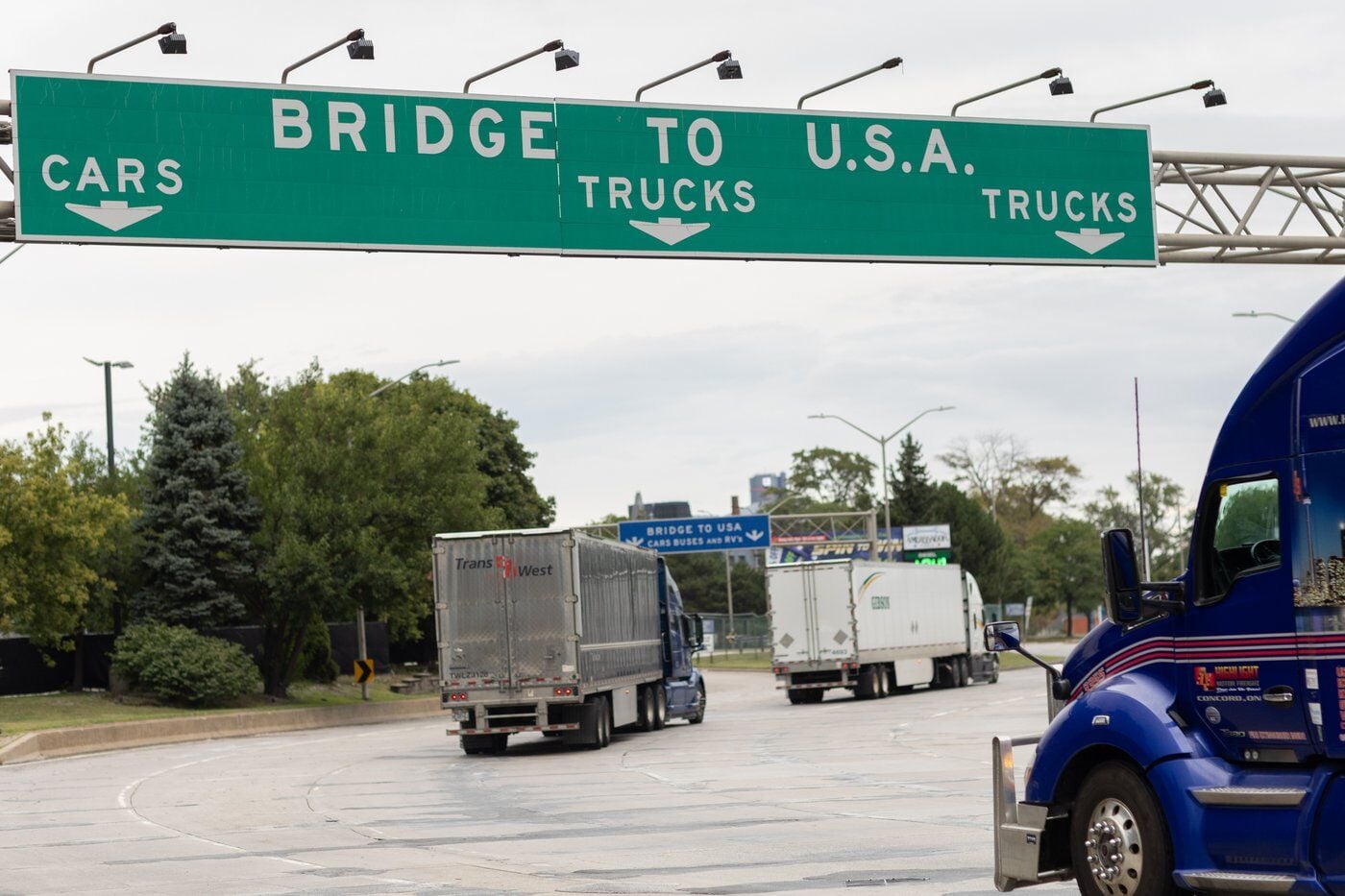
File photo: transport trucks cross the Ambassador Bridge into the United States in Windsor, Ont., Aug. 22, 2026. THE CANADIAN PRESS/Dax Melmer. The trucks and companies shown are not connected to any insolvency.
Follow Canada News Media
Get the day's top Canadian stories and our two daily 60-second news videos wherever you scroll.
X Threads Facebook Instagram LinkedIn TikTok YouTube Pinterest Reddit Substack Flipboard Newsletter RSS