
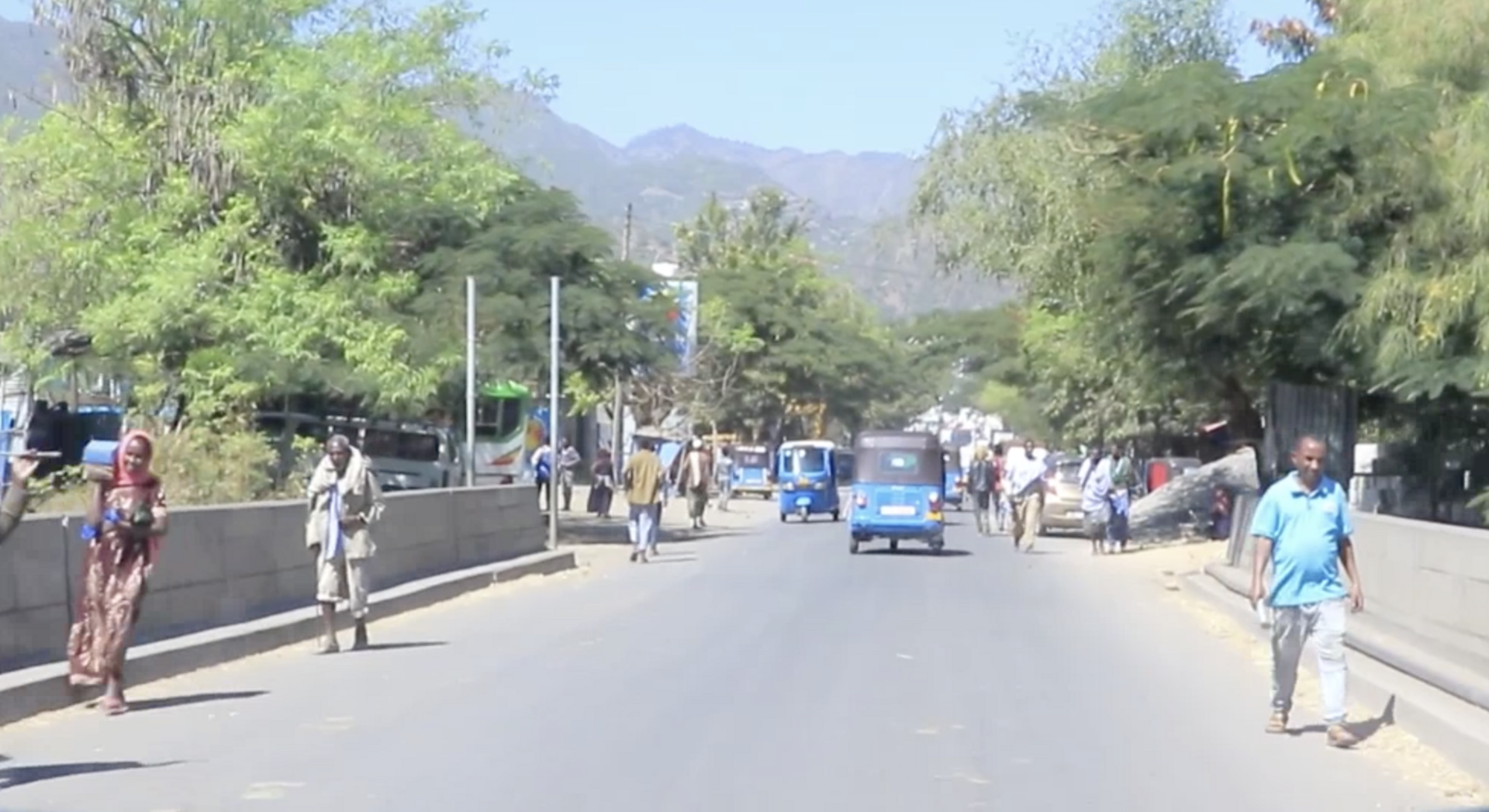
Artillery attacks by Ethiopian forces and an allied militia on the town of Alamata, in Ethiopia’s Tigray region, between Sept. 26 and 28 should be investigated as possible war crimes, Amnesty International said on Nov. 24.
The rights group said it independently verified 14 civilian deaths in four of the shelling incidents. In its published findings, it said the attacks by the Ethiopian National Defence Forces and the allied Tigray Peace Forces killed dozens of civilians and injured many more.
Researchers interviewed 28 people, including survivors, witnesses, relatives of victims and medical and humanitarian workers. Amnesty said its evidence lab also analysed eight videos, 17 photographs, satellite imagery and other open-source material.
“The use of artillery, a weapon with wide-area effects, in densely populated neighbourhoods has a terrible impact on civilians,” said Yasmine Ahmed, a senior director at Amnesty International. “Indiscriminate attacks violate the rules of international humanitarian law, and these strikes must be investigated as war crimes.”
Government and allied forces took Alamata, which Amnesty described as a key supply hub, from the Tigray People’s Liberation Front, or TPLF, on Sept. 28.
The report also criticized the TPLF side. Amnesty said forces affiliated with the group put civilians in harm’s way by setting up military bases in residential areas, including several schools, before fighting resumed. It said this does not release government and allied forces from their duty to protect civilians.
The TPLF rejected the allegations against it in a letter to Amnesty on Nov. 18, calling them unfounded and saying further independent investigation was needed.
Amnesty said it wrote to the military, the Tigray Peace Forces and the TPLF on Oct. 27, and shared its findings with the military and the militia on Nov. 17. Neither had responded when the report was published. The Ethiopian government and military had also not responded to the report, The Associated Press reported.
The organization noted limits to what it could establish. It said it could not confirm whether TPLF fighters were in or near a hotel close to one damaged compound at the time of a strike. It said it was highly unlikely that fire from fighters inside the town caused the shelling.
Amnesty wants the UN Human Rights Council to set up an independent mechanism to investigate and identify those responsible. It also called on Ethiopian authorities to give independent monitors, journalists and humanitarian groups unhindered access to conflict areas.
Fighting returned to Tigray in September despite the November 2022 agreement that ended the region’s two-year war. Researchers at Belgium’s Ghent University have estimated the earlier war caused about 500,000 civilian deaths from violence, famine and the collapse of health services, AP reported. Residents near the Eritrean border have also told AP of military buildups and fears of a wider war, and Ethiopia and Eritrea have accused each other of starting a conflict.
In October, Ethiopia set up a six-month caretaker administration for Tigray.
The Canadian government advises against all travel to Tigray, citing armed conflict, civil unrest, disruptions to flights and communications and an unpredictable security situation. It also says its ability to provide consular help is limited in some parts of Ethiopia, particularly those affected by armed conflict.
If you find reporting like this useful, consider supporting Canada News Media, an independently owned Canadian newsroom.
Sources: Amnesty International, The Associated Press via The Canadian Press, and Government of Canada travel advice.
Follow Canada News Media
Get the day's top Canadian stories and our two daily 60-second news videos wherever you scroll.
X Threads Facebook Instagram LinkedIn TikTok YouTube Pinterest Reddit Substack Flipboard Newsletter RSS