



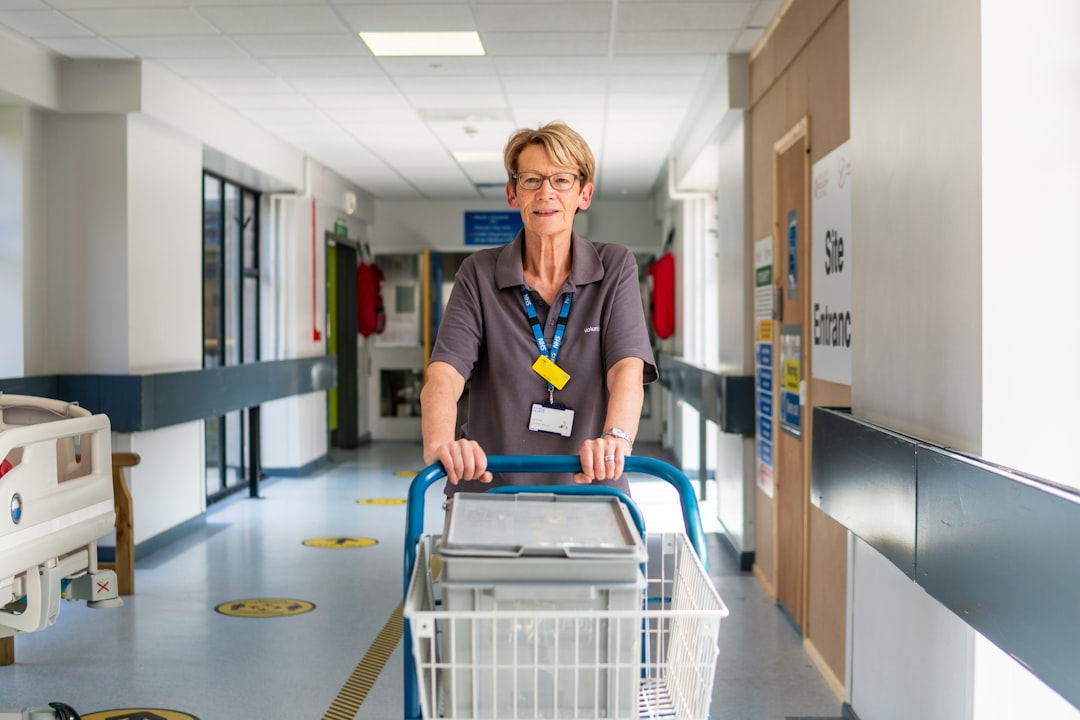
Immigration, Refugees and Citizenship Canada issued 3,500 invitations to apply for permanent residence on Sept. 4 to candidates in health care and social services occupations, one of the largest occupation-targeted rounds of 2026 and the 53rd Express Entry draw of the year.
Candidates needed a Comprehensive Ranking System score of at least 475, according to IRCC’s draw results. Under the tie-breaking rule, those scoring exactly 475 qualified only if their Express Entry profile was created before May 26, 2026. Successful candidates have 60 days to submit a full permanent residence application. The eligible occupations run wider than the shorthand suggests, covering nurses, physicians, pharmacists, dentists, optometrists, paramedics, medical technologists, therapists, social workers and psychologists.
One detail in the round has drawn little attention. Ottawa tightened the category’s entry requirement this year, raising the minimum from six months of work experience in an eligible occupation over the previous three years to a full year. That is a quiet narrowing of a stream the government continues to describe as a priority, and it sits alongside a CRS cutoff of 475, a score that in practice requires a strong combination of age, language test results and Canadian or foreign work history.
The larger point the coverage of these draws tends to skip is that an invitation to immigrate is not a licence to practise. Permanent residence is granted federally. The right to work as a nurse, physician, pharmacist or social worker is granted provincially, by regulatory colleges that set their own assessment requirements, bridging program prerequisites and timelines. A candidate can clear Express Entry, land in Canada and still spend years outside the profession they were invited for.
Governments have acknowledged the gap. In October 2023, federal, provincial and territorial health ministers committed to working with health profession regulators to license qualified internationally educated physicians and nurses within 90 days, on the condition that credential verification and immigration approvals were already complete. Three years on, there is no consolidated public reporting that shows which provinces meet that standard or how often. A peer-reviewed environmental scan of Canadian nursing regulatory bodies published in the Journal of Nursing Regulation found licensure pathways for internationally educated nurses vary substantially between jurisdictions, and CBC News has reported that international health professionals continue to face slow accreditation. Research on the transition to practice has documented individual cases running far past 90 days, including one nurse who reported taking two and a half years to transfer a licence.
The system is nonetheless moving people through at scale, which makes the throughput question the relevant one. Canadian Institute for Health Information data shows the overall supply of registered nurses in Canada reached 354,824 in 2025, with internationally educated RNs accounting for 16.8 per cent of that supply, up from 14.4 per cent a year earlier. Among licensed practical nurses, internationally educated LPNs made up 6.7 per cent of the workforce in 2024. Internationally educated nurses were roughly 8 per cent of the nursing workforce in 2017. The pipeline is not theoretical, and it is growing faster than most Canadians realize.
Ottawa has put money against the bottleneck it cannot directly fix. Employment and Social Development Canada announced $86 million in January 2024 for 15 projects intended to expand credential recognition capacity for 6,600 internationally educated health professionals, and the broader Foreign Credential Recognition Program is expected to support roughly 32,000 internationally trained professionals through 58 agreements, mostly in health and construction. Streamlining foreign credential recognition is also written into the bilateral health agreements attached to Ottawa’s $25 billion, 10-year transfer commitment to the provinces.
For the 3,500 people invited last week, the next federal deadline is the 60-day window to file. The step that determines whether Canada gets the health workers it just selected comes after that, in a provincial regulator’s queue, and it is the step nobody publishes a wait time for.
via CIC News: Canada invites 3,500 Healthcare and Social Services workers to apply for permanent residence
Follow Canada News Media
Get the day's top Canadian stories and our two daily 60-second news videos wherever you scroll.
X Threads Facebook Instagram LinkedIn TikTok YouTube Pinterest Reddit Substack Flipboard Newsletter RSS