

Ontario’s highest court has upheld two cabinet orders that allow the province to expropriate a Toronto landowner’s property at East Harbour for the Ontario Line without giving the owner the usual hearing on whether the taking is necessary.
In New Sunlight Inc. v. Ontario (Infrastructure), 2026 ONCA 812, Justices P. Lauwers, M. Rahman and L. Brownstone of the Court of Appeal for Ontario dismissed New Sunlight Inc.’s appeal after a two-day hearing on Oct. 27 and 28, 2026, and released their reasons on Nov. 10. The company was ordered to pay the province $15,000 in costs, an amount the parties agreed on.
According to the decision, New Sunlight and the province were negotiating a deal in which the company would hand over East Harbour land the province needed for a priority transit project, and in return Ontario would upzone the company’s remaining land so it could be built more densely. During those talks, and without notice to New Sunlight, cabinet issued two orders in council.
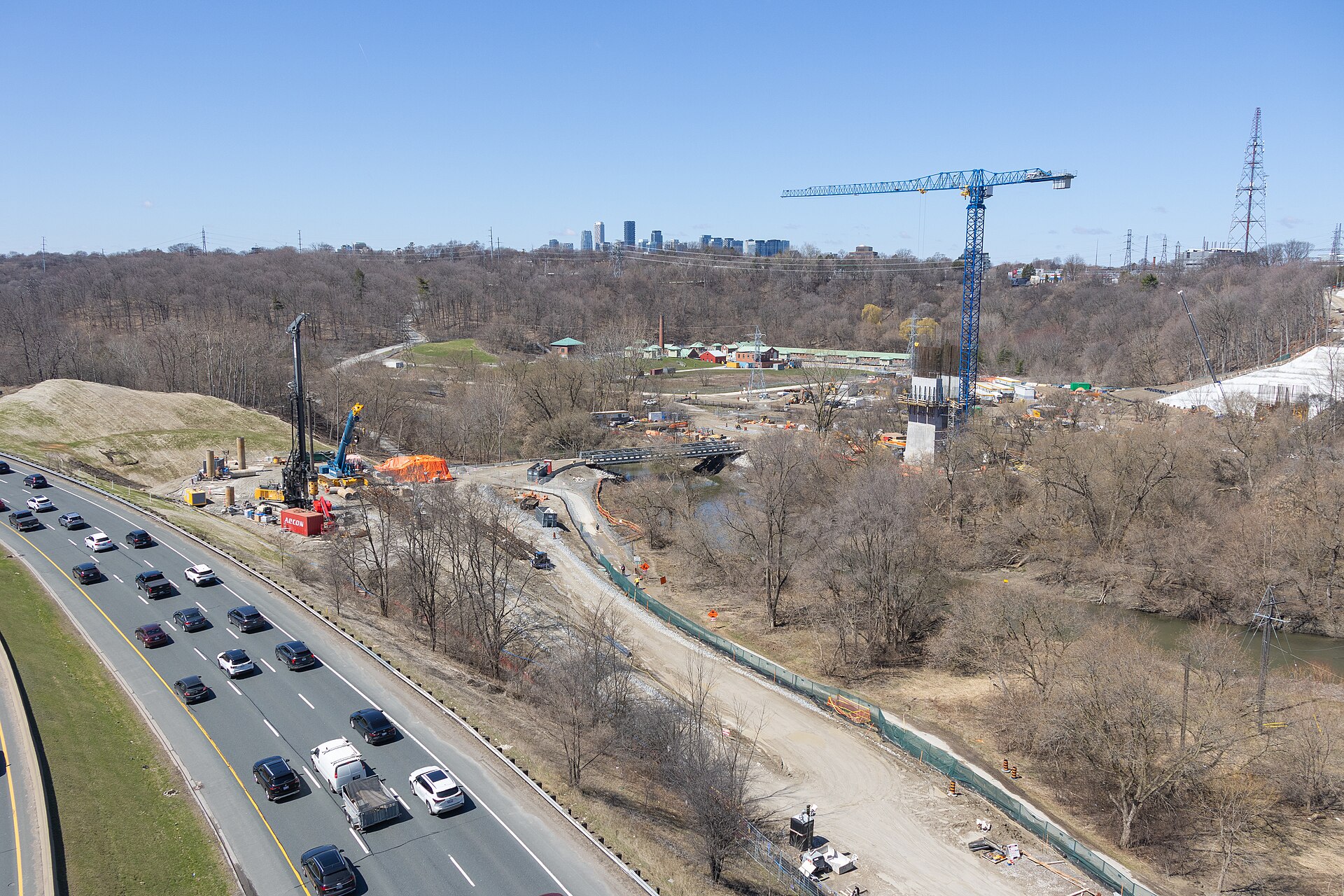
The first, Order in Council 724/2024 of June 6, 2024, designated the company’s East Harbour lands as “transit-oriented community land” under Ontario’s Transit-Oriented Communities Act, 2020. That designation removes a landowner’s right under the Expropriations Act to a “hearing of necessity” before the Ontario Land Tribunal, an inquiry into whether a taking is “fair, sound and reasonably necessary.” The second, Order in Council 1325/2024 of Oct. 10, 2024, authorized the province to “enter on, take and expropriate” the lands for the East Harbour transit hub, an extension of Broadview Avenue, the Broadview and Eastern Avenue flood protection project, the Ontario Line subway, and the East Harbour transit-oriented community project.
New Sunlight asked the courts to quash both orders. The Divisional Court refused in January 2025 (2025 ONSC 638), and the Court of Appeal said that court’s reasons “accurately state the governing legal principles” and were “clear and fully justified on the record.”
The appeal court addressed four of the company’s arguments. On the lost hearing, the judges said “necessity” is not a legal limit on cabinet’s power to designate land that “is or may be required” for a transit-oriented community project. They added that even when a hearing of necessity is held, the expropriating authority is not bound by the tribunal’s report, and such hearings cause delay. “Given the number of prospective takings required to support construction of the 15-station Ontario Line,” the court wrote, “it is no surprise that the Ministry wished to avoid hearings the result of which it had no intention of accepting.” The province intends to use an “Alternative Engagement Process” in which affected owners can send written comments after receiving an expropriation notice, the decision says.
New Sunlight also argued that cabinet was misled because the briefing notes before it named only Cadillac Fairview, a neighbouring developer that had asked for the designation. The court called that argument “without merit,” saying the law designates land without regard to who owns it and that Cadillac Fairview was named only because it had raised concerns about whether upzoning commitments could be enforced. Those concerns were addressed by Planning Act amendments that benefit current and future agreement holders, and New Sunlight remains eligible for such an agreement, the court said. It rejected the claim that the company faced “administrative discrimination.”
Finally, the court upheld the finding that New Sunlight had not shown bad faith or improper purpose. The company argued the expropriation order was a threat to gain leverage in negotiations; the court said the evidence did not bear that out and accepted that the order served as a “backstop” to keep the project on schedule if talks broke down. The Divisional Court had noted Ontario’s stated preference, when the second order was issued, to reach a deal that would let New Sunlight keep and develop the parts of its land not needed for the project.
The ruling matters beyond one property. The Transit-Oriented Communities Act lets cabinet strip owners of a necessity hearing wherever land may be needed for a transit-oriented community project, and this is now an appellate decision confirming that power, at least where it is used for the purposes the act describes. The decision does not say how much of New Sunlight’s land will be taken, what compensation will be paid, or whether the parties have since reached a deal; compensation is decided separately under the Expropriations Act. New Sunlight could seek leave to appeal to the Supreme Court of Canada.
Construction of the Ontario Line continues across the city; earlier this month we reported that its tunnel boring machine reached King West.
How we checked: We read the Court of Appeal’s full reasons, paragraphs 1 to 20 and the footnote, on CanLII on Nov. 21, 2026, and confirmed the Divisional Court citation through CanLII’s case database. The descriptions of both orders in council and of the parties’ arguments come from the decision. We searched our archive for earlier coverage of the case and found none. We did not contact the parties; the findings are the court’s.
If you find reporting like this useful, consider supporting Canada News Media, an independently owned Canadian newsroom.
Follow Canada News Media
Get the day's top Canadian stories and our two daily 60-second news videos wherever you scroll.
X Threads Facebook Instagram LinkedIn TikTok YouTube Pinterest Reddit Substack Flipboard Newsletter RSS