

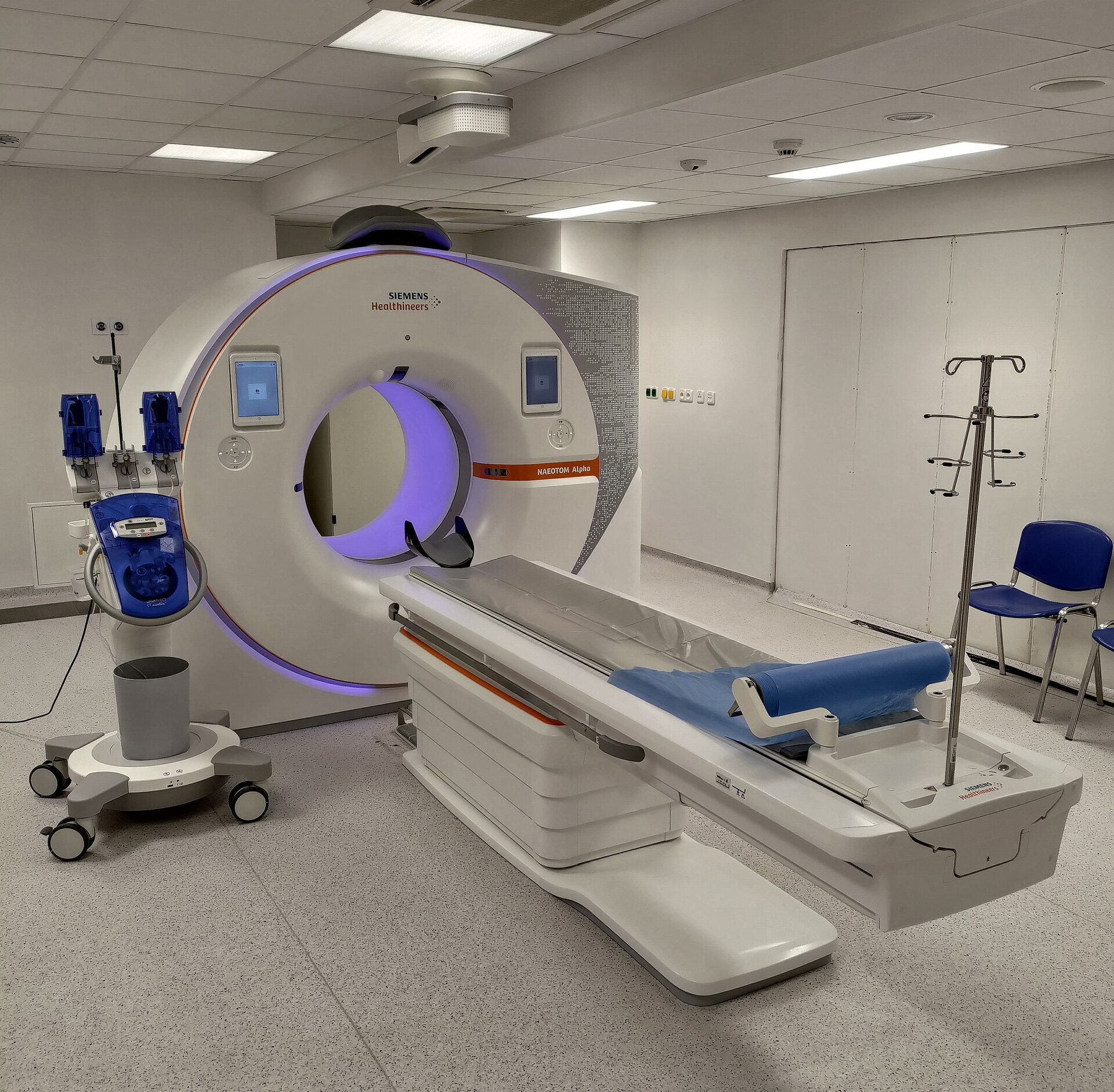
One in 10 patients who had a CT scan in the spring and summer of 2025 in the seven provinces that report comparable figures waited at least 144 days for it, more than double the 66 days of 2019 and the longest in the national series, according to a Canada News Media analysis of Canadian Institute for Health Information data tables. MRI waits set records too: half of patients waited at least 59 days and one in 10 waited at least 207.
The tables, part of CIHI’s wait times for priority procedures release, track diagnostic imaging in seven provinces that submit comparable data, Ontario, British Columbia, Alberta, Saskatchewan, Manitoba, Nova Scotia and Prince Edward Island, for April to September of each year since 2018. Quebec, New Brunswick and Newfoundland and Labrador have no imaging figures in the tables. Unlike hip and knee replacement or cataract surgery, CT and MRI scans have no national benchmark, so the tables show how long people waited but not how many waited too long.
The CT figure has risen almost every year. The 90th percentile, the wait that one in 10 patients met or exceeded, was 60 days in 2018 and 66 in 2019, jumped to 95 in the first pandemic year, fell back to 63 in 2021, then climbed to 91 days in 2022, 117 in 2023, 128 in 2024 and 144 in 2025. The median CT wait barely moved, from 12.5 days in 2019 to 14.7 in 2025, which means most patients are still scanned within about two weeks while the slowest tenth wait far longer than before.
For MRI, the median wait rose to 59.4 days in 2025 from 41.8 in 2019, up 42 per cent, and the 90th percentile rose to 206.5 days from 151.4, up 36 per cent. Both are the highest in the series, edging past the 90th-percentile wait of 204.8 days recorded in 2020, the first pandemic year, when routine scans were cut back.
It is not for lack of scans. Provinces reported 1,032,340 CT scans for April to September 2025, up 16 per cent from 886,622 in 2019, and 699,415 MRI scans, up 22 per cent from 574,663. Volume rose and long waits still grew, a sign that demand rose faster than capacity, although the tables cannot show demand directly.
The provinces differ widely. For CT, one in 10 patients waited at least 248 days in Nova Scotia (80 in 2019), 243 in British Columbia (100), 236 in Manitoba (80), 143 in Alberta (90) and 116 in Ontario (50), while Prince Edward Island was at 88 days and Saskatchewan at 82. For MRI, the 90th-percentile wait was 528 days in Prince Edward Island, up from 210 in 2019, 360 in Manitoba (133), 294 in Nova Scotia (251), 240 in British Columbia (151), 220 in Alberta, 187 in Ontario (114) and 178 in Saskatchewan. Alberta and Saskatchewan are the only two whose 90th-percentile MRI wait fell from 2019, when it was 340 and 260 days. Manitoba’s median MRI wait was 151 days, nearly three times its 55 days in 2019; British Columbia’s doubled to 89 days from 43.
CIHI’s own summary in its Wait times in Canada, 2026 release says “delays in diagnostic imaging persist”. The tables do not say why. An aging population, more scans ordered per patient, the number of machines and the technologists to run them, how urgent scans are triaged ahead of routine ones, and how each province records the start of a wait can all affect the numbers, and the figures cover only people who were scanned, not those still waiting. No province or health authority is accused here of anything; the figures are each province’s own submissions as CIHI published them. Our Nov. 19 analysis of the same tables found knee surgeries at a record but fewer meeting the six-month target.
Patients who have been waiting can ask the ordering doctor about their priority level, check their province’s diagnostic imaging wait-time website, and ask whether another site in their region has a shorter list.
How we checked: We downloaded CIHI’s Wait Times for Priority Procedures in Canada, 2008 to 2025 data tables from its priority procedures page and used the national and provincial rows for the median, 90th percentile and volume of CT and MRI scans, using only the standard April to September data years (2018 to 2025) and leaving out the extra full-year and October-to-March periods CIHI added for the pandemic years. Days are rounded as shown. Definitions and the provinces covered are in CIHI’s methodology notes, and CIHI’s summary is in Wait times in Canada, 2026.
Follow Canada News Media
Get the day's top Canadian stories and our two daily 60-second news videos wherever you scroll.
X Threads Facebook Instagram LinkedIn TikTok YouTube Pinterest Reddit Substack Flipboard Newsletter RSS