

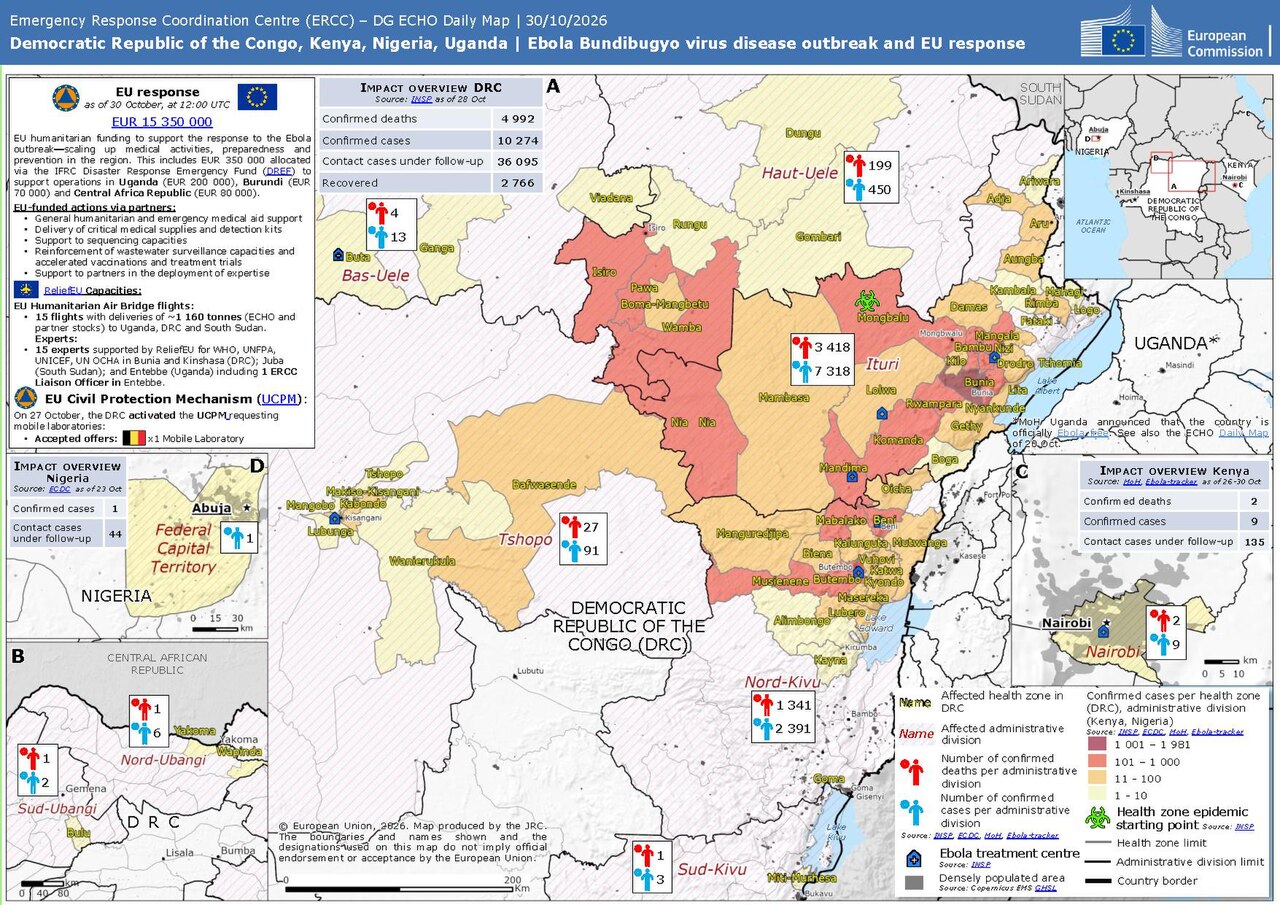
KINSHASA: Deaths in Congo’s Ebola outbreak have passed 5,000, with 5,026 people killed out of 10,351 confirmed infections, according to the latest government data reported Saturday by The Associated Press.
That is a lethality rate of nearly 50 per cent, the AP said. The outbreak, caused by the Bundibugyo virus and declared in mid-May, is already the second-deadliest Ebola outbreak in history, behind only the West Africa epidemic of 2014 to 2016, which killed about 11,000 people, the AP reported. So far 2,788 people have recovered.
The Bundibugyo virus has no known vaccine or treatment, and health workers treat patients based on symptoms, the AP said. The disease has spread to 67 of Congo’s 178 health zones in eight of its 26 provinces, with 50 of those zones reporting active cases. It is concentrated in the eastern provinces of Ituri and North Kivu, which account for 9,782 confirmed cases and 4,792 deaths.
“It is a very tragic milestone because it is just not a number,” Dr. Patrick Otim, a program area manager with the World Health Organization, told the AP. “It is families and communities that have been devastated by this outbreak.”
Contact tracing and testing are lagging. The Africa Centres for Disease Control and Prevention (Africa CDC) says about 80 per cent of new cases are coming from outside the chain of monitored contacts, and Otim said one-third of recorded deaths are people who died outside treatment centres before they were tested, according to the AP. Conflict between the government and armed groups in the east, including the Rwanda-backed M23, an Islamist insurgency near the Ugandan border and widespread distrust that has led to attacks on health workers, have also limited the response.
In an interview with CBC News from Addis Ababa on Friday, Africa CDC director-general Dr. Jean Kaseya warned of possible “massive” spread to more countries, and even other continents, unless Western countries including Canada offer more support. “No one is safe today,” he said. Kaseya said he has called Canada home since 2013. His message to Canadians was “No fear, no panic, but take it seriously,” CBC reported.
The risk to Canada remains low, Kaseya said, but he urged Canadian officials to “move from low to zero” by helping stop the outbreak in Africa. Smaller numbers of infections have appeared in Uganda, Kenya and, most recently, Nigeria, CBC reported.
Canada committed $8 million to the Ebola response in May, including $2 million for Africa CDC for surveillance and biosecurity, and Health Canada in late July authorized a Moderna clinical trial of a vaccine targeting the Bundibugyo virus, CBC reported. The Public Health Agency of Canada told CBC it continues to monitor the situation and may adjust its temporary border measures, which include outbreak alerts for Kenya and Nigeria issued in October.
“Ebola outbreak” was among the most-searched topics in Canada on Saturday, according to Google Trends. Earlier on our site: Nigeria pays Ebola contacts ₦100,000 a week, 53 monitored.
If you find reporting like this useful, consider supporting Canada News Media, an independent Canadian newsroom with no corporate parent.
Follow Canada News Media
Get the day's top Canadian stories and our two daily 60-second news videos wherever you scroll.
X Threads Facebook Instagram LinkedIn TikTok YouTube Pinterest Reddit Substack Flipboard Newsletter RSS