

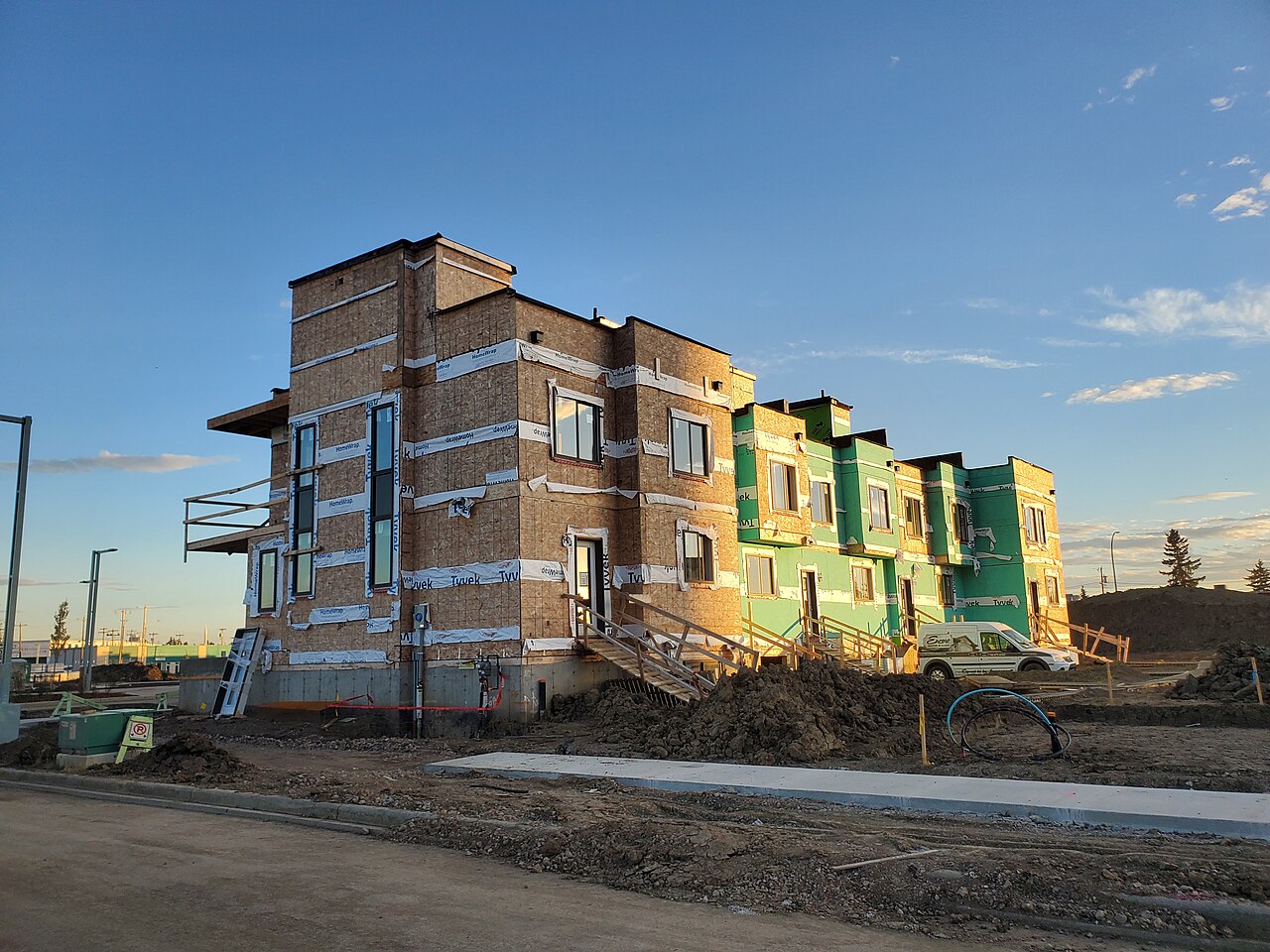
Edmonton and Calgary have approved about one-fifth fewer new homes so far in 2026 than at the same point last year, with apartment approvals falling hardest, according to a Canada News Media analysis of both cities’ building permit records.
From Jan. 1 to Nov. 18, Calgary issued building permits for 18,706 housing units, down 17.2 per cent from 22,588 in the same period of 2025. Edmonton issued permits for 12,478 units, down 21.7 per cent from 15,941. Together, the two cities permitted 31,184 units, about 7,300 fewer than a year earlier, a drop of 19.1 per cent.
The decline comes after a record 2025 in both cities’ files, which go back to 2008 in Calgary and 2009 in Edmonton: 25,964 units for the full year in Calgary and 17,715 in Edmonton. Even with the drop, 2026 is the third-highest year in each city’s records since 2021 for the same January-to-mid-November window. Calgary permitted 14,738 units in that window in 2021 and 16,264 in 2023; Edmonton permitted 9,032 and 8,624.
For renters and buyers, building permits are an early signal of supply. A permit is the city’s approval to start building, so fewer permits now usually means fewer homes finished in 2027 and 2028, although some permitted projects are delayed or never built.
Apartments account for most of the drop. In Calgary, permits for units in apartment buildings fell to 7,265 from 9,578, down 24.1 per cent. In Edmonton, units in buildings the city classes as apartments fell to 2,782 from 5,029, down 44.7 per cent.
Ground-oriented multi-unit housing held up better. Edmonton’s row-house permits added 4,734 units, close to last year’s 4,801, making row houses the largest housing type permitted in the city this year, ahead of single detached houses at 3,103 units, which fell 19.5 per cent. In Calgary, rowhouse and townhouse units slipped 5.7 per cent to 3,419, single-family houses fell 13.4 per cent to 3,549 and basement suites fell 24.5 per cent to 1,974.
Calgary’s records also show permits taking longer to issue for denser housing. For townhouse permits issued between Jan. 1 and Nov. 18, the median time from application to issue was 91 days this year, up from 81 days in 2025 and 36 days in 2021. For apartment buildings, the median was 193 days, up from 189 in 2025 and 132 in 2021. For single-family houses, the median was 27 days, up from 14 days in 2025.
Those times measure the whole period between application and permit, so they include time applicants spend revising plans or answering city questions, not only city review. The records do not show why the waits changed.
Calgary’s file also shows a smaller pipeline coming. Applications filed from Jan. 1 to Nov. 18 covered 19,490 units, down 10.9 per cent from 21,886 a year earlier.
The permit records do not explain the decline. Interest rates, construction costs, rents, a cooling resale market and changes to zoning rules can all affect when builders apply, and the data does not separate those factors. In Edmonton, Premier Danielle Smith ordered the city on Oct. 8 to roll back its infill rules for multi-unit housing in established neighbourhoods and gave council three months to comply, The Canadian Press reported, so that order came too late to explain most of this year’s numbers.
Home sales have also slowed in both cities, as Canada News Media’s monthly Housing Check reported for Edmonton in October and Calgary in September. Nationally, Statistics Canada’s figures have shown multi-unit permits swinging month to month, and Calgary was among the cities where housing starts rose in September.
How we checked: We downloaded the City of Calgary’s Building Permits open dataset (all permits since 2019 with one or more housing units) and the City of Edmonton’s General Building Permits open dataset (all permits since 2021 with units added), both updated Nov. 18, 2026. We summed housing units on permits issued from Jan. 1 to Nov. 18 of each year, so every year covers the same window. Calgary types use the city’s permit class field, combining new and improvement permits for basement suites; Edmonton types use its building type field, combining both row-house labels. Calgary approval times are the median number of days between the applied date and issued date for new-construction permits of each class. Calgary application counts use the applied date. The Edmonton infill order was reported by The Canadian Press on Oct. 8, 2026.
If you find reporting like this useful, consider supporting Canada News Media, an independently owned Canadian newsroom.
Follow Canada News Media
Get the day's top Canadian stories and our two daily 60-second news videos wherever you scroll.
X Threads Facebook Instagram LinkedIn TikTok YouTube Pinterest Reddit Substack Flipboard Newsletter RSS