


The best way to prepare your lawn for winter in Canada is to keep mowing until growth stops, clear or mulch fallen leaves before the snow, water deeply before the ground freezes, and, if you fertilize, apply a late-season feeding once the grass has stopped growing but is still green. Most of that work happens between September and the first hard freeze, so the next few weeks matter.
What you do now shapes how the lawn looks in April. Grass plants store energy in their roots in the fall, and a thick mat of wet leaves, a dry root zone or a badly timed fertilizer application can leave a lawn thin, grey and prone to snow mould by spring. Timing varies across the country, so treat the dates below as a guide and watch your local frost forecast, especially on the Prairies and in northern regions where winter arrives earlier than in southern Ontario or coastal British Columbia.
The guidance below draws on the Ontario government’s lawn care advice and on comments from Nathan Tobias, operations manager at Yard Dawgs, in a Weather Network report. Application rates from the province are given for Ontario turf. Check local conditions and municipal rules, since some Canadian cities restrict fertilizer and pesticide use.
Steps to prepare your lawn for winter
-
Deal with weeds while the plants are still active. Tobias says fall is an effective time to target weeds because plants are pulling sugars down into their roots, which means herbicides can reach the root and deliver “a much more effective kill.” If you use a product, follow the label and check whether your municipality restricts cosmetic pesticide use.
-
Reduce thatch and overseed bare patches early. Ontario’s guidance says to control thatch through core aeration or verticutting and to overseed damaged areas in early fall, roughly mid-August to mid-September. The province lists seeding rates of 2 to 4 kilograms per 100 square metres for perennial ryegrass, 1 to 3 kilograms for fine fescue and 2 to 3 kilograms for tall fescue. Spread seed in two directions so it touches the soil, and keep seeded areas watered. If you have missed that window, Tobias notes that seed spread in October or November can stay dormant through winter and use spring freeze-thaw cycles to work into the soil.
-
Keep mowing, and lower the cut only at the very end. Ontario advises raising the mowing height slightly in fall, because longer blades insulate the grass crown and support deeper roots, but not so long that the grass mats down and invites winter disease. Tobias recommends cutting to two to three inches (about five to eight centimetres) before the lawn freezes to help prevent mildew and snow mould.
-
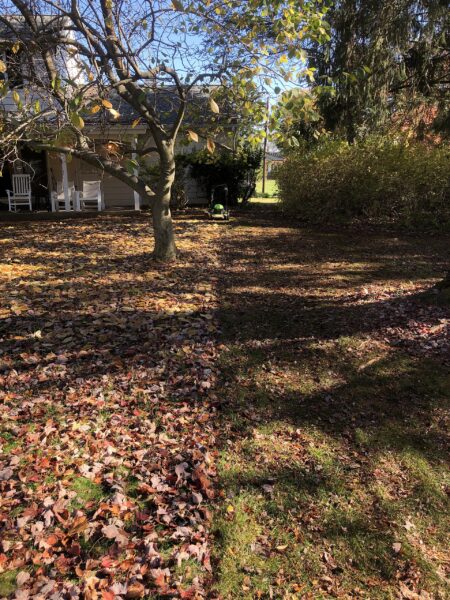
Get leaves off the lawn before snowfall. The province says to remove fallen leaves before the snow arrives, or to mulch them with sharp mower blades as long as the layer stays under 15 centimetres deep. Anything deeper than that should be raked up rather than mulched.
-
Time the late-season fertilizer carefully. Ontario recommends a second fertilizer application in mid- to late October, when the turf has stopped growing but is still green, at 0.5 kilograms of nitrogen per 100 square metres. The province says an early application encourages vulnerable late growth, while one applied too late does the lawn no good. Check the nitrogen figure on the bag to work out how much product you need, and skip this step if local bylaws restrict fertilizer use.
-
Soak the lawn before the freeze. Tobias says lawns should get at least one inch of water from a sprinkler before the ground freezes, and that too little fall watering can leave a spring lawn looking “grey and strawy.” To measure, set a shallow container such as a plastic food tub or a frisbee on the grass and run the sprinkler until an inch collects.
A lawn that goes into winter dense, watered and free of leaf litter usually recovers faster in spring. If your grass type, soil or climate is unusual, or you are unsure about product rates, a local garden centre or lawn care company can adjust these steps for your region.
Sources: Government of Ontario, “Preparing your lawn for winter” (ontario.ca/page/preparing-your-lawn-winter); The Weather Network, “Weed, seed and soak: How to prepare your lawn for winter,” with comments from Nathan Tobias of Yard Dawgs.
Follow Canada News Media
Get the day's top Canadian stories and our two daily 60-second news videos wherever you scroll.
X Threads Facebook Instagram LinkedIn TikTok YouTube Pinterest Reddit Substack Flipboard Newsletter RSS