



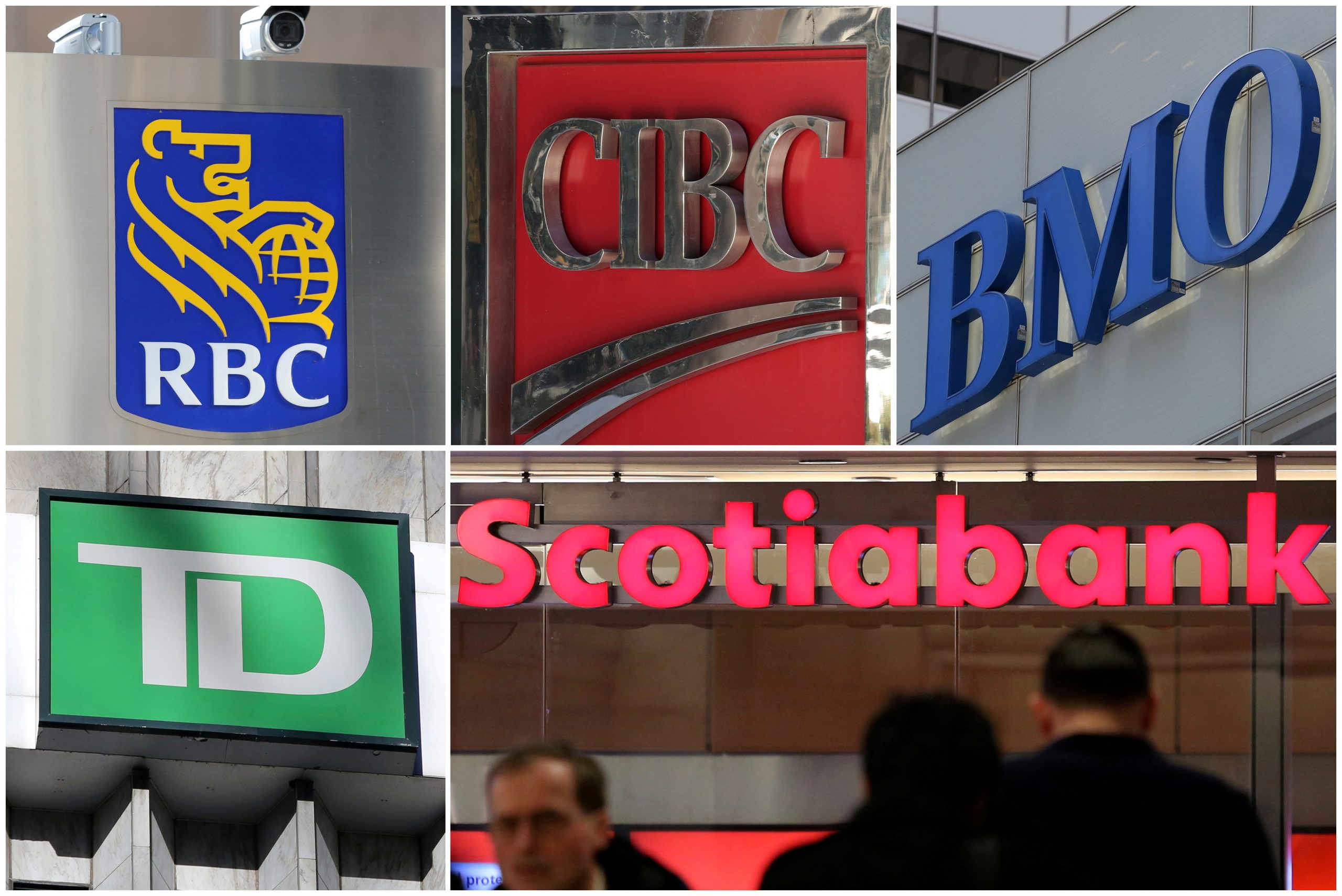
Canada’s Big Five banks are Royal Bank of Canada, Toronto-Dominion Bank, Bank of Nova Scotia, Bank of Montreal and Canadian Imperial Bank of Commerce. When National Bank of Canada is added, the group is called the Big Six. Together they hold most of the country’s deposits and mortgages and run the largest branch networks in Canada.
All six are far bigger than any other Canadian lender. Each of the Big Five reports total assets of more than $1 trillion, and Royal Bank, better known as RBC, is the largest by both assets and stock market value. CIBC, the smallest of the five, listed total assets of about $1.18 trillion as of July 31, 2026, in its third-quarter report.
The banks have deep roots, several of them older than Confederation. The table below shows where each one began and the symbol it trades under on the Toronto Stock Exchange.
| Bank | Origins | TSX symbol |
|---|---|---|
| Royal Bank of Canada | Founded in Halifax in 1864 as the Merchants Bank of Halifax | RY |
| Toronto-Dominion Bank | Formed in 1955 by the merger of the Bank of Toronto, founded in 1855, and the Dominion Bank | TD |
| Bank of Nova Scotia (Scotiabank) | Founded in Halifax in 1832 | BNS |
| Bank of Montreal (BMO) | Founded in Montreal in 1817, Canada’s oldest bank | BMO |
| Canadian Imperial Bank of Commerce (CIBC) | Formed in 1961 by the merger of the Canadian Bank of Commerce and the Imperial Bank of Canada | CM |
| National Bank of Canada | Roots in Quebec City in 1859; took its current form in 1979 | NA |
Each bank has a different mix of business. RBC has the largest wealth management arm in the country. TD and BMO have built large retail banking operations in the United States. Scotiabank has long had a big presence in Latin America and the Caribbean, though it has been shifting its focus toward North America. CIBC is concentrated mainly in Canada, and National Bank is the dominant bank in Quebec.
Canada’s banking system is often described as concentrated, and regulators treat these six banks differently because of it. The Office of the Superintendent of Financial Institutions has named all six as domestic systemically important banks, meaning a failure at any one of them could threaten the wider economy. They must hold more capital than smaller lenders, including an extra cushion called the Domestic Stability Buffer. On June 19, 2026, OSFI lowered that buffer to 3.0 per cent of risk-weighted assets from 3.5 per cent, its first change since June 2023, to give the banks more room to lend.
That concentration is one reason Canadian banks came through the 2008 financial crisis without government bailouts of the kind seen in the United States and Europe. Critics argue it also limits competition, keeping fees high and making it harder for smaller banks and fintech companies to win customers. Federal efforts to change that include open banking rules, which would let consumers share their financial data securely with other providers.
For customers, deposits at all six banks are protected by the Canada Deposit Insurance Corporation, which covers eligible deposits up to $100,000 per insured category at each member institution. Chequing and savings accounts, tax-free savings accounts, registered retirement savings plans and several other account types each count as separate categories, so one person can be covered for more than $100,000 at the same bank. Coverage is automatic and free.
The banks are governed by the federal Bank Act. Consumer protection rules, such as how banks must handle complaints and disclose fees, are enforced by the Financial Consumer Agency of Canada.
The big banks also matter to investors, since their shares make up a large part of the S&P/TSX composite index and many pension and mutual funds. Their fiscal years end on Oct. 31, and they report fourth-quarter and full-year results in late November and early December. Bank shares often move the whole market, as they did on Nov. 9, when banks and gold miners led a rally on the TSX. Anyone deciding whether to hold bank shares should consider their own situation with a qualified adviser.
If you find reporting like this useful, consider supporting Canada News Media, an independently owned Canadian newsroom.
File photo: Signs for RBC, CIBC, BMO, TD and Scotiabank in Toronto, March 16, 2017. REUTERS/Chris Helgren.
Follow Canada News Media
Get the day's top Canadian stories and our two daily 60-second news videos wherever you scroll.
X Threads Facebook Instagram LinkedIn TikTok YouTube Pinterest Reddit Substack Flipboard Newsletter RSS