


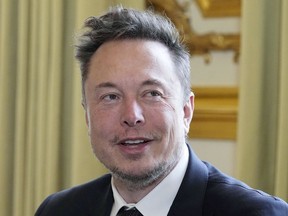
SAN FRANCISCO (AP) — All major social media platforms do poorly at protecting LGBTQ+ users from hate speech and harassment — especially those who are transgender, non-binary or gender non-conforming, the advocacy group GLAAD said Thursday. But Twitter is the worst.
Twitter ‘s communications staff was eradicated after Musk took over the company and for months inquiries to the press office have been answered only an automated reply of a poop emoji, as was the case when The Associated Press reached out to the company for comment.
LGBTQ+ advocates have long warned that online hate and harassment can lead to violence offline. But even when it does not, online abuse can take a toll on a person’s mental health.
On Twitter, attacks on LGBTQ+ users have increased substantially since Elon Musk took over the company last fall, according to multiple advocacy groups.
A big part of the reason is the drastic staffing cuts Musk has enacted since his takeover — there are simply not enough content moderators to handle the flood of problematic tweets that range from hate speech to graphic material and harassment. Musk has also described himself as a “free-speech absolutist” who believes Twitter’s previous policies were too restricting.
Twitter, as part of the same retooling of its site policies, also changed how it responds to tweets that violate its rules. While in the past, offending tweets were removed, the company now says it will sometimes restrict a tweet instead of removing it from the platform altogether.
“Twitter is is largely a cesspool now. You can’t post without getting attacked. There’s no room for conversation. It is just about hand-to-hand combat,” Ellis said. “And that’s what it is. It’s like backyard dogfights.”
Meta, which owns Facebook and Instagram, saw a 15 percentage point score increase for both its platforms, to 61% and 63%, respectively. GLAAD’s index measures 12 LGBTQ-specific indicators, such as explicit protections from hate and harassment for LGBTQ users, offering gender pronoun options on profiles, and prohibiting advertising that could be harmful or discriminatory to LGBTQ people.
While Meta has improved and has strong policies in place, GLAAD says the company does not consistently enforce them. For instance, the group says for many abusive posts that it reports, Meta will send an automated response stating that due to the high volume of reports it receives, it is not able to review the post.
TikTok, which saw its score increase from 14 points to 57%, said it is “proud to have strong policies aimed at protecting LGBTQ+ individuals from harassment and hate speech, including misgendering and deadnaming, and we’re always looking to strengthen our approach, informed both by our community and the advice of experts, such as GLAAD.”
Google’s YouTube, meanwhile, scored 54%, up nine points from 2022.
“Our policies prohibit content that promotes violence or hatred against members of the LGBTQ+ community. Over the last few years, we’ve made significant progress in our ability to quickly remove this content from our platform and prominently surface authoritative sources in search results and recommendations,” said spokesperson Jack Malon.
But GLAAD and other organizations advocating for marginalized groups note that unfettered freedom for one group can infringe on the free speech of others.
“Freedom of speech does not mean I get to, you know, bully and harass people relentlessly,” said Jenni Olson, GLAAD’s director of social media safety. “And that is why companies have hate speech policies, because … if someone is bullying and harassing me that actually means that I don’t have freedom of speech because I’m afraid to say anything.”