


President Donald Trump signed orders Monday to hammer certain Canadian products with 50 per cent tariffs, escalating trade tensions with the United States’ northern neighbour.
“President Trump is taking action to hold Canada accountable for its continued discrimination against and unreasonable and unequal treatment of U.S. commerce that has burdened and disadvantaged hardworking Americans,” a fact sheet from the White House said.
The new tariffs are set to come into force in 30 days on a wide array of goods, ranging from hockey sticks to wine to cement.
A senior White House official, who spoke to reporters on background on condition they not be named, said the measure is a response to provincial bans on U.S. liquor, Canada’s supply managed dairy system and quotas on certain U.S. vehicles.
The officials said that, unlike many of Trump’s other tariffs, the new duties will have no exemptions for goods compliant under the Canada-U.S.-Mexico-Agreement on trade, better known as CUSMA.
The officials said the new tariffs will not apply to energy, potash, fish, critical minerals or other goods already being slammed by Trump’s separate sector-specific tariffs.
Prime Minister Mark Carney responded to the tariffs, saying Canada will work relentlessly and take any measures necessary to build our strength at home and support Canadian workers, farmers, businesses and families.
“This trade dispute has raised costs for families, particularly in the U.S. Canada stands ready to engage intensively address outstanding issues with the U.S. to the mutual benefit of our citizens,” read his statement.
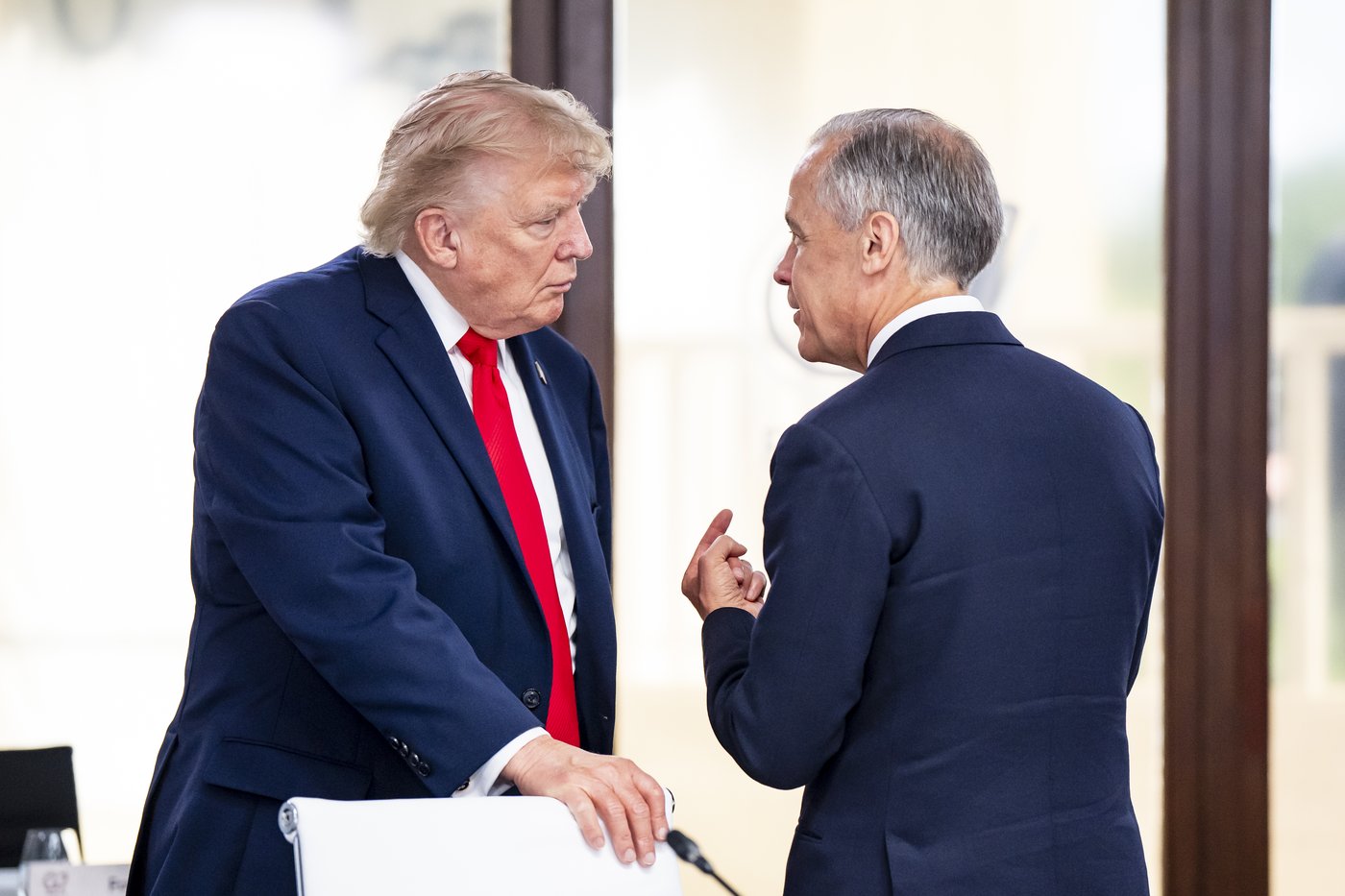
He previously said that he spoke with Trump Sunday and they had a “conversation more broadly strategically about trade and where that’s going.”
“Yes, there are issues between us,” he said. “We have very positive issues with a series of other countries that we are pursuing. First and foremost, what we are doing is building this country strong.”
The White House official repeated a Trump administration talking point claiming that only two countries have retaliated against U.S. tariffs: China and Canada.
Canada imposed wide-ranging retaliatory tariffs in response to Trump’s tariffs last year. It has since rolled back many of those duties in an effort to smooth trade relations.
Separately, several Canadian provincial liquor boards stopped purchasing American alcohol last year in response to Trump’s tariffs and threats of annexation.
While Saskatchewan and Alberta have returned American booze to the shelves, major purchasing provinces like Ontario and Quebec have not resumed stocking U.S. alcohol.
The provincial liquor bans have been a thorn in the side of the Trump administration and many Republican lawmakers. The White House said Monday that from March 2025 through February 2026, Canadian imports of U.S. alcoholic beverages decreased by about 81 per cent compared to the same time period the year prior.
Trump’s 25 per cent automobile tariffs have been hammering the Canadian industry. But the White House criticized Ottawa’s decision to impose tariff-free quotas on imports of vehicles from the United States built by automakers that were moving production out of Canada.
“Canada also administers these quotas in a way that compels U.S. auto companies to invest in production in Canada instead of the United States,” the White House fact sheet said.
Canada’s supply managed dairy system has long been a major irritant in the Canada-U.S. trade relationship.
The White House said “Canada established tariff-rate quotas on U.S. cheese that are much more restrictive than the tariff-rate quotas imposed on similar imports of cheese into Canada from the (European Union).”
It had been rumoured for months that the Trump administration would use Section 338 of the Tariff Act of 1930 to implement the new duties — even though the law has never been used for that purpose.
The White House said Section 338 empowers the president to impose tariffs when a country puts U.S. exporters at a disadvantage relative to exporters in other countries.
The White House official said the statute doesn’t specify conditions that would require the duties to be removed but added the Trump administration is taking it one step at a time.
These tariffs are not connected to Trump’s recent threat to hit Canada with higher tariffs because of wildfire smoke.
Ontario Premier Doug Ford told reporters in Washington last month he would welcome back American alcohol once CUSMA is renewed.
“I just want to get this deal done,” he said. “I can assure you once that deal’s done, I’m going to be sitting down and bringing all the booze back on shelves in Ontario.”
Ford responded on social media to news of the tarriffs, saying Canada should be responding dollar-for-dollar.
“I’ll never stop fighting to protect Ontario. If these tariffs proceed, Canada should respond tariff for tariff, dollar for dollar,” read his post on X.
Add CityNews Toronto as a trusted source on Google to see more local stories from us.
Related Products
Follow Canada News Media
Get the day's top Canadian stories and our two daily 60-second news videos wherever you scroll.
X Threads Facebook Instagram LinkedIn TikTok YouTube Pinterest Reddit Substack Flipboard Newsletter RSS