


The latest:
COVID-19 infections and deaths are mounting with alarming speed in India with no end in sight to the crisis, and a top public health expert is warning of hard weeks ahead.
India’s official count of coronavirus cases surpassed 20 million on Tuesday, nearly doubling in the past three months, while deaths officially have passed 220,000. Staggering as those numbers are, the true figures are believed to be far higher, the undercount an apparent reflection of the troubles in the health-care system.
On Tuesday, the health ministry reported 357,229 new cases in the past 24 hours and 3,449 deaths from COVID-19.
Infections have been increasing in India since February in a disastrous turn blamed on more contagious variants of the virus as well as government decisions to allow massive crowds to gather for Hindu religious festivals and political rallies before state elections.
WATCH | Frantic patients seek care as hospitals in India struggle to keep up with COVID-19 cases:

A ‘monster’ variant of the coronavirus in India is ‘killing patients like anything,’ says Dr. Dhiren Shah, a cardiac surgeon in Ahmedabad, India, while the country remains desperately short of hospital beds, oxygen and medications. 9:26
Dr. Dhiren Shah, a cardiac surgeon at a private hospital in Ahmedabad, India, told CBC’s Heather Hiscox that the situation in hospitals is grim.
“We are in a situation where there are a lot of patients begging for a bed in the hospital,” he said, but there is no way to care for them all.
The overall scenario is “gruesome” right now, he told CBC News Network.
Patients seeking a bed are forced to move from hospital to hospital as they spend hours searching for an open bed, Shah said, with some people dying in ambulances as they try to secure care.
Watch the full interview to hear more about what’s happening on the ground in India.
The challenges are steep in states where elections were held and unmasked crowds likely worsened the spread of the virus. The average number of daily infections in West Bengal state has increased by a multiple of 32 to over 17,000 since the balloting began.
“It’s a terrifying crisis,” said Dr. Punyabrata Goon, convener of the West Bengal Doctors’ Forum.
Goon also said that the state needs to hasten immunizations. But the world’s largest maker of vaccines is short of shots — the result of lagging manufacturing and raw material shortages.
Dr. Ashish Jha, dean of Brown University’s School of Public Health in the United States, said he is concerned that Indian policymakers he has been in contact with believe things will improve in the next few days.
“I’ve been … trying to say to them, ‘If everything goes very well, things will be horrible for the next several weeks. And it may be much longer,’ ” he said.
Jha said the focus needs to be on “classic” public health measures: targeted shutdowns, more testing, universal mask-wearing and avoiding large gatherings.
“That is what’s going to break the back of this surge,” he said.
India’s top health official, Rajesh Bhushan, refused to speculate last month as to why authorities weren’t better prepared.
What’s happening across Canada
WATCH | Expert discusses latest NACI recommendations and what they might mean for Canada:

Changing guidance on COVID-19 vaccines in Canada could lead some people to regret getting the shot that was available to them at the time, says Dr. David Naylor, co-chair of the national COVID-19 Immunity Task Force. He says all of the vaccines available in Canada are very effective. 10:18
As of 2:10 p.m. ET on Tuesday, Canada had reported 1,247,304 confirmed cases of COVID-19, with 82,935 considered active. A CBC News tally of deaths stood at 24,385.
At a briefing on Tuesday, federal officials said three million doses of Pfizer-BioNTech and Moderna would arrive in Canada by the end of the week. That figure includes one million Moderna doses that were meant to be picked up next week, Public Services and Procurement Minister Anita Anand said, noting the company is working with the government on a more regular delivery schedule.
Ontario on Tuesday reported 2,791 new cases of COVID-19 and 25 additional deaths. COVID-19 hospitalizations stood at 2,167, with 886 patients in intensive care, the province reported.
Education Minister Stephen Lecce also announced that students can opt to take all their classes online when the new school year begins in September. Lecce did not, however, provide details on whether or not students will be heading back to class for the remainder of the current school year.
Quebec reported 797 new cases of COVID-19 on Tuesday and 16 additional deaths. Premier François Legault also announced that emergency lockdown measures will end in some parts of the province next week, including the Quebec City area.
Legault said the situation has improved enough in the capital and in two parts of the Outaouais region in western Quebec to allow high school students to return to class, non-essential businesses to open and the nightly curfew to be pushed to 9:30 p.m. from 8 p.m. beginning May 10.
Nova Scotia reported 153 new cases of COVID-19 and two related deaths on Tuesday. The provincial government also announced more than $12 million in additional support for businesses hit by the latest COVID-19 restrictions in the province.
Labi Kousoulis, minister of inclusive economic growth, said the new grant targets businesses directly affected by the provincewide lockdown that went into effect last Wednesday.
Prince Edward Island on Tuesday reported one new case of COVID-19, bringing the number of active cases in the province to seven, while New Brunswick and Newfoundland and Labrador each reported four new cases of COVID-19 on Tuesday.
Across the North, Nunavut on Tuesday reported seven new cases of COVID-19, bringing the number of active cases in the territory to 85. Yukon and the Northwest Territories had not yet provided updates for the day.
Manitoba reported 291 new COVID-19 cases and one death connected to a more contagious coronavirus variant on Tuesday. The province also declared two outbreaks at Winnipeg schools.
Alberta Premier Jason Kenney said the province can expect an announcement on stricter public health measures Tuesday as COVID-19 case numbers continue to climb.
Kenney told a news conference on Monday — when the province reported 2,012 new cases of COVID-19 and four additional deaths — that he was angered to see that a large group of people gathered over the weekend at a rodeo event in Bowden, Alta., in flagrant violation of the restrictions in place.
WATCH | Questions around NACI advice for Johnson & Johnson vaccine:

Some doctors are concerned about new guidance for the Johnson & Johnson COVID-19 vaccine after the National Advisory Committee on Immunization said it should be limited to those over 30 who don’t want to wait for an mRNA vaccine. Meanwhile, Health Canada continues to advise Canadians to take the first vaccine available to them. 2:12
What’s happening around the world
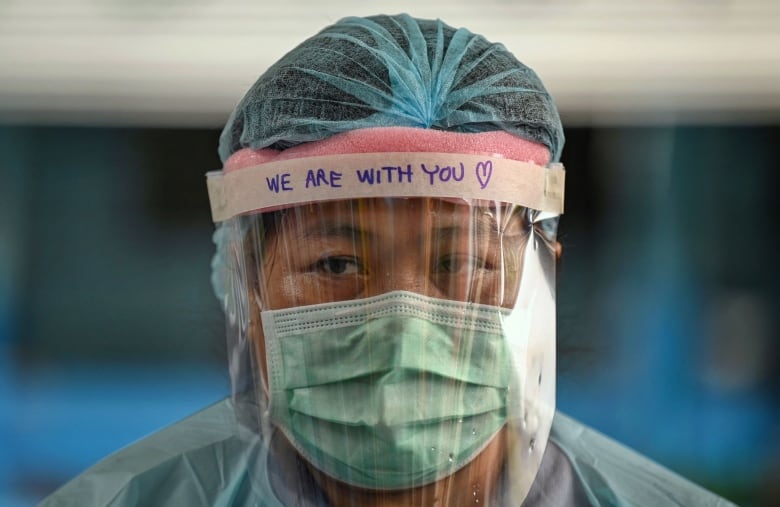
As of Tuesday afternoon, more than 153.7 million cases of COVID-19 had been recorded around the world, according to a case-tracking tool maintained by Johns Hopkins University. The reported global death toll stood at more than 3.2 million.
In the Middle East, Kuwait’s government is barring unvaccinated residents from travelling abroad starting later this month, the latest attempt to tame the spiraling coronavirus outbreak in the Gulf Arab sheikhdom.
In the Asia-Pacific region, Taiwan became the latest place to ban arrivals from India, as it moves to prevent new infections, with more nations reporting cases of a variant first identified in the subcontinent.
In Africa, Tanzania announced new anti-coronavirus measures, saying it wanted to prevent the importation of new variants.
In Europe, the German government says people who are fully immunized or have recovered from a coronavirus infection will be exempt from contact restrictions and curfews.
Justice Minister Christine Lambrecht said the two groups will be treated the same as people who have tested negative. This means they can visit certain places, such as the hairdresser, without taking a test. More than eight per cent of the population in Germany have received two shots, while 28.7 per cent have received at least one dose of vaccine.

In the Americas, Trinidad and Tobago said on Monday it was tightening lockdown restrictions for three weeks starting at midnight as the number of new COVID-19 cases hit new highs and the Caribbean twin-island nation faces a potential shortage of hospital beds.

Follow Canada News Media
Get the day's top Canadian stories and our two daily 60-second news videos wherever you scroll.
X Threads Facebook Instagram LinkedIn TikTok YouTube Pinterest Reddit Substack Flipboard Newsletter RSS