

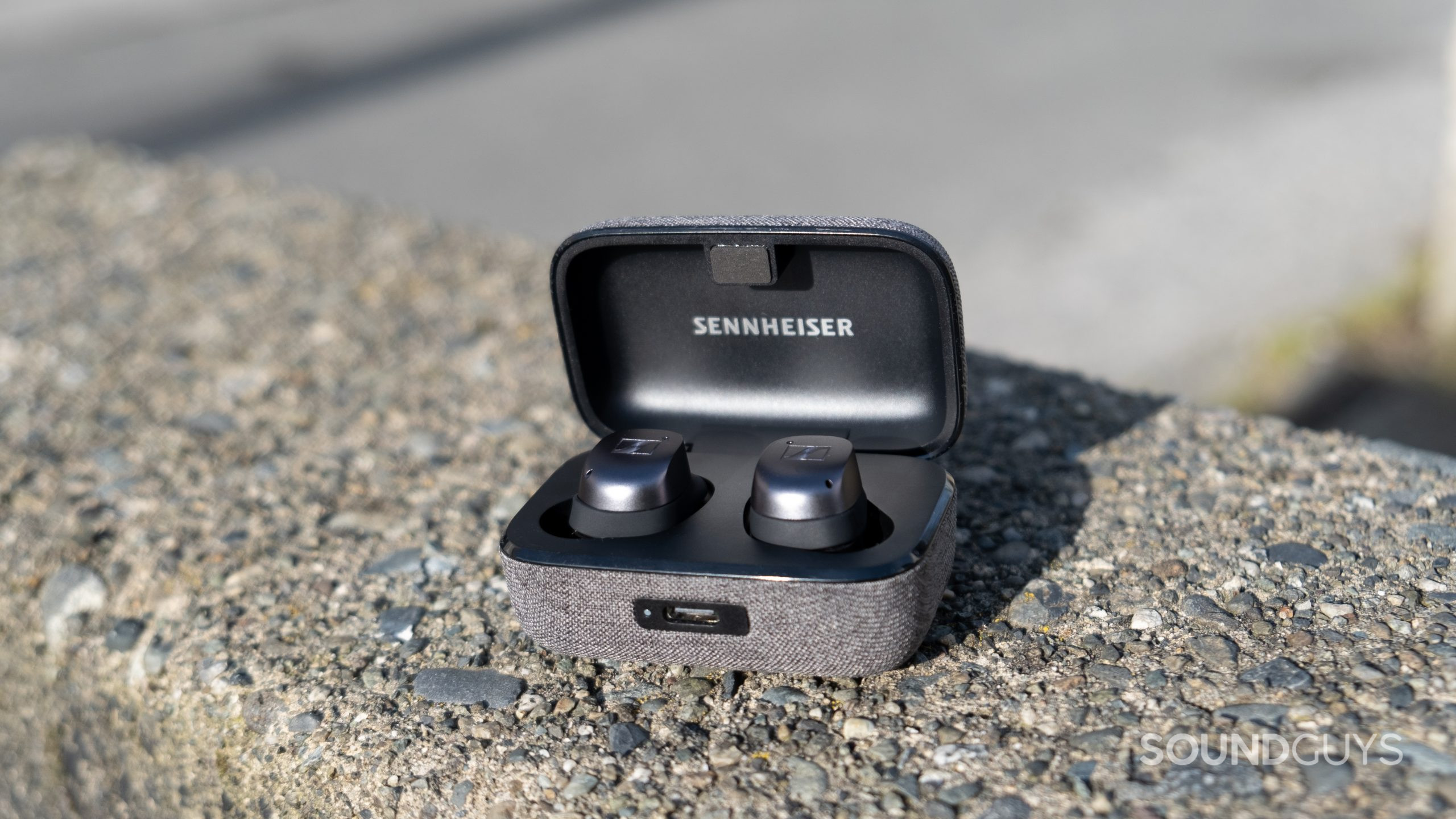
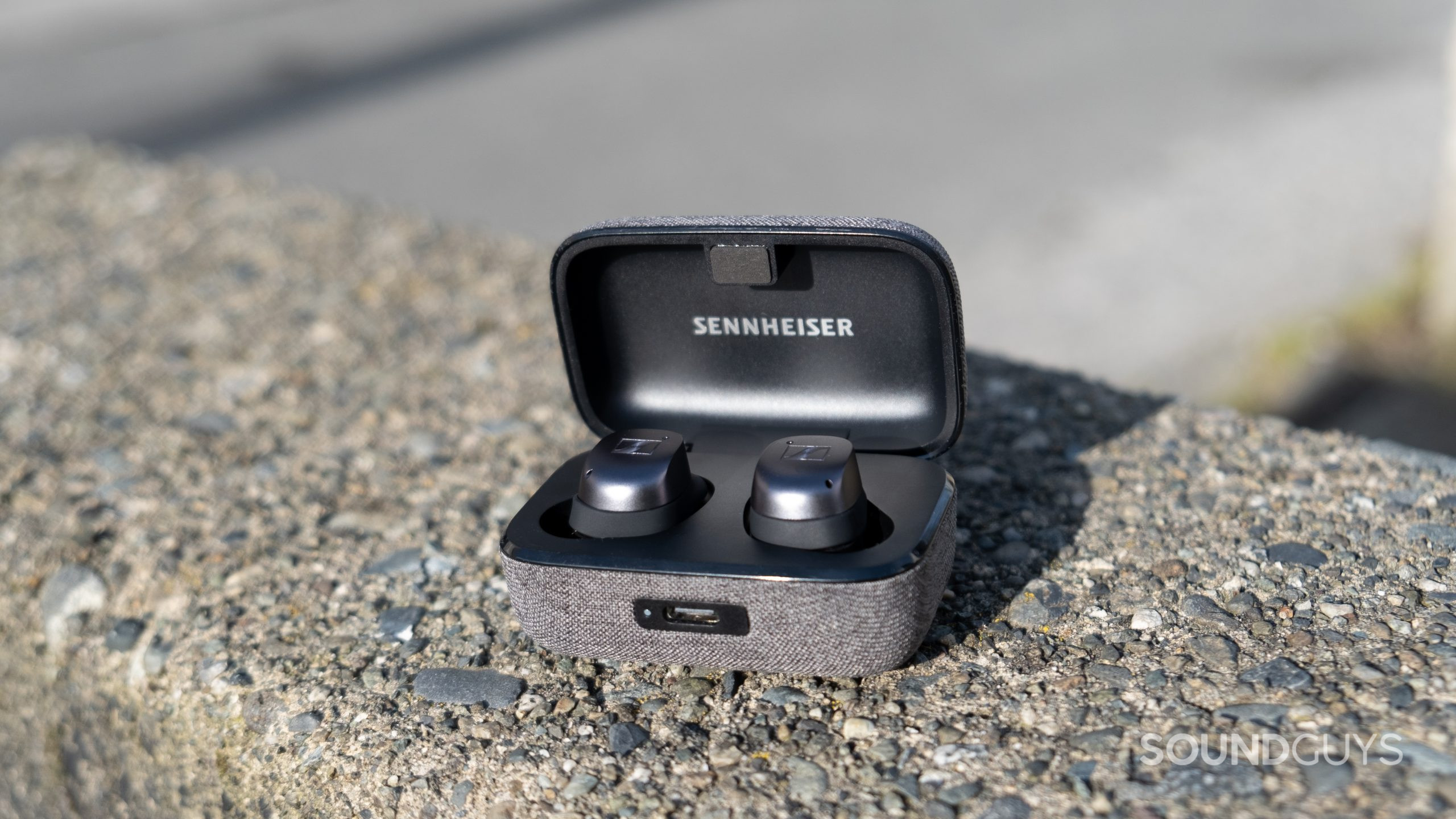
The Sennheiser Momentum True Wireless 3 champion high-end features their predecessors could only dream of. Chief among them is improved noise canceling that now rivals the likes of Sony, Samsung, and Bose. They also sport stabilizing ear fins for greater security during workouts. Their sound profile also closely follows our consumer curve in the bass and midrange. With such a rich feature set, it is not surprising the Momentum True Wireless 3 are among the best wireless earbuds money can buy. Nevertheless, nothing is truly perfect. Here is everything I want to see Sennheiser bring to the updated Sennheiser Momentum True Wireless 4.
A secure and comfortable fit

Finding the touch control area is easy; it’s on the Sennheiser logo.
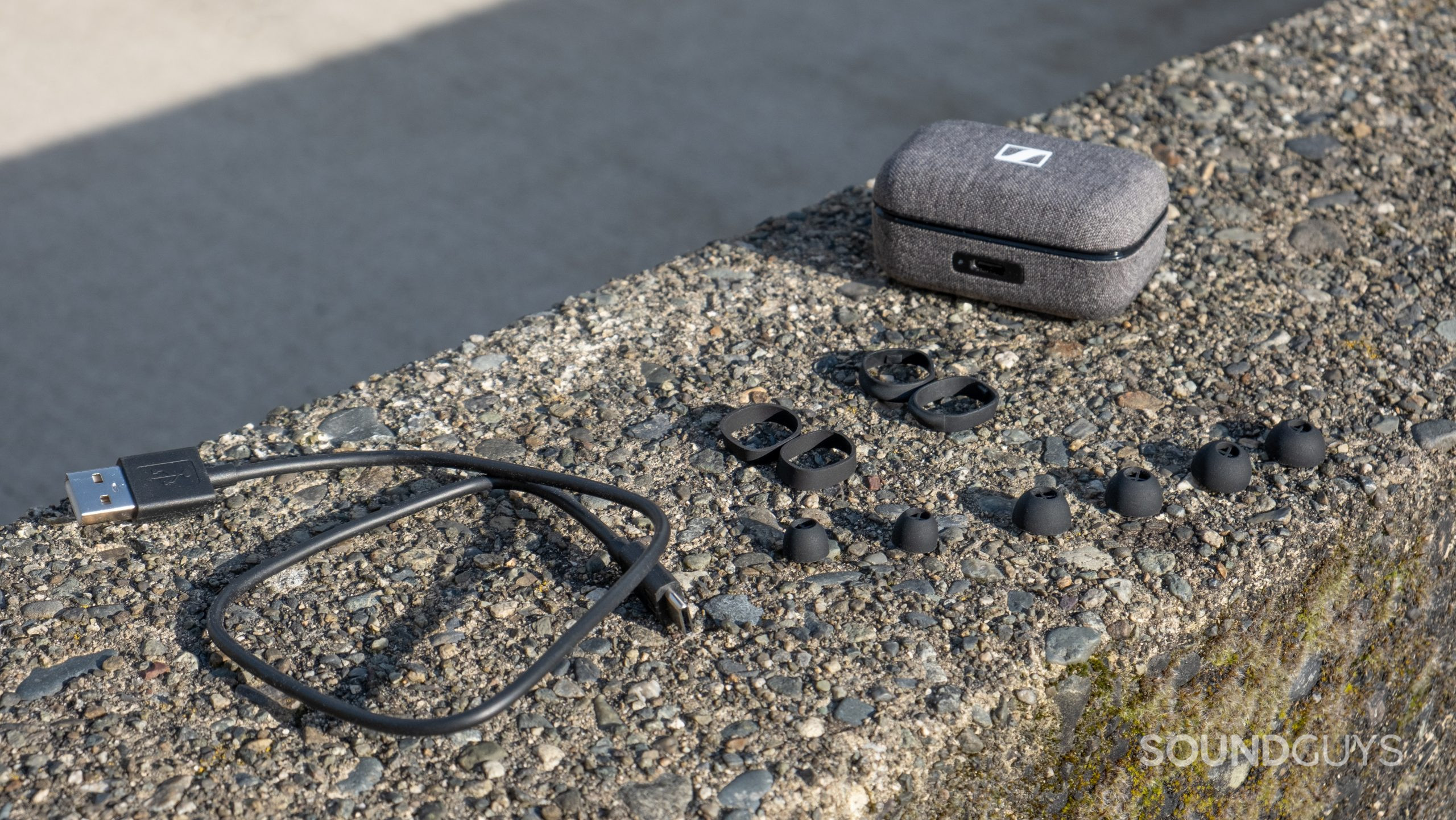
Few earbud manufacturers offer as much customization as Sennheiser with the Momentum True Wireless 3. Users gain four silicon ear tips from 10mm – 15mm in diameter out of the box. The buds also come equipped with three sets of silicone wings to help secure a snug fit. Replacing the ear tips is a breeze and takes minimal effort to fit over the 7mm earbud nozzle.
However, the earbuds’ bulky design can make them hard to place securely inside the ear canal. The earbuds also weigh 7g more than their predecessor. Both specifications mean rigorous exercise, such as jogging, is a non-starter. Furthermore, the buds’ 15mm size makes it more likely you will suffer ear fatigue if worn over long periods. I want Sennheiser to bring a smaller and lighter form factor to the Momentum True Wireless 4. The company could also learn from the Jabra Elite 8 Active and adopt a rubberized coating. This could help Sennheiser ditch the ear wings in favor of a more slender, gripper build.
A detailed custom EQ
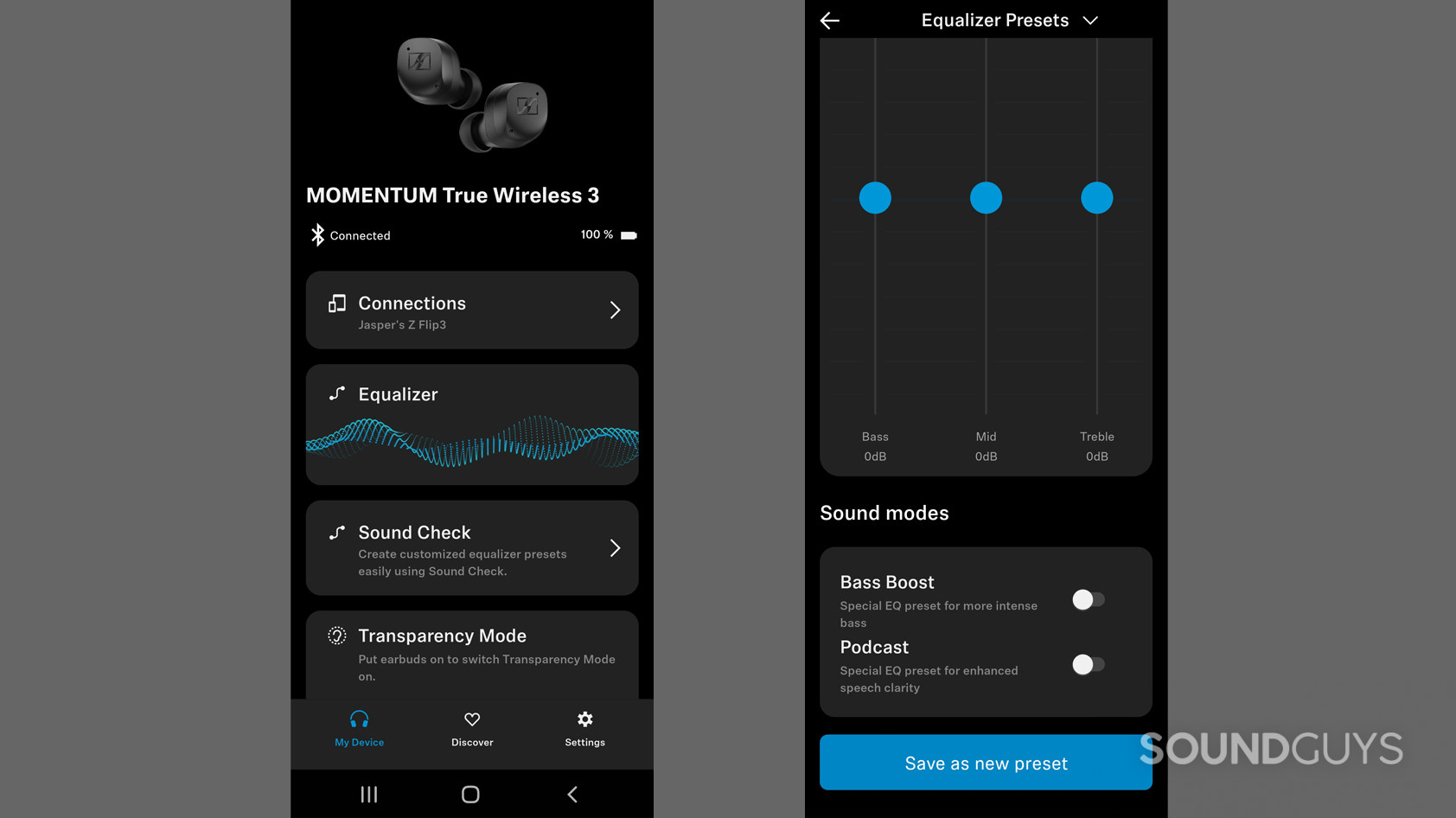
On the left is the main menu, and on the right is the basic equalizer. What, for instance, does Sennheiser classify as treble?
In a world with ever more walled gardens, it is always worth singing the praises of OS-agnostic devices. Sennheiser’s Smart Control app works seamlessly with iOS and Android to control connected devices, firmware updates, Sound Check, Transparency Mode, “Adaptive Noise Cancellation,” “Sound Zones,” and Touch Controls. The app tiles can even be reorganized to your specifications, which is handy.
Herein lies the “but.” Despite Sennheiser including a custom EQ, it has a strikingly limited set of adjustable parameters. For example, there are only three sliders to control: Bass, Mid, and Treble. The volume of each can be adjusted up or down by a maximum of 6dB – less than many competitors and third-party EQ apps. It is also unclear which specific frequencies these bands adjust. This makes it difficult to hone your sound or to dial out a particularly unwanted frequency. When spending upwards of $249, it is fair to expect more than just Bass Boost and Podcast presets, too. Sennheiser will need to bring a more detailed multiband EQ to the Sennheiser Momentum True Wireless 4 if it wants to stay in the race with Sony, Bose, and Samsung.
More reliable wireless connectivity
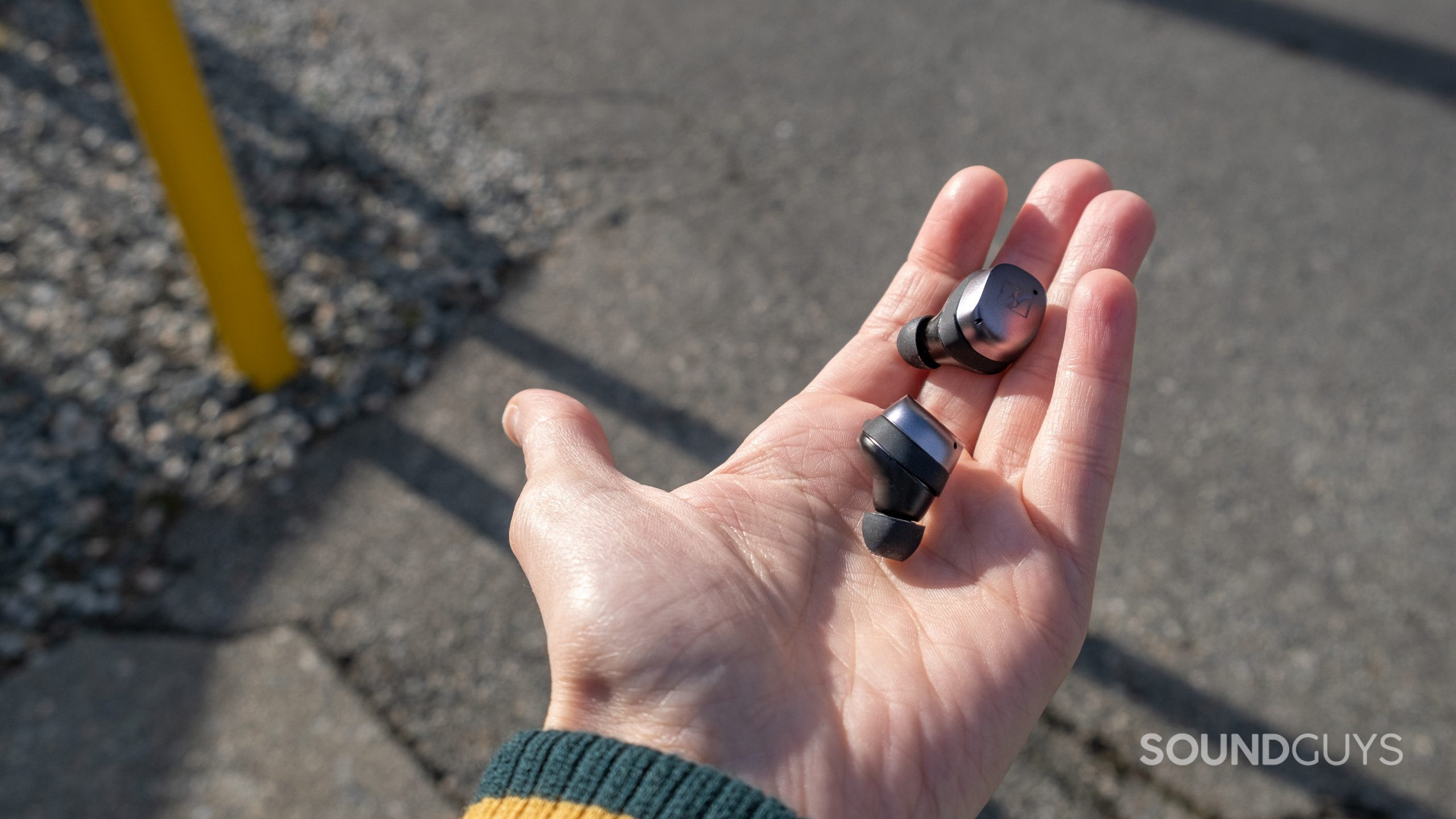
The new stabilizers help give the MOMENTUM True Wireless 3 a more universal fit than its predecessor.
The Sennheiser Momentum True Wireless 3 provide a more comprehensive list of Bluetooth codecs than many of their competitors. For example, the company released an update allowing 24-bit/96kHz streaming via aptX Adaptive on November 2, 2022. The earbuds also include SBC, AAC, and aptX wireless connectivity options. With such a wide pool of codecs, the Sennheiser Momentum True Wireless 3 even make it among some of the best earbuds for iPhone owners.
However, there are caveats. For example, streaming over the aptX Bluetooth codec yields little more than eight meters of connectivity. Anything beyond this distance begets audio dropouts and stuttering playback. Even more worrisome is the prevalence of connectivity issues from as little as one meter. While this may not affect every user to the same extent, it proves that the earbuds are not as stable as they should be. Given Sennheiser’s Momentum True Wireless brand represent its top-tier line, I expect the Sennheiser Momentum True Wireless 4 to retain more reliable wireless connectivity than their predecessors.
More pronounced treble frequencies
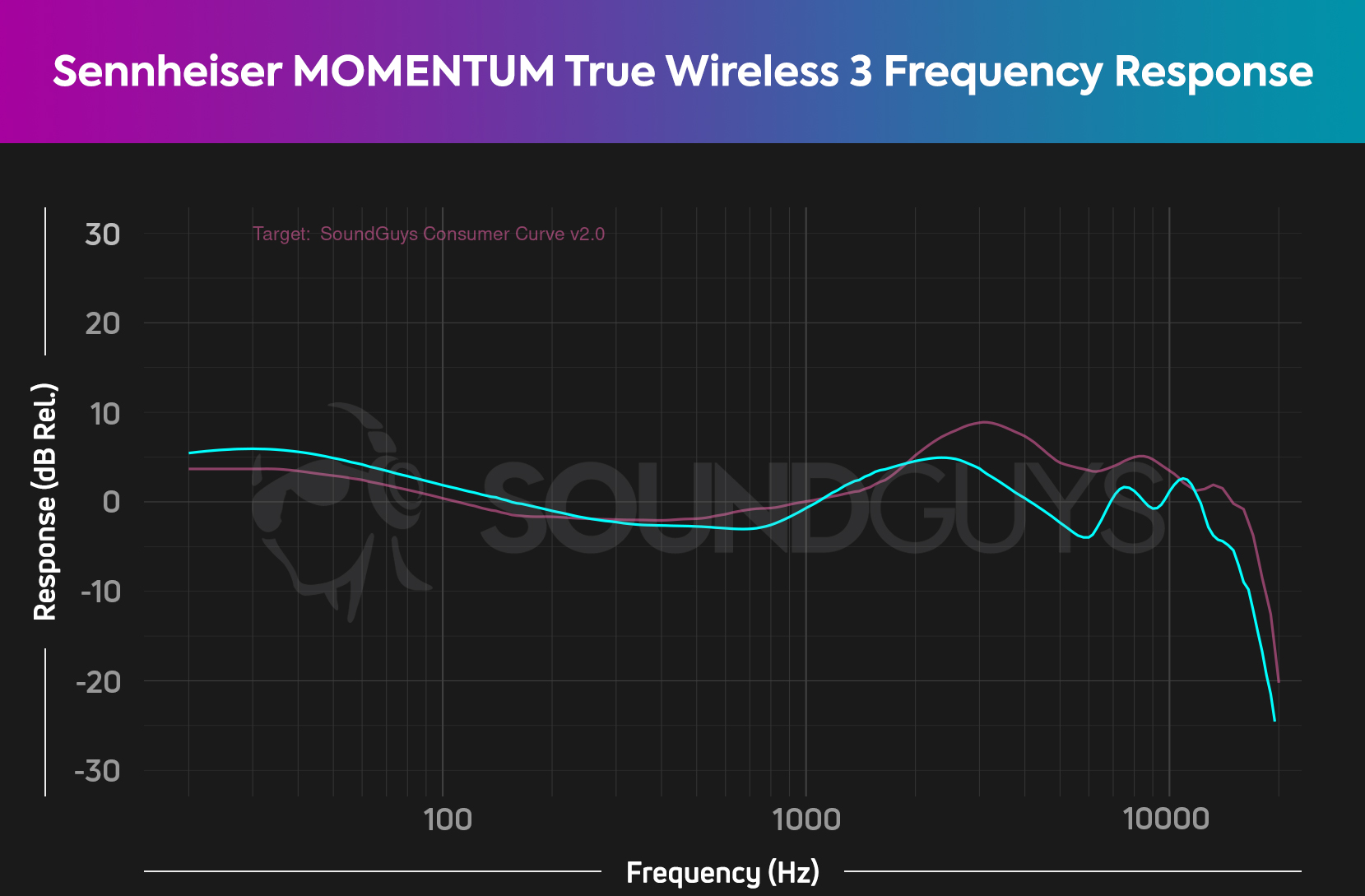
The MOMENTUM True Wireless 3 (in cyan) follows our target curve (in pink) closely, except for the highs.
Regarding audio quality, Sennheiser headphones stand proud as some of the best in the business. The same is true for the Momentum True Wireless 3. Generally speaking, the company’s flagship buds have a pleasing frequency response. As you can see, it closely follows our preference curve above (shown in pink.) This helps the Momentum True Wireless 3 complement a variety of music genres. Furthermore, the oft-over-accentuated bass response of other earbuds is comparatively tame here. This leads to less auditory masking and the reproduction of finer musical details.
However, as you can see in the chart above, there is some deviance from our preference curve in the highs. From around 2.5 – 10kHz, the Sennheiser Momentum True Wireless 3 under-emphasizes treble frequencies by almost 10dB. While this helps reduce sibilance and ear fatigue, it also reduces the prominence of vocals and keys in the mix. Given the simplicity of the Sennheiser Smart Control app EQ, adjusting the treble slider may not yield the desired effect, either. The Sennheiser Momentum True Wireless 4 would benefit from a slightly more accentuated treble response while retaining its pleasing bass and mid-range curve.
Improved battery life
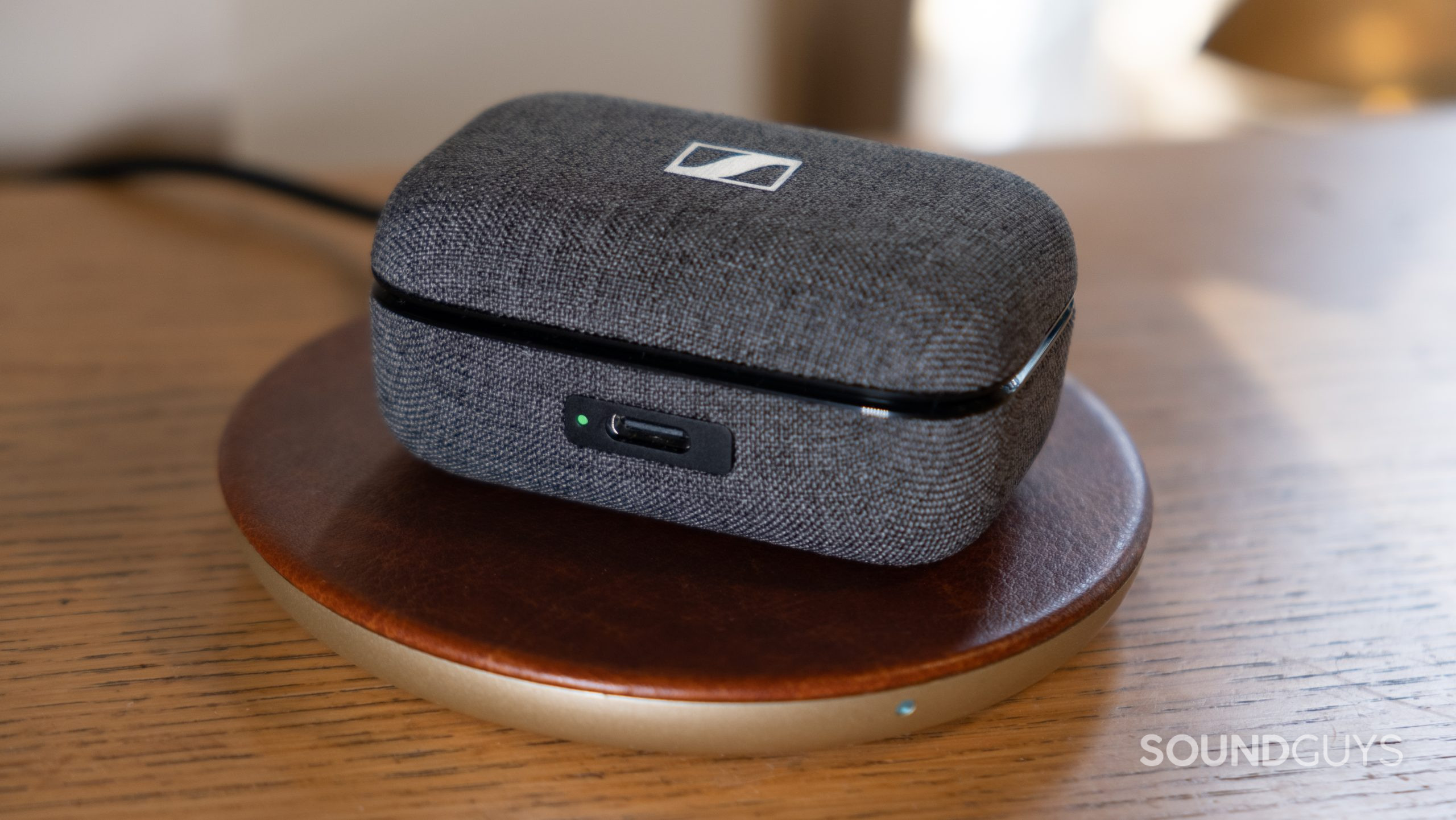
The charging pad doesn’t come with the package, but if you have one already it’s handy.
The average battery life of wireless earbuds sits around the four-to-five-hour mark. The original Momentum True Wireless buds run under four hours, while the middle sibling last nigh on four hours. The company’s most recent Momentum True Wireless 3 last significantly longer, yielding five hours and 33 minutes of playback time. The charging case delivers three extra charging cycles, totaling 22 hours of battery life. You can pop the buds on a Qi wireless pad or go traditional with wired boosting via USB-C. A quick 10-minute top-up delivers 60 minutes of juice.
This all sounds great on paper. However, other similarly-priced earbuds deliver greater battery life without a hitch. Take, for example, the Sony WF-1000XM5. These high-end earbuds support eight hours of playtime on a single charge and cost only $50 more. Further, the Anker Soundcore Liberty 4 NC provide nearly 10 hours of charge for less than half the price. If Sennheiser wants to compete for the lion’s share, the Sennheiser Momentum True Wireless 4 will need even greater battery life at launch.
What would you like to see Sennheiser bring to the Sennheiser Momentum True Wireless 4?
12 votes
A secure and comfortable fit
33%
A detailed custom EQ
25%
More reliable wireless connectivity
17%
More pronounced treble frequencies
0%
Improved battery life
8%
Other
17%
Will there be a Sennheiser Momentum True Wireless 4?
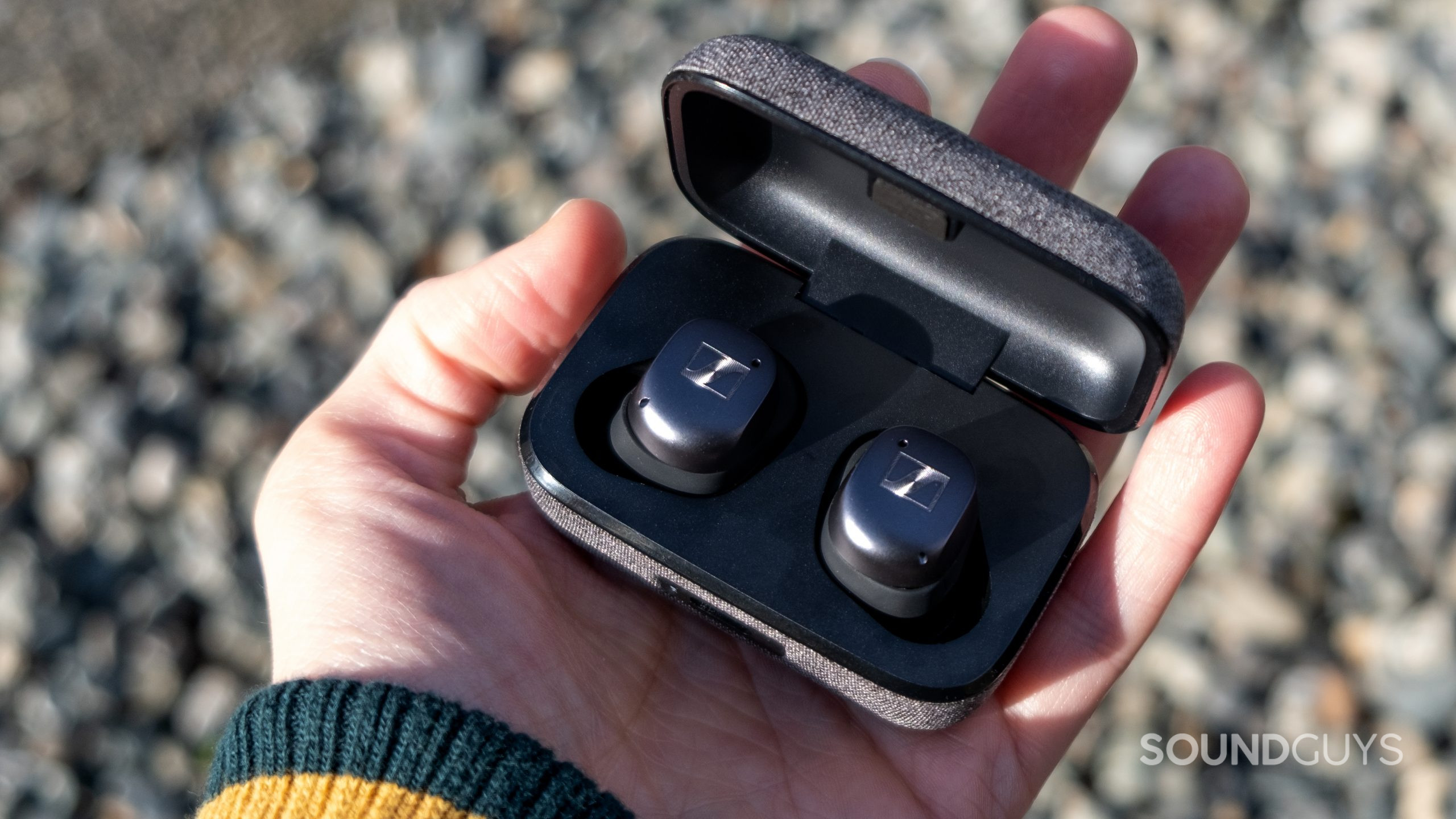
The strong case magnet hampers single-handed operation, but it also means it remains closed in your bag.
Sennheiser’s Momentum True Wireless 3 rest atop its most accomplished earbud line. While there has been no official announcement, I fully expect the Sennheiser Momentum True Wireless 4 to launch in 2024, though when exactly that will be is unknown. I’m hoping for Spring.
Sennheiser is home to an extensive catalog of true wireless earbuds. For example, the company released its athletic Sennheiser Sport True Wireless eight days after its most recent flagship earbuds. Serving as open-ear alternatives to the Momentum True Wireless 3, the Sport True Wireless prioritize environmental pass-through, a robust IP54 rating, and excellent battery life. Conversely, the Sennheiser CX Plus SE True Wireless are a bridgehead between the two. Priced at roughly $80 less than the MTW3, these earbuds pride themselves on being the best all-rounder in Sennheiser’s arsenal. With an IPX4 water-resistant rating, good noise canceling, and prominent bass response, that title seems fitting. Given that it has been over two years since each of these earbud cousins came to be, it seems like an appropriate time to get excited about the Sennheiser Momentum True Wireless 4.
- Sennheiser Momentum True Wireless — November, 2018
- Sennheiser Momentum True Wireless 2 — March 13, 2020
- Sennheiser Momentum True Wireless 3 — April 25, 2022
Running alongside its formidable headphones category, Sennheiser has consistently updated its earbud catalog over recent years. From the Sennheiser CX 400BT in 2020 to the Sport True Wireless in 2022 and everything in between, users are spoiled for choice. However, there have only been three iterations of the company’s Momentum True Wireless earbuds thus far. While it is not certain, we can surmise when the Momentum True Wireless 4 may arrive based on the company’s previous release schedule.
For example, the original Momentum True Wireless came to shelves in November 2018. Sennheiser followed up one year and four months later with the MTW2 on March 13, 2020. The company’s most recent MTW3 launched on April 25, 2022 – just over two years after their predecessor. If we stick to Sennheiser’s previous trend, we may see the Sennheiser Momentum True Wireless 4 come to shelves in the Spring of 2024. This seems especially likely given that both the MTW2 and MTW3 came to market during the springtime of 2020 and 2022, respectively.
Should you wait for the Sennheiser Momentum True Wireless 4?
The Sennheiser Momentum True Wireless 3 are an equally solid choice whether pairing with an iPhone or Android device. Sennheiser’s Smart Control app is available on the Apple Store and the Google Play Store, and the buds support AAC and aptX connectivity for Hi-Res audio streaming. Given the company’s next-gen earbuds are expected to retail for more than the current model, it is fair to consider whether forking out for the upgrade is worth it. Besides, many other earbuds offer high-end features at a similar price point.
Sennheiser Momentum True Wireless 3

Sennheiser Momentum True Wireless 3
Great sound quality • Feature-rich app with custom EQ • Broad codec support
These feature-rich earbuds exceed all expectations.
Sennheiser Momentum True Wireless 3 show you can have great sound, great active noise-canceling, and a sturdy build all at once in a pair of true wireless earbuds.
For example, the Sony WF-1000XM5 ($298 at Amazon) come equipped with up to 50dB of noise canceling, a five-band custom EQ, Sony’s 360 Reality Audio feature, Ambient Sound, Speak-to-Chat, customizable touch controls, excellent sound quality, and Sony’s proprietary DSEE Extreme upscaling feature. The earbuds also play host to angled nozzles and flexible ear tips for improved comfort. The matte-finish touch controls are pleasant and the case and buds weigh 27.6g less than the TMW3. Like the MTW3, the WF-1000XM5 boast an IPX4 rating to protect from sweaty workouts and host nearly 10 hours of battery for long outdoor stints. Users can stream high-res wireless audio over the AAC and LDAC Bluetooth codecs. Sony’s Headphones Connect app plays just as nicely as Sennheiser’s Smart Control app on iOS and Android.
If you don’t mind parting ways with some of Sennheiser’s handy features, such as Sound Zones, then the Sennheiser CX Plus True Wireless ($89 at Amazon) are worth consideration. They deliver excellent passive isolation and up to 45dB of noise canceling. You also get a bump in the bass and mid-range frequencies, which is good if you want to use these as workout buds. Speaking of working out, the CX Plus True Wireless flex an IPX4 rating and a host of ear tip sizes, including extra small. The earbuds run Bluetooth 5.2 and offer wireless connectivity over the SBC, AAC, and aptX Bluetooth codecs. Battery life runs parallel to the MTW3 at just under six hours, and the case replenishes 16 hours of playtime when the buds run flat. The only downside is that the CX Plus True Wireless do not support wireless or fast charging.
For something a little off the radar, the Sony LinkBuds S ($148 at Amazon) are another OS-agnostic underdog. Although they sport an understated aesthetic, the buds host a pleasing matte finish that stay in your ears without the need for stabilizers. The LinkBuds S support the AAC and LDAC Bluetooth codecs, which play high-res audio nicely with Apple and Android, respectively. If you desire spatial audio, then the Sony buds have you covered here. Battery life runs almost identical to the MTW3 at just under six hours, and low-end noise canceling attenuates up to 35dB around 200Hz. Passive isolation is solid, and the default frequency curve sounds remarkably similar to the Momentum True Wireless 3.
As always, iPhone users should consider the Apple AirPods Pro (2nd generation) ($199 at Amazon) for a truly seamless user experience. Users receive one of the best out-of-the-box frequency curves on the market. Apple’s proprietary H2 chip also delivers superior ANC capable of reducing up to 30dB over a wide frequency range. The AirPods Pro 2 deliver just under six hours of charge, with the case boosting listening time by another 24 hours. For wireless charging, users can opt for a Qi, MagSafe, or Apple Watch charging mat, or connect via USB-C for wired charging. Adaptive Transparency Mode also makes a great companion when out and about, and their IPX4 water-resistant rating keeps the buds safe from rainwater and sweat. If you own an iPhone and want spatial audio, pressure-sensitive stems, and auto-wear detection, then the Apple AirPods Pro (2nd generation) are an excellent choice.