




The United States government has taken minority equity stakes in three quantum computing companies, two of them founded by Canadians, under agreements worth $100 million US apiece that were finalized Tuesday, according to BetaKit.
The recipients are D-Wave, founded in 1999 as a spinout from the University of British Columbia; Rigetti Computing, based in Berkeley, Calif. and founded by Moose Jaw, Sask.-born former chief executive Chad Rigetti; and Colorado-based Quantinuum. Each signed a definitive agreement with the U.S. Department of Commerce for money under the CHIPS and Science Act, and each granted Washington a minority, non-controlling stake as a condition of the award, Quartz reported. The three deals total $300 million US. D-Wave had signed a letter of intent in May, BetaKit reported.
“The Administration has made clear that U.S. quantum leadership will require not only breakthrough research, but also the ability to scale, commercialize, and manufacture these technologies,” D-Wave chief executive Alan Baratz said in a statement.
Read from Ottawa, the significant number in Tuesday’s announcement is not the dollar figure. It is the instrument. Eleven days earlier, on Aug. 28, the federal government announced $195 million for Toronto-based Xanadu, described by the company as the largest quantum manufacturing investment in Canadian history, to build a 158,000-square-foot photonics facility in Toronto. Canada News Media reported on Aug. 31 that the Xanadu money is structured as a repayable contribution, a loan rather than a grant, and that it is not the first federal quantum package built that way. Washington bought a piece of three companies. Ottawa is lending to one.
The federal government is not unaware of that distinction. Its national artificial intelligence strategy, released in June and branded “AI for All,” proposed a $500-million Canadian Tech Growth Fund designed specifically to let Ottawa take equity positions in promising firms, a break from the grant-and-loan model it has relied on for years. The strategy argued Canada should follow France, Japan and the United States in holding stakes in its strongest technology companies. As announced, however, the fund is scoped to artificial intelligence. Quantum companies are not obviously inside it, and the government has not said whether they will be.
The scale gap is wider still. Canada’s most recent federal budget committed $334 million to the quantum industry, according to BetaKit, against roughly $53 billion US in federal incentives under the CHIPS Act. Applying the conversion BetaKit used for the D-Wave award, where $100 million US was given as $138 million, Tuesday’s three deals come to about $414 million, more than Canada’s entire budgeted quantum commitment, moved in a single day.
Retention is the live question underneath all of this. D-Wave itself is the cautionary case: a UBC spinout that moved its headquarters from Burnaby to Palo Alto in 2023, retaining a presence in both cities, according to BetaKit. Julien Camirand Lemyre, chief executive of Sherbrooke-based Nord Quantique, told The Globe and Mail last month that Canadian public support for the sector may not be enough to keep his company in the country, and that U.S. incentives are a “strong pull.”
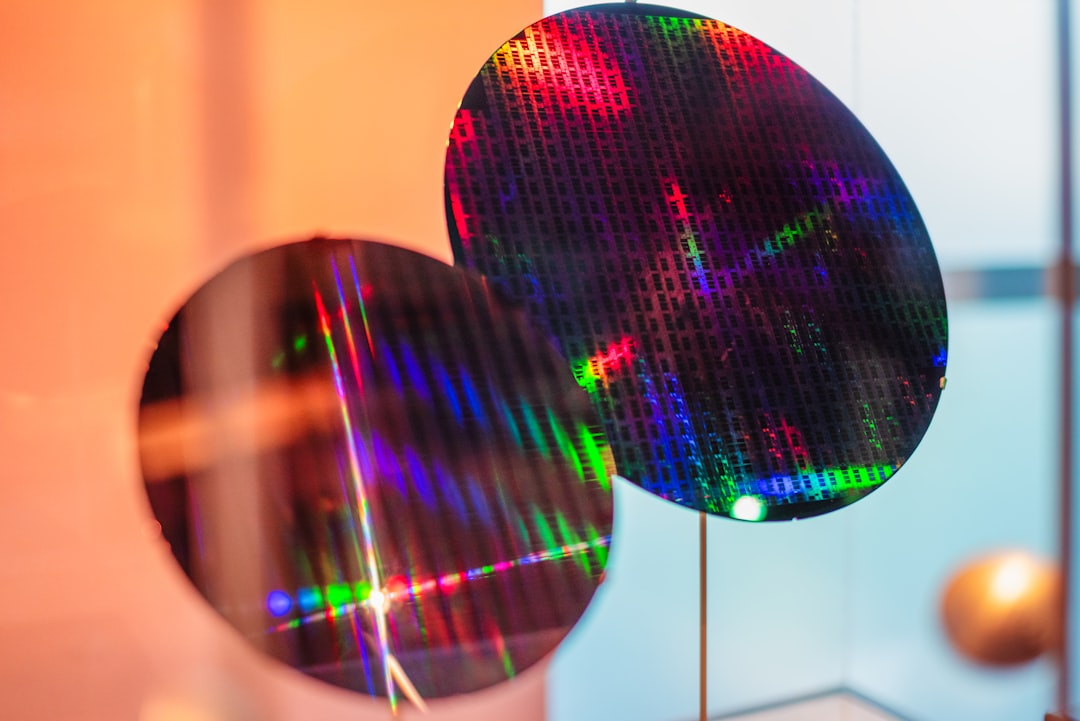
The awards are tied to specific work. D-Wave will put its money toward a 100,000-qubit annealing system and a 10,000-qubit gate-model machine, Quartz reported. Rigetti will pursue miniaturized readout electronics, a new cryostat architecture and fabrication capacity for high-connectivity chips. Quantinuum will work with GlobalFoundries on 300-millimetre wafer fabrication of ion traps. None of that manufacturing capacity is being built in Canada.
Follow Canada News Media
Get the day's top Canadian stories and our two daily 60-second news videos wherever you scroll.
X Threads Facebook Instagram LinkedIn TikTok YouTube Pinterest Reddit Substack Flipboard Newsletter RSS