



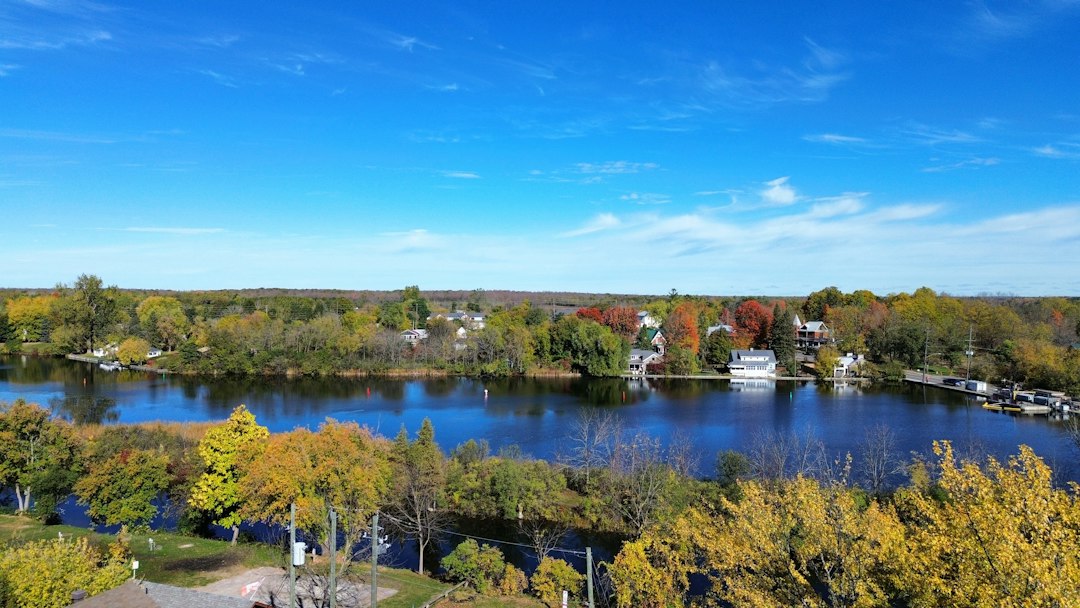
On Oct. 5, 1813, the Shawnee leader Tecumseh was killed in the Battle of the Thames, also known as the Battle of Moraviantown, fought near present-day Thamesville in what is now Chatham-Kent, Ont. The American victory broke the Indigenous alliance Tecumseh had built, according to the Ontario Heritage Trust.
The Ontario Heritage Trust’s provincial plaque at the site says Tecumseh had worked to unite First Nations peoples to resist American expansion and protect their territories from settler colonization. By the autumn of 1813, that effort was tied to the British war effort in Upper Canada during the War of 1812.
The collapse began on water. After the British lost control of Lake Erie in September 1813, Maj.-Gen. Henry Procter, the British commander in the west, withdrew up the Thames River valley, according to Wikipedia’s account of the battle. That account describes a retreat marked by poor leadership, with Procter often failing to share his plans with his subordinates. It says roughly half of Tecumseh’s warriors abandoned the cause because Procter was reluctant to make a stand.
American forces under Maj.-Gen. William Henry Harrison caught up with the retreating column. The Ontario Heritage Trust plaque says about 3,000 Americans, including their Indigenous allies, defeated about 950 British, Canadians and Indigenous fighters. Wikipedia puts the British and Indigenous side at roughly 450 British regulars and about 500 warriors, facing about 2,500 Americans, among them a force of Kentucky mounted riflemen led by Col. Richard Mentor Johnson.
Sources differ sharply on the numbers. The American Battlefield Trust gives much larger totals for both sides, 5,160 Americans against 3,760 British and 1,400 Indigenous warriors. Readers should treat all of these figures as estimates.
The accounts agree on the broad shape of the fight. According to the American Battlefield Trust, Harrison’s mounted riflemen charged at dawn and broke the British line. Procter left the field with a small group of soldiers, and Tecumseh’s warriors were left to fight on their own. The trust says the fight continued at close quarters in a swamp until Tecumseh was killed, after which his remaining fighters withdrew.
Casualty figures also vary. Wikipedia lists British losses of 12 to 18 killed, 22 to 36 wounded and 601 captured, with 16 to 33 Indigenous dead and American losses of 7 to 12 killed and 22 to 35 wounded. The American Battlefield Trust counts 84 American casualties and 665 on the British and Indigenous side, most of them prisoners.
Exactly who killed Tecumseh has never been settled. Wikipedia notes that Johnson is usually credited, though other candidates have been proposed, including William Whitley, who was killed in the fight. The same entry says the circumstances of Tecumseh’s death and the location of his burial remain historically uncertain. Johnson later served as U.S. vice-president from 1837 to 1841, and Wikipedia says he capitalized politically on the claim.
Harrison’s troops burned the nearby village of Moraviantown, then withdrew toward Detroit because the enlistments of his militia were about to expire, according to Wikipedia. Even so, the American victory restored U.S. control of Detroit and Michigan Territory and led to the occupation of Amherstburg and Sandwich for the rest of the war. The Ontario Heritage Trust says part of Upper Canada remained under temporary American occupation until 1815.
Procter faced a court martial in December 1814. He was found “erroneous in judgment and deficient in energy,” publicly reprimanded and suspended from rank and pay for six months, according to Wikipedia.
For Indigenous nations, the consequences lasted far longer than the war. The Ontario Heritage Trust says the battle merely delayed rather than prevented American westward expansion into Indigenous lands, which continued after 1815. Wikipedia says the death of Tecumseh was a crushing blow to the confederacy he created, which dissolved after the battle, although some nations kept fighting until the war ended.
If you find reporting like this useful, consider supporting Canada News Media, an independent Canadian newsroom with no corporate parent.
Sources: Ontario Heritage Trust plaque, Battle of Moraviantown (1813); Wikipedia, Battle of the Thames; American Battlefield Trust. Figures vary by source. The featured image is a file photo.
Follow Canada News Media
Get the day's top Canadian stories and our two daily 60-second news videos wherever you scroll.
X Threads Facebook Instagram LinkedIn TikTok YouTube Pinterest Reddit Substack Flipboard Newsletter RSS