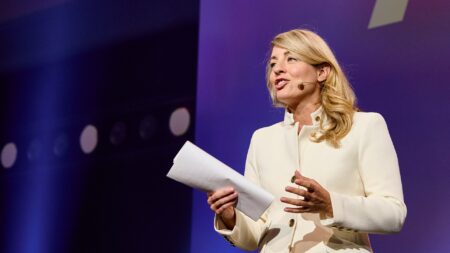






Prime Minister Mark Carney launched a new National Council on Artificial Intelligence on Oct. 2, naming 13 members to advise the government on its “AI for All” strategy, according to a news release from the Prime Minister’s Office.
The release says the council will provide independent expert guidance on accelerating AI adoption, fostering national champions, building sovereign AI infrastructure, strengthening AI safety, protecting democracy and ensuring Canadians broadly benefit from the technology. A small team within the Privy Council Office will support its work.
The members named are Ajay Agrawal, Yoshua Bengio, Sanja Fidler, John Graham, Gillian Hadfield, Jordan Jacobs, Eric Lamarre, Valérie Pisano, Senator Thomas Pitfield, Jody Thomas, Louis Vachon and Michelle Zatlyn. Patrick Pichette sits ex officio. The release as published does not name a chair or say how often the council will meet.
“Prosperity and sovereignty in the age of AI belong to nations that can build, adopt, and govern AI on their own terms,” Carney said in the release.
The council arrives four months after Ottawa unveiled the strategy it is meant to advise on. Carney launched AI for All on June 4, and the government projects the five-year plan could add $200 billion in economic growth and create 250,000 AI-related jobs, according to the government’s own figures.
The strategy’s most contested piece is a $500-million Canadian Tech Growth Fund that would give Ottawa the ability to take equity stakes in AI companies, BetaKit reported at the time. The fund is aimed at closing the scale-up funding gap and keeping Canadian firms from relocating abroad. BetaKit also reported that a $25-billion Canada Strong sovereign wealth fund may invest in such companies.
Industry reaction in June was split. Cohere co-founder Nick Frosst called the steps “broadly great,” according to BetaKit, while Build Canada chief executive Lucy Hargreaves argued the approach makes “the government the venture capitalist instead of unleashing private capital.” Laurent Carbonneau of the Council of Canadian Innovators warned of “strange and counterproductive incentives.”
That debate is why the council’s composition matters. A body with a mandate to foster “national champions” will be advising on how, and to whom, public capital flows. The release describes the council as independent, but it is an advisory body appointed by the prime minister and staffed from inside the Privy Council Office. Its recommendations will not bind the government.
For Canadian founders and investors, three questions are worth watching. Will the council publish its advice or keep it private? Will it weigh in on the equity-stake model that drew the sharpest criticism? And will its safety and democracy mandate produce anything concrete on regulation, an area where BetaKit noted the strategy offered few details at launch?
For businesses weighing AI adoption, the practical effect is likely to be indirect for now. The council does not run programs or distribute money. The $1-billion AI Compute Access Fund and other measures in the strategy are separate from it, according to the strategy details reported in June.
The Prime Minister’s Office did not say in the release when the council would first meet or report.
If you find reporting like this useful, consider supporting Canada News Media, an independent Canadian newsroom with no corporate parent.
Sources: Prime Minister’s Office news release (Oct. 2, 2026); BetaKit (June 4, 2026).
Follow Canada News Media
Get the day's top Canadian stories and our two daily 60-second news videos wherever you scroll.
X Threads Facebook Instagram LinkedIn TikTok YouTube Pinterest Reddit Substack Flipboard Newsletter RSS