




OTTAWA —
With the initial phase of reopening in some provinces underway, Prime Minister Justin Trudeau is urging Canadians not to go out “unless you absolutely have to.” This comes as Canada’s top public health official is emphasizing that even though some aspects of life are rolling again, the habits and practices Canadians have adapted to during the last few months cannot be rolled back.
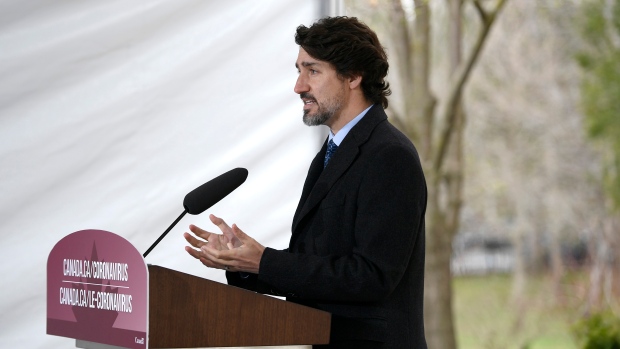
“I know the weather is getting nicer, but we still need to be extremely careful, and not just for our seniors, but for everyone around us. So don’t go out unless you absolutely have to. And if you do, keep two metres apart from each other,” Trudeau said Monday during his address to Canadians on the federal government’s latest COVID-19 efforts.
The prime minister continues to encourage Canadians to stay home and do their part to protect health-care and other front-line workers from further spread, while still reaching out and helping the vulnerable people in their lives, such as delivering groceries to an elderly neighbour
“With your actions, you are helping your community,” Trudeau said, adding that it is “extremely important” that physical distancing and other public health measures like frequent handwashing need to be kept up or the country could face a second wave of the virus that has shut down most of regular life in Canada for the last two months.
The prime minister said that the billions of dollars in federal aid already spent and earmarked to roll out in the coming days to help businesses and workers could still be extended or adjusted in the coming months if needed as more economic sectors get back up and running or have to stay closed, but “we’re not there yet.”
“We are on a positive trajectory, we are not out of the woods, however, and it requires us to continue to remain attentive and vigilant and following the instructions set out by our public health officials,” Trudeau said.
Staying home and isolating the moment you show any COVID-19 symptoms is among those public health instructions. Chief Public Health Officer Dr. Theresa Tam said Monday such directives have been integral in getting the spread under control by buying the country time to build health-care capacity.
“No matter where we live, living with COVID-19 is something we all need to reconcile with,” Tam said.
“And although we’ll be getting out of our homes, more and more, it will be vitally important that at the slightest sign of symptoms, we stay home to save lives. Working while sick can no longer be a thing,” she said, adding that it will be a difficult habit to sever, but one that governments and employers need to support.
SOME BUSINESSESS, PUBLIC SPACES OPEN
Among the provinces taking gradual reopening steps into what’s being considered the country’s “new normal” are Ontario, Quebec, Manitoba, and Saskatchewan. In all of these provinces certain businesses can reopen on Monday, though they are still required to use personal protective equipment and maintain physical distancing.
New Brunswick, Nova Scotia, Prince Edward Island and Alberta have taken initial steps towards loosening public health measures like physical distancing and allowing certain public outdoor spaces to reopen.
Last week, Trudeau and the premiers released “a set of common principles for restarting the Canadian economy” that said the timing and efforts from one province to another will look different because the caseload is different in each region.
Among what all provinces and territories have agreed need to be in place: a stabilized number of cases; a health system that can handle new cases and track potential outbreaks; sufficient protective gear for businesses to keep their staff and patrons safe; and an agreement on co-ordinated travel guidance.
During a press conference on Parliament Hill, outgoing Conservative Leader Andrew Scheer credited the “decisive action” from provinces in seeing their caseloads get under control and called on Trudeau to do more to ensure there are enough tests and personal protective supplies to help facilitate the reopening plans.
Scheer also questioned whether the current federal assistance is acting as a disincentive for Canadians to go back to work when the time comes.
“As provinces reopen, Canadians will have a difficult decision to make. On the one hand, they will have an option, perhaps, to return to work, while hoping that there isn’t a second wave, even though that will jeopardize their emergency response benefits or on the other hand, they could wait. Stay on the benefit and wait until the uncertainty passes. It’s not difficult to understand the choice that many will be forced to make,” Scheer said.
“At a time when our economy needs stimulus, Justin Trudeau has given it a tranquilizer and risked creating labour shortages across the country. This failure must be reversed before it is too late. Canada’s economic recovery depends on it,” he said.
As of 2 p.m. EDT there were 60,616 COVID-19 cases in Canada, and 3,842 people have died.
Last week’s national modelling projected that while public health measures have been effective and the curve is flattening, Canada was on track to see between 53,196 cases and 66,835 cases and between 3,277 and 3,883 deaths by May 5.

Follow Canada News Media
Get the day's top Canadian stories and our two daily 60-second news videos wherever you scroll.
X Threads Facebook Instagram LinkedIn TikTok YouTube Pinterest Reddit Substack Flipboard Newsletter RSS