


Opinion. The views expressed are the author’s own.
In March 2019, the Syrian Democratic Forces (SDF) raised their flag over the rubble of Baghouz, marking a symbolic victory that Western capitals hailed as the collapse of the Islamic State’s terror regime. Yet behind the glossy press releases, the truth about those who endured and those who lost their lives in the 2014-2019 conflict remained hidden.
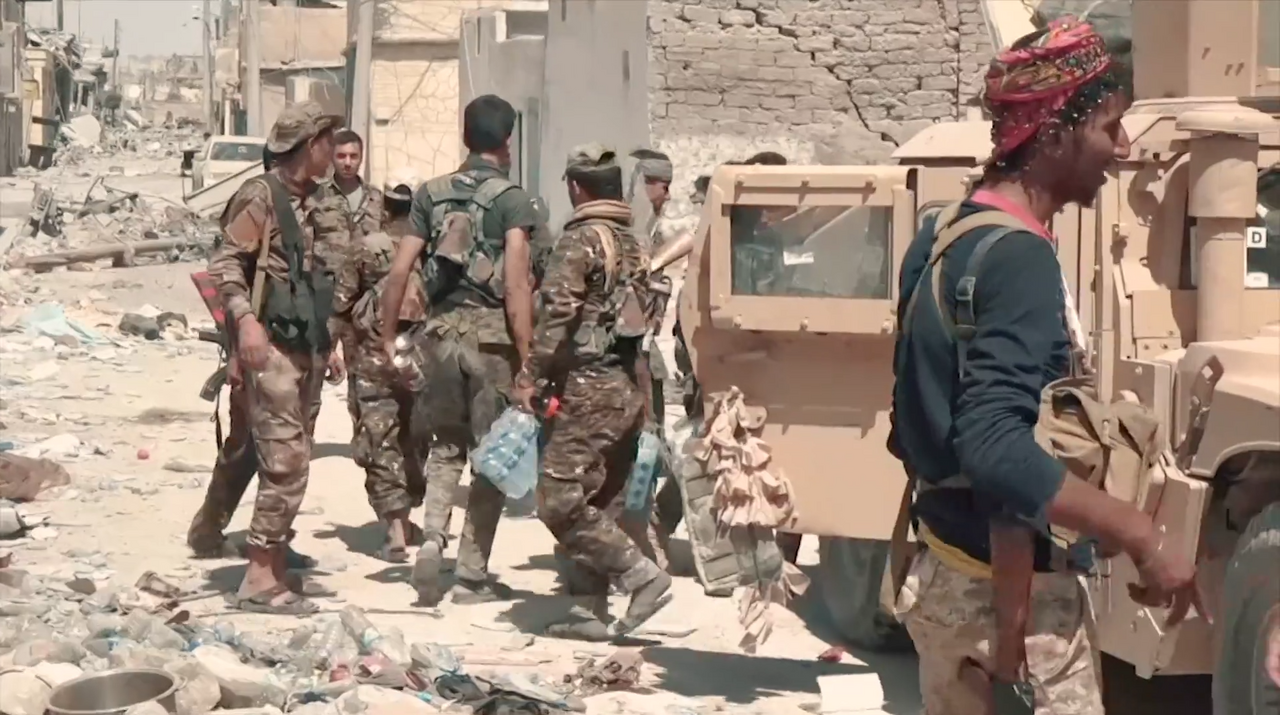
It wasn’t American or European boots on the ground sweeping through the desert dust. It was young Kurdish women and men, fighting alongside local Syriac Christians, Assyrians and Sunni Arab tribesmen, doing the brutal, door-to-door groundwork Western armies simply lacked the stomach to do themselves.
The price of that victory, which gave the West a semblance of security, was steep. By the SDF’s own count, more than 11,000 Kurdish and allied fighters lost their lives fighting ISIS, sacrificing themselves to protect the so-called “free world,” only to be abandoned in the desert. Western countries, including the United States and European nations, left the Kurds responsible for detaining tens of thousands of hardened jihadist prisoners because they lacked the political resolve to repatriate their own radicalized citizens. This arrangement exemplifies Western hypocrisy: let the Kurds bleed for Western security today, then turn a blind eye when regional enemies come for them tomorrow.
Fast-forward to August 2026, and that blood-bought self-governance in Rojava, the autonomous, democratic sanctuary carved out of war-torn northern Syria, has been systematically dismantled. The region was formerly governed by the Democratic Autonomous Administration of North and East Syria (DAANES), a decentralized, secular administrative framework that explicitly prioritized women’s leadership, multi-ethnic pluralism and local self-determination. It no longer exists. Trapped in a vice grip between relentless foreign air strikes, aggressive demands from Damascus and backroom arm-twisting by Western diplomats, DAANES was formally integrated into the Syrian state on Aug. 20. Days later, the SDF announced its own dissolution, its fighters folded into the Syrian army and its institutions absorbed by the central government.
This forced surrender exposes a callous, recurring pattern in Western foreign policy. Just as Washington recruited and then abandoned Hmong fighters in Laos during the Cold War, Western nations keep repeating the same “throw them to the wolves” approach in the Middle East. When Western nations need a dirty job done, they deem secular, heroic partners indispensable. But when the threat recedes, those same allies become an inconvenience, and Western diplomats quickly negotiate with whichever rebranded regime promises central control.
The Western-SDF alliance was always an asymmetric marriage of convenience. When ISIS swept across Iraq and Syria, capturing Mosul, threatening Western interests and destabilizing NATO’s doorstep, Washington urgently needed a reliable local force with real grit on the ground. The Kurds answered the call. They fought block by bloody block through Kobani, Raqqa and Deir ez-Zor, all while building a pioneering governance model grounded in direct democracy, gender equality and secular pluralism.
Yet as the immediate threat from ISIS receded, Western priorities shifted back to calculated self-interest.
The abandonment was gradual, not sudden. In 2018, Turkey, a NATO ally, invaded Afrin, a Kurdish-controlled region, forcing hundreds of thousands of civilians to flee and making way for extremist proxies. In October 2019, President Donald Trump abruptly ordered U.S. troops to withdraw after a phone call with Turkish President Recep Tayyip Erdoğan. Trump said the withdrawal would end an “endless war” and save money, but in doing so he effectively gave Turkey a green light to attack the local ground partners of the United States and the Western coalition.
By 2026, Western envoys were standing by as Rojava’s autonomous institutions were dismantled to appease central state authorities and regional powers. The core message: Kurdish blood was essential to crushing terrorists, but Kurdish self-governance was a diplomatic inconvenience.
Perhaps the most troubling part of this geopolitical realignment is how quickly Western capitals embraced rebranded warlords, to the detriment of their secular allies.
At the centre of this whitewashing campaign are figures such as Ahmad al-Sharaa. Under his former nom de guerre, Abu Mohammad al-Julani, al-Sharaa led Jabhat al-Nusra, al-Qaeda’s official Syrian franchise, and later commanded Hayat Tahrir al-Sham (HTS), an armed group forged in the same ideological furnace as ISIS.
That Western power brokers now court former extremist commanders simply because they traded battle fatigues for tailored suits reveals a glaring double standard: radicalism isn’t the deal-breaker in Western foreign policy; disobedience is.
Washington’s quick willingness to lift terror designations and warmly welcome former warlords highlights a recurring hypocrisy. Changing appearance, trimming beards, wearing Western suits and using diplomatic language doesn’t erase a person’s core ideology. Yet Western diplomats eagerly accept these surface-level makeovers in the name of centralized order, while demanding total capitulation from the Kurdish forces who spent a decade taking bullets to stop those same extremists.
Western rationalizers point to symbolic gestures from Damascus, such as formal acknowledgment of Kurdish language rights, restored citizenship and official decrees marking Newroz. But these paper concessions are an insultingly cheap trade. Ink on parchment in Damascus doesn’t compensate for the deliberate destruction of living, self-governing institutions, nor does it shield a population when political winds shift, as they inevitably will.
In a centralized security state, language rights and cultural crumbs granted by decree don’t ensure physical security. Without independent military capabilities or enforceable federal structures, regional minorities, including Kurds, Christians, Druze and Alawites, are left defenceless against state reprisal and violence from local militias. Liquidating the SDF didn’t bring stability; it destroyed the only credible check on centralized dictatorship in northern Syria.
What happened to Rojava in August 2026 transcends regional borders; it’s a warning to any future ally naive enough to trust Western promises. By abandoning the very people who crushed ISIS to satisfy the immediate whims of Middle Eastern authoritarian warlords, Western leaders are sending a message to freedom fighters everywhere that shouldn’t be ignored: dying for Western security earns warm gratitude while the bullets are flying, but those fighters are disposable once the smoke clears.
Rojava’s destruction underscores the need to challenge the superficial morality of Western diplomacy. Sustainable regional stability cannot come at the cost of sacrificing pluralistic democracies to appease autocrats. By trading away the DAANES secular experiment for short-term political gains, Western leaders didn’t secure peace; they merely demonstrated the lethal price local allies pay when Western commitments are treated as disposable currency.
Nick Kossovan, a self-described connoisseur of human psychology, writes about what’s on his mind from Toronto. You can follow Nick on X and Instagram @NKossovan.