




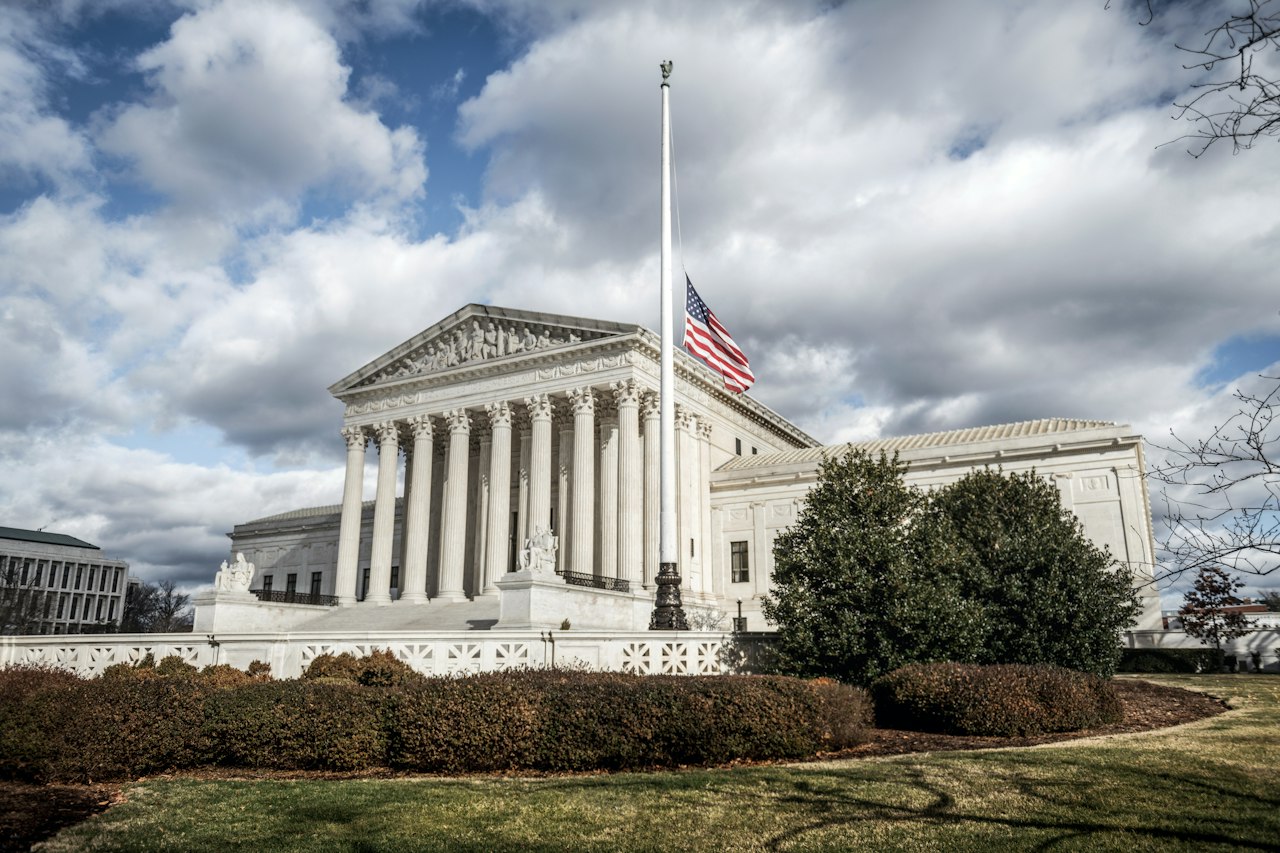
The U.S. Supreme Court opened its 2026-27 term on Oct. 5, 2026, by hearing a climate case against Suncor Energy and Exxon Mobil that will help decide whether state courts can hear lawsuits over the marketing of fossil fuels.
The companies say nearly 60 state and local governments have filed similar suits, each seeking billions of dollars, Jurist reported. Justice Samuel Alito is not taking part, CBS News reported, which leaves eight justices to decide the case. The court gave no reason for his absence.
The case, Suncor Energy (U.S.A.) Inc. v. Commissioners of Boulder County, asks whether the federal Clean Air Act overrides the Colorado Consumer Protection Act, and whether the Supreme Court has jurisdiction to review the Colorado court’s decision. The Colorado Supreme Court ruled in May 2025 that federal law did not block the suit, and the companies appealed.
Boulder County sued in 2018, alleging unjust enrichment and public and private nuisance. It seeks money for the cost of reducing dangers from flooding, wildfires and ground-level ozone, according to Jurist. It does not ask the courts to stop sales or order emissions controls.
The energy companies warn the suits could impose a carbon tax on producers and “bankrupt” the industry, CBS News reported. In a brief quoted by Jurist, they said that without the court’s intervention, “the Nation will be left with different environmental standards for every state.” Boulder County said the case “merely asks that petitioners bear their fair share of local costs,” CBS reported.
The Trump administration filed a brief supporting the companies. It argued that “Boulder’s attempt to regulate global emissions interferes with the Federal Government’s exclusive role in foreign affairs,” Jurist reported. More than 50 friend-of-the-court briefs were filed by petroleum industry and environmental groups, U.S. senators and the Coalition of Large Tribes.
The Canadian connection is direct. Suncor Energy Inc. is headquartered in Calgary, and the case names its U.S. arm. A ruling for Boulder County could open the door to similar state-court suits against Canadian-headquartered producers with U.S. operations. A ruling for the companies would close that route. Because only eight justices are sitting, a 4-4 split would leave the Colorado decision in place without setting a national rule.
The climate case is the first of several politically charged disputes on the docket. The court will hear a Catholic preschool’s religious-liberty claim against Colorado on Nov. 3, challenges to AR-15-style rifle bans in Connecticut and Cook County, Ill., on Dec. 2, and Arizona’s proof-of-citizenship voter registration rule on Dec. 8, according to CBS News.
Immigration is also central. On Sept. 29, the court let the administration resume rapid deportations to countries that are not named in a removal order while it considers the case, SCOTUSblog reported. Justices Sonia Sotomayor, Elena Kagan and Ketanji Brown Jackson indicated they would have denied the request. Arguments on the legality of those removals are set for Dec. 9.
On Oct. 1, the court agreed to hear the administration’s policy of holding some migrants who entered illegally, and have lived in the U.S., without a bond hearing. Axios reported that nine of the 11 federal appeals courts to rule on the question have rejected the administration’s reading. Arguments are expected early next year.
The term opens amid public friction between the president and the court. Axios reported that after the justices blocked a pre-midterm effort to rewrite mail-in voting rules, Trump wrote on Truth Social: “These are not the people I interviewed to serve.” Last term the court rejected his attempt to undermine birthright citizenship, and also handed the administration wins on temporary protected status, stricter asylum rules and a revamped tool for checking voters’ citizenship, Axios reported.
Decisions in the cases argued this fall are expected by the end of the term in summer 2027. The court has not said when it will rule in the Boulder case.
If you find reporting like this useful, consider supporting Canada News Media, an independent Canadian newsroom with no corporate parent.
Via CBS News, Axios, SCOTUSblog and Jurist.
