

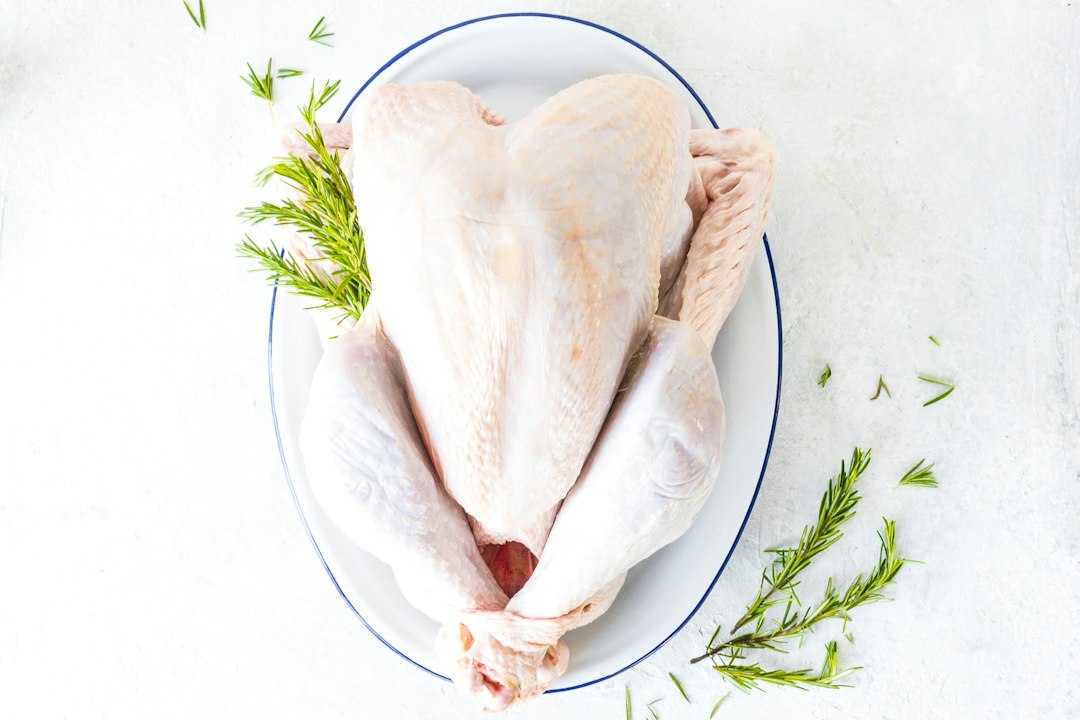
The safest way to thaw a frozen turkey is in the fridge, allowing 10 hours per kilogram, or in a sink of cold water, allowing two hours per kilogram. With Canadian Thanksgiving on Monday, Oct. 12, a typical five-kilogram bird needs about two days in the fridge, so the time to start is now.
Turkey producers and food safety guidance in Canada agree on the main rule: never thaw a turkey on the counter at room temperature. The outer layers can sit in a temperature range where bacteria multiply while the centre is still frozen. The two methods below avoid that problem.
Before starting, check the label. Some turkeys are sold to be cooked from frozen, and those products come with their own instructions that override anything here.
Step 1: Work out your thawing time
Weigh the bird, using the weight on the package. In the fridge, allow 10 hours per kilogram. In cold water, allow two hours per kilogram. A five-kilogram turkey needs about 50 hours in the fridge or about 10 hours in cold water. A seven-kilogram turkey needs about 70 hours in the fridge, or just under three days.
Once thawed, the turkey can stay in the fridge and must be cooked within 48 hours. Count back from the time you plan to put it in the oven, and add a little extra for a large bird.
Step 2: Thaw in the fridge (the preferred method)
Set the fridge to 4 C. Leave the turkey in its original wrapping and place it on a tray on a bottom shelf. The tray catches any liquid and keeps it from dripping onto other food. Leave it undisturbed until the time you calculated has passed.
This method takes the longest, but it is the most forgiving. A turkey that finishes thawing early can simply stay in the fridge for up to 48 hours.
Step 3: Or thaw in cold water if you are short on time
Keep the turkey in its original wrapping and submerge it completely in cold water in a large container or a clean sink. Change the water at least every hour, and allow two hours per kilogram. A five-kilogram bird will be ready in roughly 10 hours.
The wrapping should be intact so the bird does not absorb water. Clean and sanitize the sink and any surfaces the packaging touched when you are finished. Cook the turkey right after it thaws this way, rather than returning it to the fridge for a day or more.
Step 4: Thawing turkey cuts
If you are cooking a breast or other pieces, the same times apply: 10 hours per kilogram in the fridge, or two hours per kilogram in cold water with the cut still in its tray pack and the water changed hourly. Cuts can also be thawed in a microwave with care, but they must be cooked immediately afterward.
Step 5: Cook to a safe internal temperature
Thawing is only half of turkey safety. Health Canada says whole poultry should reach an internal temperature of 82 C (180 F). Stuffing, whether cooked alone or inside the bird, should reach 74 C (165 F).
Insert a food thermometer through the thickest part of the meat, all the way to the middle, without touching bone. Check more than one spot if you can, and do not rely on the colour of the meat or juices.
If the turkey is still frozen on the big day
A bird that is still icy a day or two out is a common problem. Switch to the cold-water method, which can finish the job in hours rather than days, and keep the water changing every hour. Do not leave the turkey on the counter to speed things up, and do not guess at doneness once it is in the oven.
Plan the rest of the meal around the same food safety timeline. Refrigerate leftovers promptly after the meal rather than leaving them out for the evening.
If you find reporting like this useful, consider supporting Canada News Media, an independent Canadian newsroom with no corporate parent.
Sources: thawing times and safety rules from Turkey Farmers of Canada; internal cooking temperatures from Health Canada.