


Ontario’s deficit for 2026-27 is now projected at $16.9 billion, up from the $13.8 billion forecast in the March budget, as U.S. tariffs and higher gas prices weigh on the provincial economy, the Ford government said Thursday.
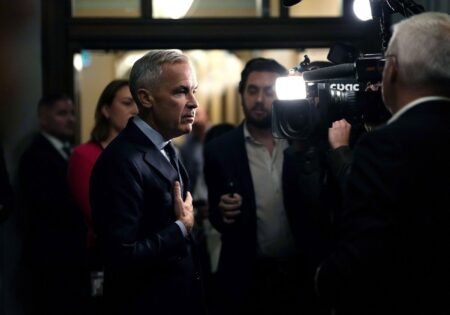
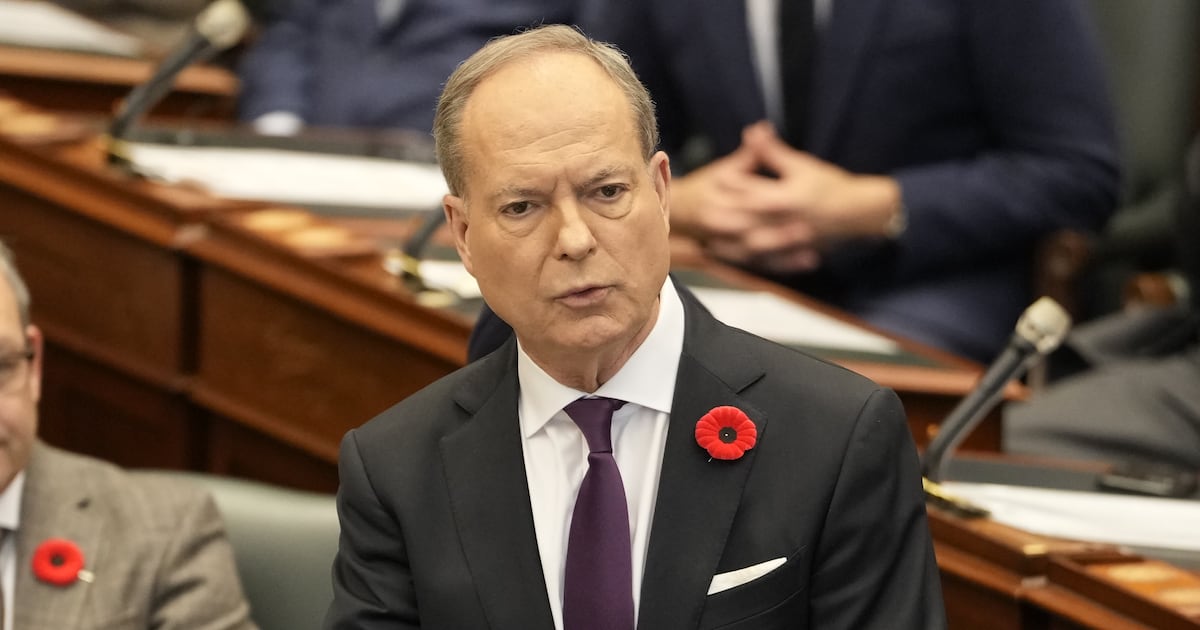
Finance Minister Peter Bethlenfalvy delivered the fall economic statement at Queen’s Park on Oct. 29, as reported by The Canadian Press on CP24 and CTV News. He said the impact of U.S. tariffs on steel, auto and manufacturing, along with global unrest that has pushed up gas prices, has created “a sea of uncertainty” for families and businesses.
Smaller deficits of $12.7 billion and $6.7 billion are projected for the following two fiscal years, with a $200-million surplus in 2029-30. The spring budget had projected a return to balance in 2028-29 with a $600-million surplus.
Part of the larger shortfall comes from bigger reserves. The province raised its fiscal reserve fund from $1.5 billion to $2.2 billion and added $3.8 billion to its contingency fund, bringing that fund to $4.9 billion. Bethlenfalvy called the move “prudent.” Ontario is also borrowing $3.9 billion more, which brings long-term borrowing for the year to $51.1 billion.
Overall revenue is actually higher than expected, at about $2 billion above the $232.6 billion forecast in the spring. The government said that reflects higher federal transfers, $878 million more in sales tax and about $1.5 billion more in corporate tax revenue. Personal income tax revenue is $1.7 billion lower than forecast, which officials attributed mainly to weaker-than-expected capital gains revenue from the Canada Revenue Agency for 2025. Land transfer tax revenue is now projected at $3.28 billion, $497 million less than the budget forecast, which the government blamed on a sluggish housing market.
The statement also laid out how the trade dispute is affecting Ontario. Steel exports to the United States totalled $4.1 billion in the first eight months of 2026, compared with $8.4 billion in the same period of 2024, a drop of more than 50 per cent. Auto exports to the U.S. fell 13.7 per cent over the same period, from $39.9 billion to $34.5 billion.
The government now expects Ontario’s real GDP to grow 0.5 per cent in 2026 and 1.5 per cent in 2027. Bethlenfalvy said the March budget assumed growth of one per cent and did not account for the new Section 338 tariffs, bans on certain products or the war in Iran. Unemployment is 7.2 per cent for 2026 and is forecast to fall to 6.1 per cent by 2029. A slower-growth scenario in the document contemplates more large deficits if the trade war drags on, while a faster-growth scenario would see balance return as early as 2028-29.
Most of the measures in the update were previously announced, including a joint $8.7-billion Canada-Ontario action plan for the steel, auto and critical minerals sectors, and an $8-billion provincial tax relief plan that lets businesses write off a wide range of assets. The tariff fight itself is still moving: Ottawa and Washington have been working on a deal to ease steel and auto tariffs, and the White House has said Canada tariff changes take effect Oct. 30.
Opposition parties criticized the update. Ontario NDP finance critic Jessica Bell said it contains no significant measures on food or rent costs, saying: “Never have I seen a fall economic statement this mediocre.” Green Party Leader Mike Schreiner said people cannot afford to live in the province and suggested a wealth tax. Interim Liberal Leader John Fraser said the premier “can’t keep blaming Trump” and should look at his own choices.
Bethlenfalvy defended the update, pointing to existing affordability measures including a temporary HST break on new homes and purpose-built rentals. He said the government does not know exactly how the tariff effects will land over the next five months. Rising borrowing costs are a theme across the country since the Bank of Canada raised its key rate to 2.5 per cent on Oct. 28.
If you find reporting like this useful, consider supporting Canada News Media, an independent Canadian newsroom with no corporate parent.
Follow Canada News Media
Get the day's top Canadian stories and our two daily 60-second news videos wherever you scroll.
X Threads Facebook Instagram LinkedIn TikTok YouTube Pinterest Reddit Substack Flipboard Newsletter RSS