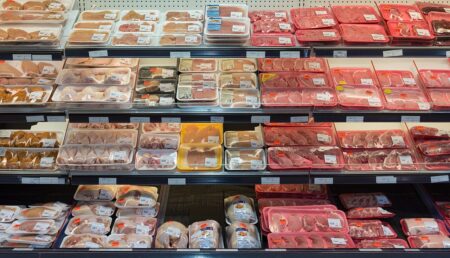




Finance Minister François-Philippe Champagne on Monday put before the House of Commons draft legislation for a one-time grocery benefit top-up worth up to $339 for a single person and $679 for a couple with two children, to be paid in early 2027, along with a two-year extension of the ban on foreign buyers of existing homes.
Champagne tabled the document, titled “Draft Legislative Proposals relating to An Act respecting certain measures related to affordability and housing,” on Nov. 16, according to the House of Commons Journals for that sitting. Finance Canada said in a release issued Monday evening that the two measures are being moved forward as “urgent legislative proposals” from the Nov. 5 budget. Neither is law yet. A bill still has to be introduced, pass the House and the Senate and receive royal assent.
The grocery payment is called the 2027 Canada Groceries and Essentials Benefit Supplement. The Canada Groceries and Essentials Benefit is the quarterly payment that replaced the GST/HST credit this year. The supplement would add 50 per cent to what each household gets from that benefit for the 2026-27 benefit year, paid in one lump sum in early 2027, according to Chapter 3 of Budget 2026. Neither the release nor the budget gives an exact payment date.
Ottawa says the supplement would reach more than 12 million individuals and families with low and modest incomes, cost $4.1 billion and lift an additional 120,000 people out of poverty in 2027. By our math, $4.1 billion spread across 12 million recipients works out to roughly $340 each on average.
No application is expected. The supplement is built on the existing benefit, which the Canada Revenue Agency pays automatically to people who filed a tax return and qualify, based on family net income, marital status and the number of children under 19. Anyone who has not filed a 2025 return is not receiving the current benefit and would have nothing to top up.
The size of the payment can be worked out from the agency’s own figures. For the July 2026 to June 2027 benefit year, the CRA lists maximums of $679 for a single person, $890 for a married or common-law couple and $234 for each eligible child. Half of those amounts gives the government’s own examples: $339 for a single person and $679 for a couple with two children ($890 plus two times $234, divided by two). By the same math, a couple with no children receiving the maximum would get about $445, and a couple with one child about $562. Households whose income is high enough to reduce their regular benefit would see a proportionally smaller supplement.
Counting the earlier one-time top-up paid in June 2026 and the 25 per cent increase in the benefit that took effect in July, Finance Canada says total support for the 2026-27 year would reach about $1,290 for a single person without children and about $2,570 for a couple with two children.
The second measure deals with the Prohibition on the Purchase of Residential Property by Non-Canadians Act, which has generally barred non-Canadians from buying homes in Canada since Jan. 1, 2023, and is now set to expire on Jan. 1, 2027. The proposal would extend the ban on purchases of existing homes by two years, to Jan. 1, 2029. Finance Canada said the government will also “launch a regulatory process in short order” to exempt newly built homes, so foreign buyers could purchase new units.
That leaves Parliament 46 days, by our count, to pass the extension before the current ban lapses on New Year’s Day. Neither the release nor the budget says what “new residential property” will mean, including whether presale condominium contracts would count, or when the exemption would take effect. Those details are expected in the regulations.
The government’s case is that the change keeps “the vast majority of the market available for Canadians” while drawing foreign money into construction. The release points to Australia, which generally bars foreign purchases of existing homes but allows foreign investment in newly built homes, subject to approval. Provincial measures are untouched, and the release says Ottawa will keep supporting housing measures by other levels of government aimed at speculation.
The release headline refers to encouraging new home construction. The measure tabled Monday that does that is the new-build exemption. It does not contain a new tax rebate on new homes. In the release, Ottawa also pointed to separate budget commitments of nearly $45 billion to build homes and to work with provinces on cutting housing taxes, fees and development charges, which it says can reduce the cost of a new home by up to $200,000 in Ontario.
“We’re taking action to put more money back in Canadians’ pockets, protect opportunities for Canadians to own a home, and encourage new investment to build more homes,” Champagne said in the release. Housing and Infrastructure Minister Gregor Robertson said the government is “helping lift hundreds of thousands of people out of poverty.”
We found no published reaction to Monday’s tabling by late Monday evening. Earlier responses to the same budget measures were mixed. During question period on Nov. 6, NDP MP Jenny Kwan said the “temporary groceries benefit will quickly be swallowed up by rising food prices,” and asked the government to redirect money from its business tax deduction to public grocery stores, according to Hansard. The Toronto Regional Real Estate Board said in a Nov. 6 statement that it supports exempting newly built homes while extending the ban on existing homes until Jan. 1, 2029.
The Canadian Press reported after the budget that middle-income households above the income thresholds would find little new immediate help, and quoted Alexandre Laurin of the C.D. Howe Institute saying targeted low-income benefits are a more affordable way to help those most in need.
Both measures were first announced in the budget Champagne tabled on Nov. 5, which projects a $62.3-billion deficit for 2026-27. Our plain-language guide to Budget 2026 explains what else it means for household budgets. We looked at how the new-build exemption could bring foreign buyers back to unsold condos, and in September asked what would replace the ban before it expired. For how the regular quarterly payments work, see our report on the October Canada Groceries and Essentials Benefit payment.
If you find reporting like this useful, consider supporting Canada News Media, an independently owned Canadian newsroom.
Follow Canada News Media
Get the day's top Canadian stories and our two daily 60-second news videos wherever you scroll.
X Threads Facebook Instagram LinkedIn TikTok YouTube Pinterest Reddit Substack Flipboard Newsletter RSS