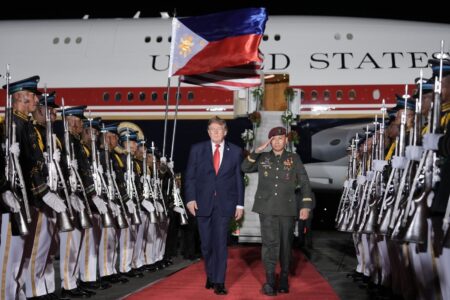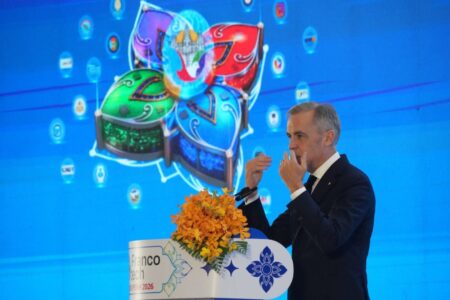



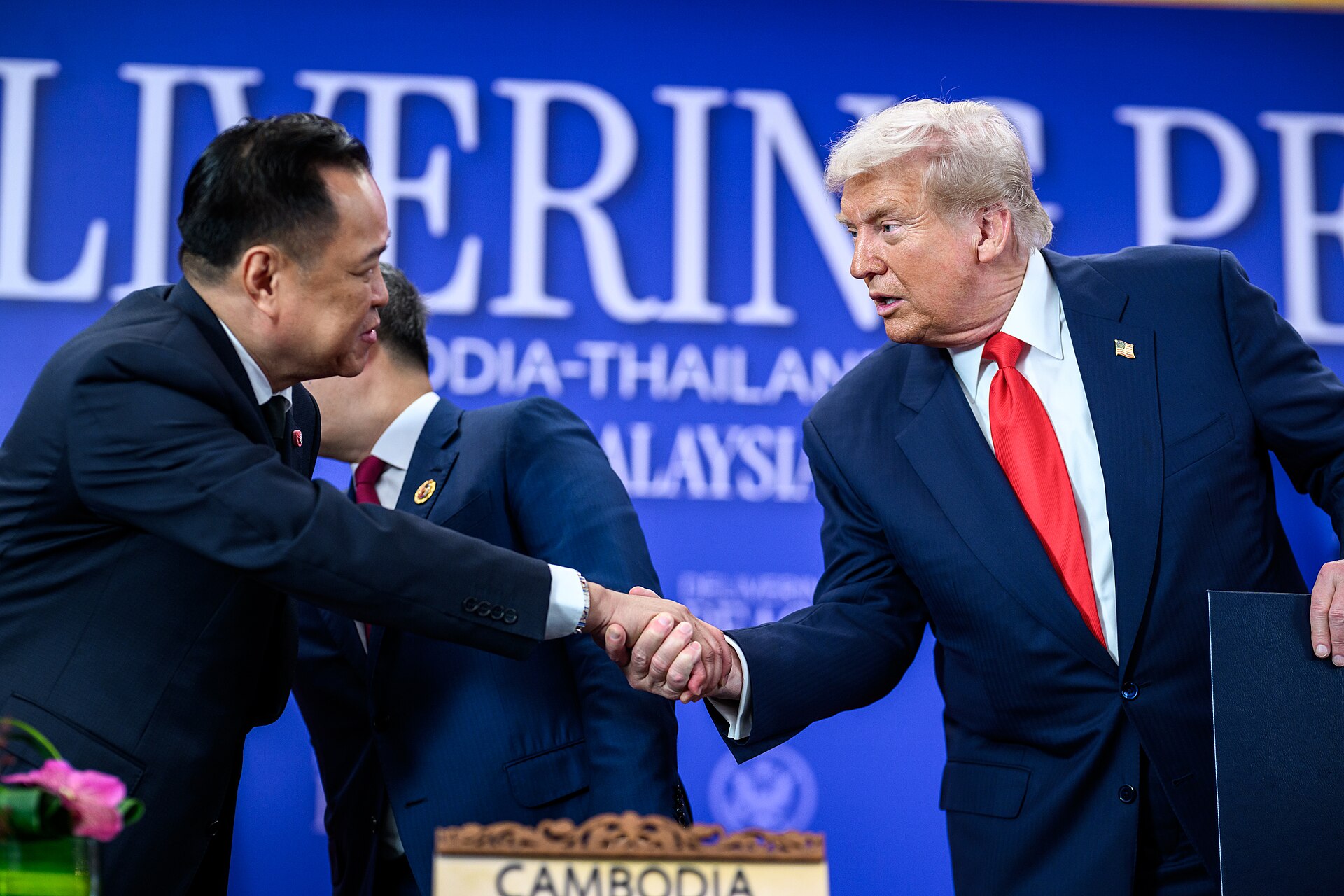
MANILA — U.S. President Donald Trump and Thai Prime Minister Anutin Charnvirakul signed a joint statement in Manila on Tuesday confirming that the two countries have reached a “substantial conclusion” in negotiations on a U.S.-Thailand trade deal, the White House said.
The statement, dated Nov. 17, 2026, does not give a tariff rate or list any terms of the Agreement on Reciprocal Trade. It says each government will now begin its own internal processes to prepare the deal for signature and entry into force, according to the text posted by the White House.
The details came from Trump’s remarks at the signing ceremony, as reported by The Associated Press. Trump said Thailand has agreed to eliminate all tariffs on U.S. exports and to remove “substantial” non-tariff barriers on American automobiles, medical devices, pharmaceuticals, ethanol and poultry. He said Thailand will also buy an estimated US$2.6 billion in additional U.S. agricultural products.
Anutin said there is still “a little more to do” before the agreement is finalized and that it should be “ready for us to sign real soon,” The Associated Press reported.
The statement builds on the 1966 Treaty of Amity and Economic Relations and a 2002 trade and investment framework between the two countries, the White House said. Thailand’s cabinet cleared the draft statement on Nov. 10, and the Nation Thailand news site reported at the time that it would not disclose the agreed elements or set final terms.
The tariff rate remains unconfirmed. Anutin said on Nov. 5 that Thailand expects a U.S. rate of about 19 per cent, the Nation Thailand reported. Thailand once faced the prospect of a 36 per cent U.S. reciprocal tariff, and a framework its cabinet endorsed on Aug. 1, 2025 provided for 19 per cent. Existing tariff arrangements stay in place until the agreement is formally signed, Anutin said.
Trump arrived in the Philippines on Tuesday for the first stop of a three-day Asia trip. He is due in Shenzhen, China, on Thursday for three-way talks with Chinese President Xi Jinping and Russian President Vladimir Putin. It is his first foreign trip since his party lost both chambers of Congress in the November midterm elections, as we reported.
For Canada, the Manila statement shows the kind of framework Washington is willing to announce before final text exists. Canada’s own talks with the United States are unresolved. Prime Minister Mark Carney said last week that a deal is possible but “not yet there,” and on Monday he said Canada could turn to Chinese automakers if the talks fail, as we reported.
The Canadian Press reported that Trump used Section 338 of the Tariff Act of 1930 to impose 50 per cent levies on an array of Canadian goods after talks between Ottawa and Washington broke down in August. Separately, Canada concluded negotiations on its first trade deal with the Association of Southeast Asian Nations, a bloc that includes Thailand, as we reported.
The next step is for the two governments to finish their internal reviews and sign the full agreement. No signing date has been announced.
Via The Associated Press, the White House and Nation Thailand.
If you find reporting like this useful, consider supporting Canada News Media, an independently owned Canadian newsroom.
Follow Canada News Media
Get the day's top Canadian stories and our two daily 60-second news videos wherever you scroll.
X Threads Facebook Instagram LinkedIn TikTok YouTube Pinterest Reddit Substack Flipboard Newsletter RSS