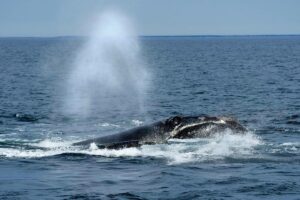

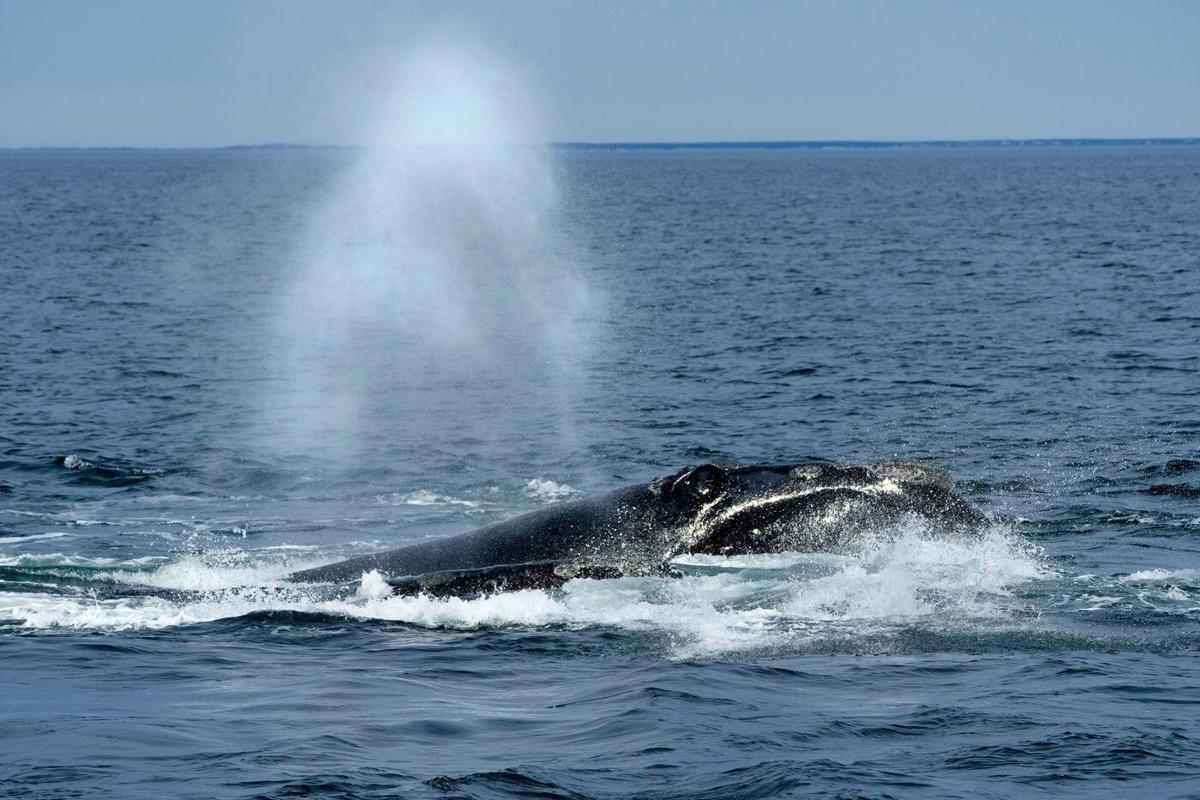
The North Atlantic right whale population fell two per cent to 382 animals in 2025, a preliminary estimate released Monday says, even though the most recent calving season was one of the strongest on record.
The North Atlantic Right Whale Consortium released the figure as scientists gathered in Halifax for the group’s annual meeting. Twenty-four calves were born during the 2025-2026 season, the most since 2009. A portion of the population feeds in the Gulf of St. Lawrence each summer, which makes the species’ survival a Canadian regulatory question as well as an American one.
Lindsey Jones, a scientist who manages the New England Aquarium’s North Atlantic right whale catalogue, said the rise in births may be short-lived. “We just need to help ensure that those calves can survive to maturity and contribute to further population growth,” she said.
Heather Pettis, a scientist and chair of the consortium, said the estimate shows the population is not yet on a path to recovery. “Recovery for this species depends on sustained, protective actions in both the U.S. and Canada,” she said in a statement.
Jones said vessel strikes and entanglement in fishing gear remain the most lethal threats. She called for U.S. ship speed limits to apply to vessels shorter than 65 feet and for more testing of ropeless fishing gear, which is designed to prevent entanglements.
Earlier this year, the consortium documented two deaths. A four-year-old male was found dead off North Carolina in January after becoming entangled in snow crab gear from Canada. A three-year-old female was found dead off Virginia in February, but the cause of death could not be determined. Scientists also recorded eight human-caused injuries this year, one blamed on a vessel strike and seven on fishing gear.
In Canada, Transport Canada imposes summer speed restrictions and a vessel exclusion zone in the Shediac Valley of the Gulf of St. Lawrence, and Fisheries and Oceans Canada enforces seasonal fishing closures and other measures to reduce entanglement risk. Canada News Media reported on Oct. 31 that an entangled right whale was spotted in the Gulf of St. Lawrence.
In the United States, the Trump administration has paused any additional protections until 2028. The U.S. House of Representatives has passed a bill that would extend the pause to 2035, and it is now before the Senate. Jones said that would be “a pretty big hit” to recovery if it becomes law.
The population is believed to have peaked at about 21,000 before commercial whaling cut it to fewer than 100 by the 1920s. After a hunting ban in 1935, it grew to 483 by 2010, then declined steeply from 2017 after 12 whales died in Canadian waters and five in U.S. waters, most from entanglements and vessel strikes. Numbers have risen slowly since 2020.
Jones said right whales should give birth every three or four years but some now go five to seven years or longer between calves. “That’s a concern … in such a small population,” she said.
The estimate was first reported by The Canadian Press and The Associated Press.
If you find reporting like this useful, consider supporting Canada News Media, an independently owned Canadian newsroom.
Follow Canada News Media
Get the day's top Canadian stories and our two daily 60-second news videos wherever you scroll.
X Threads Facebook Instagram LinkedIn TikTok YouTube Pinterest Reddit Substack Flipboard Newsletter RSS