

The Toronto area has fewer two-bedroom rental apartments than it did a year ago, while the count of one-bedrooms and studios kept growing, according to the Canada Mortgage and Housing Corporation’s 2025 Rental Market Survey tables. In the Toronto census metropolitan area, CMHC counted 140,124 two-bedroom private apartments in October 2025, down 3,817 (2.7 per cent) from 143,941 in October 2024. Over the same year the count of one-bedrooms rose by 3,775, studios by 707 and three-bedroom-plus units by 767. Toronto was the only one of 18 major metros where the two-bedroom count fell by more than 500.
The figures come from CMHC’s “universe” table, the count of private apartment units in the survey, by bedroom type. We pulled the metro-wide row for each of the 18 metros CMHC published. Across all 18, the survey universe grew by 50,618 apartments, from 1,842,223 to 1,892,841. One-bedrooms made up 31,613 of that growth (62 per cent) and studios another 5,036, so smaller units were 72 per cent of the net addition. Two-bedrooms added 6,069 (12 per cent) and three-bedroom-plus units 7,900 (16 per cent), though the three-bedroom-plus base is small, about 154,000 units in 2024.
Two-bedroom counts fell in six metros: Toronto (down 3,817), Ottawa (down 483), Kitchener-Cambridge-Waterloo (down 167), Hamilton (down 133), Montréal (down 76) and Québec (down 3). Montréal and Québec were effectively flat. In Ottawa the one-bedroom count rose by 3,250 and in Kitchener-Cambridge-Waterloo by 1,059. Two-bedroom counts rose in the other 12 metros, led by Calgary (up 2,938, or 11.2 per cent), Edmonton (up 2,873) and Gatineau (up 1,219). Calgary’s three-bedroom-plus count rose 35.6 per cent, from 2,480 to 3,362.
In the City of Toronto itself, within the metro, the two-bedroom count fell from 113,903 to 110,563 while one-bedrooms rose from 116,973 to 120,040. CMHC’s tables show a two-bedroom vacancy rate of 2.1 per cent in the city in October 2025, with an average two-bedroom rent of $2,055 a month, compared with $1,763 for a one-bedroom. A household that needs a second bedroom, such as a family or two roommates, has a shrinking pool to look in even as the overall apartment count edges up (the metro total rose only 1,432 units, 0.4 per cent).
The tables do not say why the two-bedroom count fell. A change in the universe can reflect new buildings entering the survey, demolitions, units converted to other uses, apartments split or relabelled by bedroom count, or changes in which buildings CMHC surveys, and we have not tested which of these applies in Toronto. A change in the count also does not by itself show that tenants lost homes. CMHC says 2024 and 2025 figures use the same 2021 census geographic definitions, so the metro boundaries are consistent between the two years. The data cover purpose-built rental apartments in structures with three or more units, not condominium units rented out by their owners, basement apartments or houses. No organization or person is accused of wrongdoing in this analysis.
How we checked: We downloaded the 18 metropolitan data workbooks that CMHC links from its 2025 Rental Market Report page on Nov. 17, 2026 and read table 1.1.3, “Number of Private Apartment Units in the Universe, by Zone and Bedroom Type,” taking the CMA total row for each metro (Toronto CMA, Montréal CMA and so on), plus tables 1.1.1 and 1.1.2 for Toronto’s vacancy rates and average rents. Differences, percentages, the 18-metro totals and the count of metros with falling two-bedroom universes are our calculations from CMHC’s published counts. The October 2025 survey is the latest in the series; CMHC’s 2026 survey had not been released when we checked.
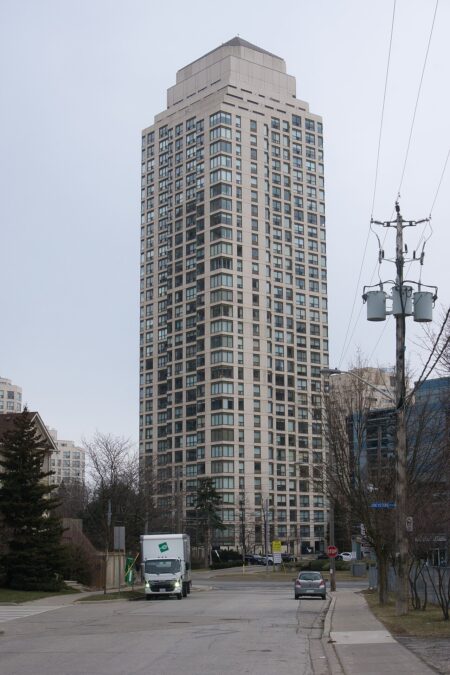
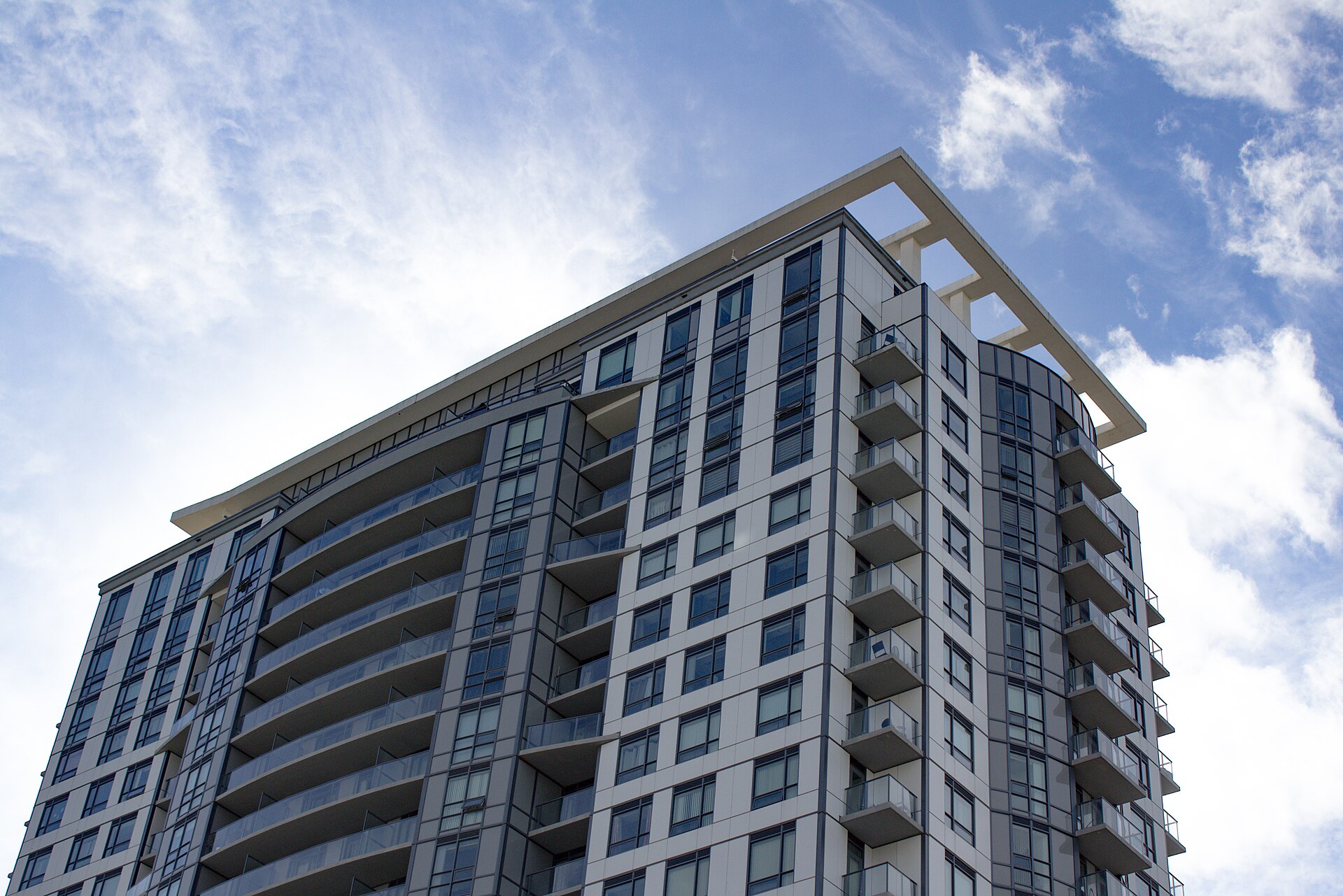
File photo: an apartment tower at 195 Bonis Avenue, Scarborough, Toronto (Jason Zhang, CC BY-SA 3.0, Wikimedia Commons). The building is not named in the data.
Follow Canada News Media
Get the day's top Canadian stories and our two daily 60-second news videos wherever you scroll.
X Threads Facebook Instagram LinkedIn TikTok YouTube Pinterest Reddit Substack Flipboard Newsletter RSS