

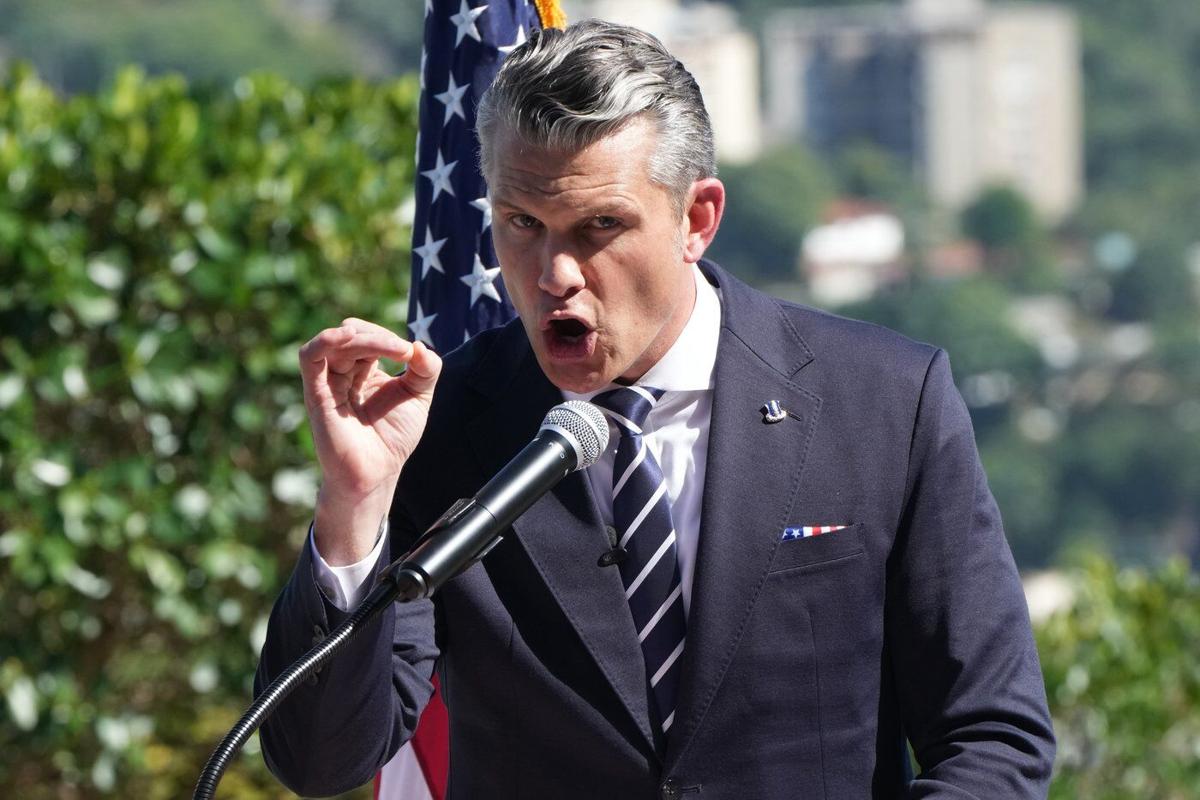
U.S. Defense Secretary Pete Hegseth said Wednesday in Caracas that the United States and Venezuela have signed an agreement to restore military ties, covering joint training and intelligence sharing with the interim government led by acting president Delcy Rodríguez.
The deal comes 10 months after U.S. forces captured then-president Nicolás Maduro in January, and it is the latest in a series of visits to Venezuela by members of President Donald Trump’s cabinet. Reuters, CNN, Al Jazeera and The Associated Press all reported the announcement.
Hegseth said Venezuela has gone from the United States’ “most aggressive regional threat” to a “compliant security partner,” according to The Associated Press. He spoke at the U.S. Embassy to an audience of American and Venezuelan diplomats and military officials. He offered few specifics, saying only that the two militaries would be training together, sharing intelligence and sharing more defence equipment and capabilities.
Rodríguez said she hoped military co-operation could be taken to “its highest possible level” so the two countries can address common threats. The Pentagon did not immediately release further details of the agreement, and no text of the deal has been published.
Hegseth tied the military agreement to the energy arrangement Trump announced in August, under which the U.S. would take control of some Venezuelan oil reserves. He said the oil deal “makes the Strait of Hormuz a nonfactor for the Western Hemisphere,” a reference to disruptions to Persian Gulf shipping during the Iran war, according to The Associated Press. Alejandro Betancourt, owner of North American Blue Energy Partners, the second-largest oil operator in Venezuela, attended the speech, the news agency reported.
Hegseth later stopped in Bogotá, where Colombia’s defence and foreign ministers greeted him at a military air base. The U.S. military has stepped up its focus on Latin America since Trump returned to office, including strikes on boats the administration says are smuggling drugs. The Associated Press reported that at least 240 people have been killed since September 2025 and that officials have released little public evidence the vessels carried drugs.
For Canadians, the most direct effect is on travel. Global Affairs Canada’s travel advice for Venezuela, last updated Oct. 13, says to avoid all travel to the country because of the heightened security situation, unstable political and economic conditions, violent crime, the risk of arbitrary detention and shortages of medication, gasoline and water. It also notes that the Embassy of Canada to Venezuela has not been open since 2019, which limits the consular help Ottawa can give.
The second link is oil. The Alberta oilsands and Venezuela both produce heavy crude that U.S. Gulf Coast refineries are built to process. As we reported in September, that market takes only about 10 per cent of Canadian crude exports to the U.S., and analysts cited by CBC News estimated extra Venezuelan barrels could trim $4 to $5 a barrel from Canadian heavy crude. The gap is already wide: the Western Canadian Select discount topped US$31 a barrel in late October, driven mainly by U.S. Midwest refinery outages, according to Oil Sands Magazine.
The announcement also follows Venezuelan politics that remain unsettled. Rodríguez has promised elections but set no date, as we reported on Oct. 31. Whether the military pact is submitted to either country’s legislature is not yet known.
Via The Associated Press and Reuters.
If you find reporting like this useful, consider supporting Canada News Media, an independently owned Canadian newsroom.
Follow Canada News Media
Get the day's top Canadian stories and our two daily 60-second news videos wherever you scroll.
X Threads Facebook Instagram LinkedIn TikTok YouTube Pinterest Reddit Substack Flipboard Newsletter RSS