


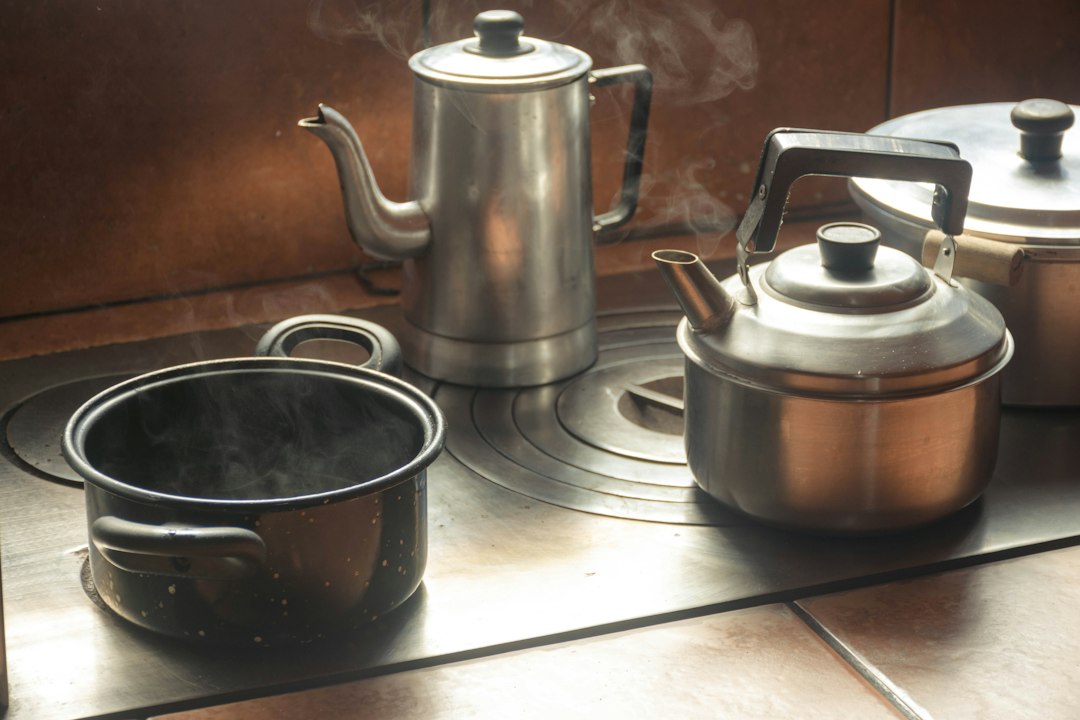
You can descale a kettle by boiling a half-and-half mix of white vinegar and water, letting it sit for 30 minutes to an hour, then rinsing well and boiling plain water once to clear the smell. Do it about once a month if you use the kettle daily, and more often if you live in a hard-water area.
Limescale is the chalky white or grey crust that forms inside a kettle when the calcium and magnesium in water are left behind after boiling. Bob Vila said the deposits are not harmful to swallow, but heavy buildup can make a kettle less efficient and shorten its life. Winter is a good time to do the job, since the kettle gets heavy use on cold days.
Check the manufacturer’s instructions first. Both Bob Vila and KitchenAid advise reading the owner’s manual before using an acid, and KitchenAid said diluted vinegar is usually a safe choice. Never put an electric kettle in water, and keep the base and cord dry.
Step 1: Unplug the kettle and let it cool. Pour out any leftover water, take off the lid and rinse the inside with cold water. If your kettle has a removable filter at the spout, take it out following the manufacturer’s directions.
Step 2: Add the descaling mix. Fill the kettle about halfway with equal parts cold water and white vinegar. KitchenAid suggested a weaker mix of one part vinegar to three parts water, which also works for lighter buildup. If you prefer to avoid the smell, use the juice of one lemon or lime and top it up with cold water to the halfway mark. Another option is one tablespoon of citric acid powder or lemon juice with enough water to cover the base.
Step 3: Boil, then let it sit. Bring the mix to a boil and switch it off, or let the automatic shut-off do it. Leave the solution in the kettle for 30 minutes to an hour. Bob Vila gave that range for a regular clean. KitchenAid suggested leaving a vinegar mix overnight for heavier scale.
Step 4: Pour it out and rinse. Empty the kettle, then rinse it with cold water. Wipe away any loose flakes with a clean, damp cloth. Scrubbing hard is not needed and is not recommended, especially on stainless steel or copper. Avoid wire brushes and scouring pads, which can scratch the surface.
Step 5: Get rid of the taste. Fill the kettle halfway with fresh cold water, boil it and pour it out. KitchenAid recommended repeating this twice if a vinegar smell lingers. Leave the lid open so the kettle air-dries.
If the buildup is light, baking soda is another option, according to both sources. Bob Vila said to fill the kettle about three-quarters full with water, add a heaping tablespoon of baking soda, boil it and let it sit for an hour before rinsing and boiling plain water once more. KitchenAid used one to two tablespoons and a shorter 10-minute rest, followed by gentle scrubbing with a non-abrasive brush once the kettle is cool.
Commercial descaling products are also sold. Bob Vila noted that some contain ingredients you should not ingest, so follow the label and rinse the kettle thoroughly afterward.
To slow the next buildup, avoid leaving water sitting in the kettle between uses. Rinse and dry it after use, and consider filtered water if your tap water is hard. Bob Vila also listed a limescale catcher, a metal ring that sits inside the kettle, as an option. Wipe the outside regularly with a damp cloth and dry it with a soft one. KitchenAid suggested a small amount of olive oil on a microfibre cloth to polish stainless steel.
The same vinegar approach is often used on other appliances, but each has its own rules. See our guides on cleaning a humidifier, cleaning a washing machine and cleaning a range hood filter for those jobs.
If you find reporting like this useful, consider supporting Canada News Media, an independently owned Canadian newsroom.
Sources: Bob Vila and KitchenAid.
Follow Canada News Media
Get the day's top Canadian stories and our two daily 60-second news videos wherever you scroll.
X Threads Facebook Instagram LinkedIn TikTok YouTube Pinterest Reddit Substack Flipboard Newsletter RSS