


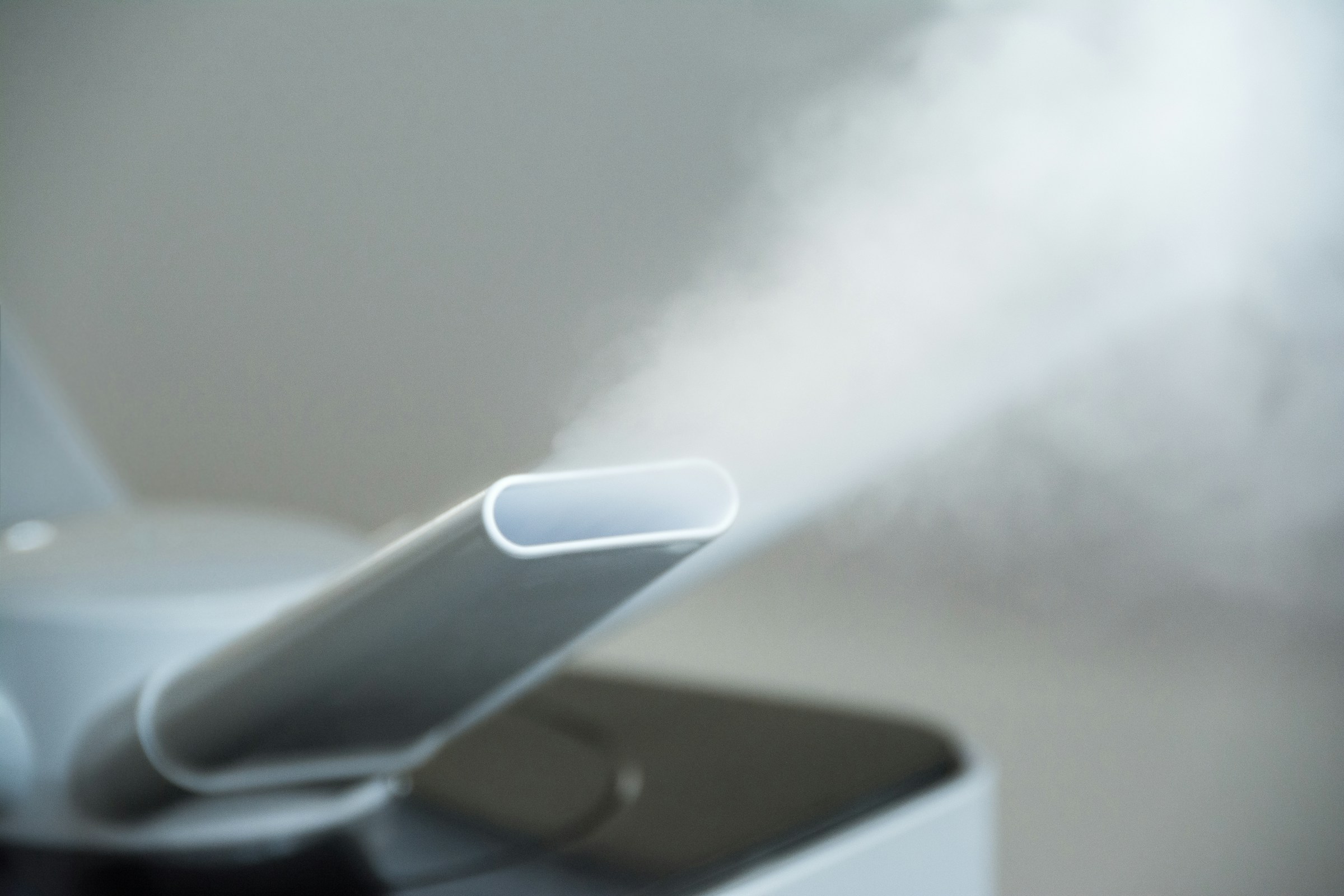
Empty the tank, wipe every surface dry and refill with fresh water once a day, and give the unit a full scrub every third day. That is the maintenance schedule the U.S. Environmental Protection Agency sets out for portable humidifiers, and it exists for a blunt reason: a tank of standing water is a good place for bacteria and mould to grow, and cool-mist humidifiers are efficient at pushing whatever is growing in that tank into the air of the room.
The timing matters. Humidifiers come out of storage in Canada in September and October, when furnaces switch on and indoor air dries out, and a unit that sat in a basement all summer with a film in the bottom of its tank is the one most likely to cause trouble. Health Canada recommends keeping indoor relative humidity between 30 and 50 per cent, and lists cleaning and disinfecting “anything that holds water, like humidifiers, de-humidifiers and air conditioners” among its basic steps for preventing mould in a home. The department also notes that people living with mould and damp conditions are more likely to have eye, nose and throat irritation, coughing, wheezing and worsening asthma symptoms, and that children, seniors and people with asthma or severe allergies are among those most susceptible.
Not every humidifier carries the same risk. The EPA singles out two types as the biggest dispersers of both microorganisms and minerals: ultrasonic units, which make a cool mist using ultrasonic vibrations, and impeller or “cool mist” units, which use a high-speed rotating disc. Evaporative and steam vaporizer models generally disperse less, though any model with a tank of standing water can still grow microorganisms. If your humidifier is built into your furnace rather than sitting on a table, the steps below do not apply, and you should follow the manufacturer’s instructions for that unit instead. Here is how to clean a portable humidifier properly.
- Unplug the unit before you touch the water. The EPA flags this twice in its guidance, for emptying and for cleaning. Do it before you lift the tank or open the base.
- Pour out any water that has been standing. If the humidifier has been in storage, dump whatever is in the base and tank rather than topping it up. Standing water is the specific condition the guidance is written to avoid.
- Scrub every surface that touches water. Use a brush or another scrubber on the tank and the interior of the base. The goal is to remove scale, mineral deposits and any film on the sides, since scale itself can become a breeding ground for microorganisms.
- Disinfect, checking the manual first. Follow the manufacturer’s suggestions on cleaning products. Where the manufacturer gives no specific direction, the EPA advises cleaning all surfaces that come into contact with water with a three per cent solution of hydrogen peroxide. Bleach is not required.
- Rinse thoroughly, several times. The EPA is explicit that if you use any cleaning or disinfecting agent, you should rinse the tank with several changes of tap water. Residue left behind gets dispersed into the room along with the mist.
- Wipe every surface dry before reassembling. Drying is part of the instruction, not an optional finish. Leaving the interior wet reintroduces the problem you just cleaned up.
- Handle the filter or cartridge as the manufacturer directs. Follow the manufacturer’s instructions on the use, maintenance and replacement of any wick, filter or demineralization cartridge supplied with the unit, and use the materials that manufacturer recommends.
- Fill it with low-mineral water. The EPA recommends water with low mineral content, such as bottled water labelled distilled, particularly for ultrasonic and impeller models. Minerals in tap water speed up scale buildup and are the source of the white dust that settles on furniture near these units. Water labelled spring, artesian or mineral has not been treated to remove minerals.
- Set the humidistat and verify it with a hygrometer. The EPA says not to humidify past 50 per cent relative humidity, which sits at the top of Health Canada’s recommended 30 to 50 per cent range. A hygrometer costs very little at a hardware store, and Health Canada suggests using one rather than guessing.
- Use your windows as the daily check. This is the test that matters most through a Canadian cold snap. If water condenses on windows, walls or pictures, the EPA advises relocating the humidifier, lowering its humidistat setting or reducing its use. Do not let the area around the unit become damp, and do not let carpet, drapes or tablecloths near it stay wet.
- Repeat the schedule. Empty, dry and refill daily. Scrub every third day. That cadence is the whole point of the guidance, and a single deep clean in October does not substitute for it.
- Clean it again before you store it in spring. Clean the unit at the end of the humidifying season, make sure all parts are dry before storage, throw out used demineralization cartridges, cassettes or filters, and keep the unit somewhere dry. Clean it once more and dust the outside when you take it out next fall.
Two safety notes are worth repeating. Steam vaporizer humidifiers should be kept out of reach of children, because the steam and boiling water can cause burns. And if you develop respiratory symptoms you believe are linked to periods when your humidifier is running, the EPA advises stopping use and contacting your physician, even if you have been following the maintenance directions.
None of this takes long. The daily step is a two-minute job and the every-third-day scrub is closer to 10 minutes, which is a modest trade for not aerosolizing whatever has taken up residence in the bottom of the tank over a long Canadian heating season.
Sources: Health Canada, “Mould,” canada.ca (last modified Feb. 13, 2023); U.S. Environmental Protection Agency, “Use and Care of Home Humidifiers,” epa.gov (last updated April 29, 2026).
Follow Canada News Media
Get the day's top Canadian stories and our two daily 60-second news videos wherever you scroll.
X Threads Facebook Instagram LinkedIn TikTok YouTube Pinterest Reddit Substack Flipboard Newsletter RSS