


Ontario’s Court of Appeal has refused to pause a provincial order that requires two excavation companies and a rural landowner in Norfolk County to plan testing of liquid excess soil dumped into an open pit, more than two years after the province told them to sample it.
In reasons released Nov. 17, Justice Grant Huscroft dismissed an urgent motion by Synergy Underground Utilities Inc., Underground Conduit Solutions Inc. and the owner of the property at 1115 Windham Road 12 for a stay of the order while they seek leave to appeal. The motion was filed after 5 p.m. on Nov. 12, “mere hours” before the compliance deadline, and heard and dismissed on Nov. 13.
“The circumstances in which this motion was made are problematic,” Huscroft wrote, noting that the companies had benefited from extensions and waited four weeks after losing at the Divisional Court. He added that the motion had no merit in any event, because the companies would not suffer irreparable harm by preparing a soil-testing plan and their full appeal is set to be heard in February 2027. The Environmental Protection Act, he wrote, is legislation whose “important – and often urgent – goals” courts must not undermine.
Canada News Media read all six public decisions in the case, from the Ontario Land Tribunal, the Divisional Court and the Court of Appeal, to piece together how a soil complaint from June 2024 was still before the courts in November 2026, with the deadline for the testing plan reached only this month.
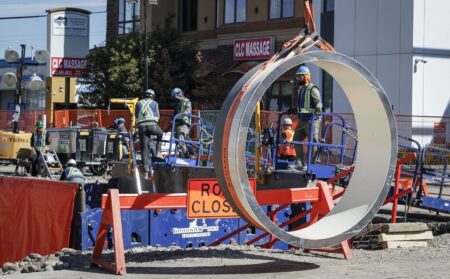
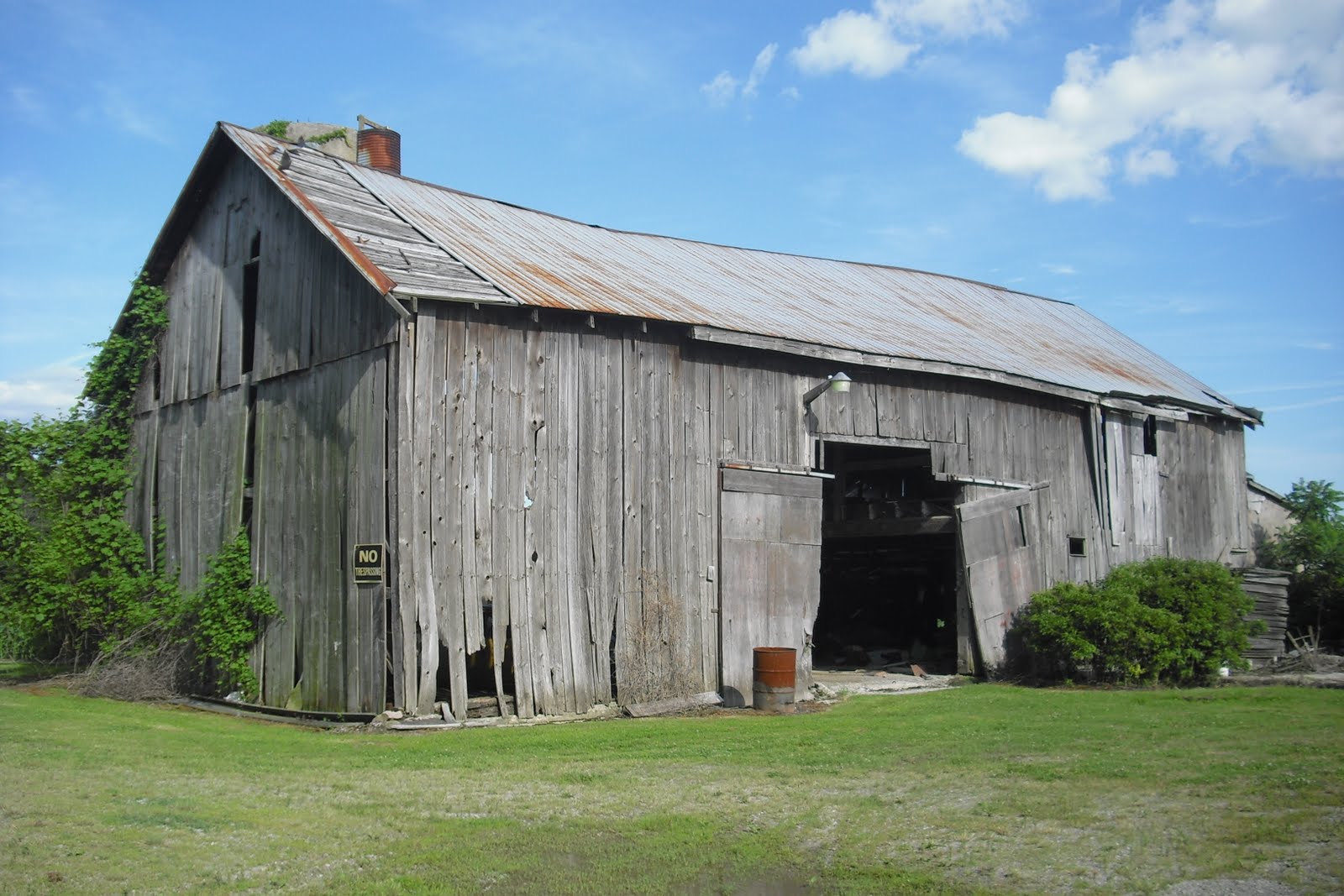
The decisions set out the background. Synergy contracts with municipalities and utilities to bury cable and pipe in road allowances, and was contracted by Rogers Communications to install fibre optic cable in Norfolk County between April 28, 2023 and June 5, 2024, according to the tribunal decision. Rogers is not a party to the case. Underground Conduit Solutions, whose president owns the 49-acre agriculturally zoned property, runs its business from the site, which includes an excavated pit created by a previous owner. Around 2022, the companies began depositing excess soil in the pit.
The ministry says more than 700 loads of liquid excess soil “of unknown contamination level” went into the excavation. Underground Conduit Solutions told the tribunal the material was hydrovac slurry from Synergy’s cable work. The area relies on private drinking water wells, the ministry said.
The timeline in the tribunal record runs like this. On June 5, 2024, the ministry learned of an anonymous complaint about vacuum trucks entering the property. An environmental officer inspected on June 6 and on June 7 told Synergy to stop depositing and to sample the material, which a Synergy representative agreed to do voluntarily. All deposits stopped by June 10, 2024. On April 9, 2025, the officer followed up because no results had been shared and learned no sampling had been done. In October 2025, a search warrant was executed at Synergy’s office. On Jan. 6, 2026, the ministry laid charges under the Provincial Offences Act, alleging Synergy deposited waste on land that was not an approved waste disposal site and Underground Conduit Solutions operated a waste disposal site without an environmental compliance approval. Those charges have not been proven in court.
A provincial officer’s order followed on Jan. 19, 2026, confirmed by a ministry director on Jan. 30. It requires a qualified person to prepare a work plan to characterize any liquid excess soil on the land, including a sampling and analysis plan, originally due April 13, 2026. Both companies confirmed they had hired a qualified person, but they appealed the order and asked for a stay of the planning items.
The companies dispute the order on many grounds. They say the soil is not waste, that they were not the “project leader” responsible for it under Ontario’s excess soil regulation, that a county bylaw officer permitted the deposit for remediation, that there is no evidence of harm and that the ministry’s own delays show there is no urgency. Their consultant estimated that it would take 25 years for any contamination, if present, to reach groundwater, and costed the work plan at $44,360. The ministry pointed out that the sampling plan itself was estimated at $2,400.
The tribunal’s April 15 decision, by member A. Snowdon, refused the stay. It found the preliminary groundwater work relied on a municipal well more than a kilometre away and did not account for the multiple private drinking water wells within 250 metres of the property. “Protecting drinking water sources is in the public interest,” the decision said. It also said the gap between the voluntary sampling agreement and the officer’s follow-up “does not project urgency,” and gave the companies nine more weeks, to June 18, 2026.
A Superior Court judge then granted an interim stay on June 16. On Oct. 13, a three-judge Divisional Court panel dismissed the companies’ appeal because the tribunal’s refusal was an interlocutory ruling that the law does not allow to be appealed, lifted the stay, set a new deadline of Nov. 13 and fixed costs at $35,000 payable to the ministry. The panel added in a footnote that the tribunal had misstated the stay test by calling its three parts conjunctive, though that did not change the result.
The tribunal’s case management decision of May 12 scheduled a 10-day hearing on the merits starting Feb. 8, 2027, which will decide whether the order stands. A June 18 motion on the use of disclosure from the prosecution was withdrawn, with the right to refile.
The records do not show whether the soil is contaminated, because no testing has been done, as the companies’ own expert acknowledged in an affidavit cited by the ministry. They do not show whether the companies filed the plan after the Nov. 13 ruling, and the merits of both the order and the charges remain untested.
Ontario’s On-Site and Excess Soil Management regulation, O. Reg. 406/19, sets rules for moving soil dug up during construction, including who must characterize it before it is reused. Whether the companies or someone else counts as the responsible “project leader” under that regulation is one of the issues the tribunal will decide.
How we checked: We found the Court of Appeal decision, Synergy Underground Utilities Inc. v. Ontario (Environment), 2026 ONCA 838, in CanLII’s list of new Ontario appeal rulings and read it in full, along with the Divisional Court’s decision (2026 ONSC 5655) and all four Ontario Land Tribunal decisions in file OLT-26-000141 (2026 CanLII 25158, 2026 CanLII 35720, 2026 CanLII 46880 and 2026 CanLII 61945). Dates, amounts and positions are taken from those decisions. The ministry’s and the companies’ positions are as recorded by the tribunal and courts. We did not name the landowner, who appears in the decisions as a party, because the story concerns the companies and the order. No publication ban or sealing order appears in the decisions.
If you find reporting like this useful, consider supporting Canada News Media, an independently owned Canadian newsroom.
Follow Canada News Media
Get the day's top Canadian stories and our two daily 60-second news videos wherever you scroll.
X Threads Facebook Instagram LinkedIn TikTok YouTube Pinterest Reddit Substack Flipboard Newsletter RSS