


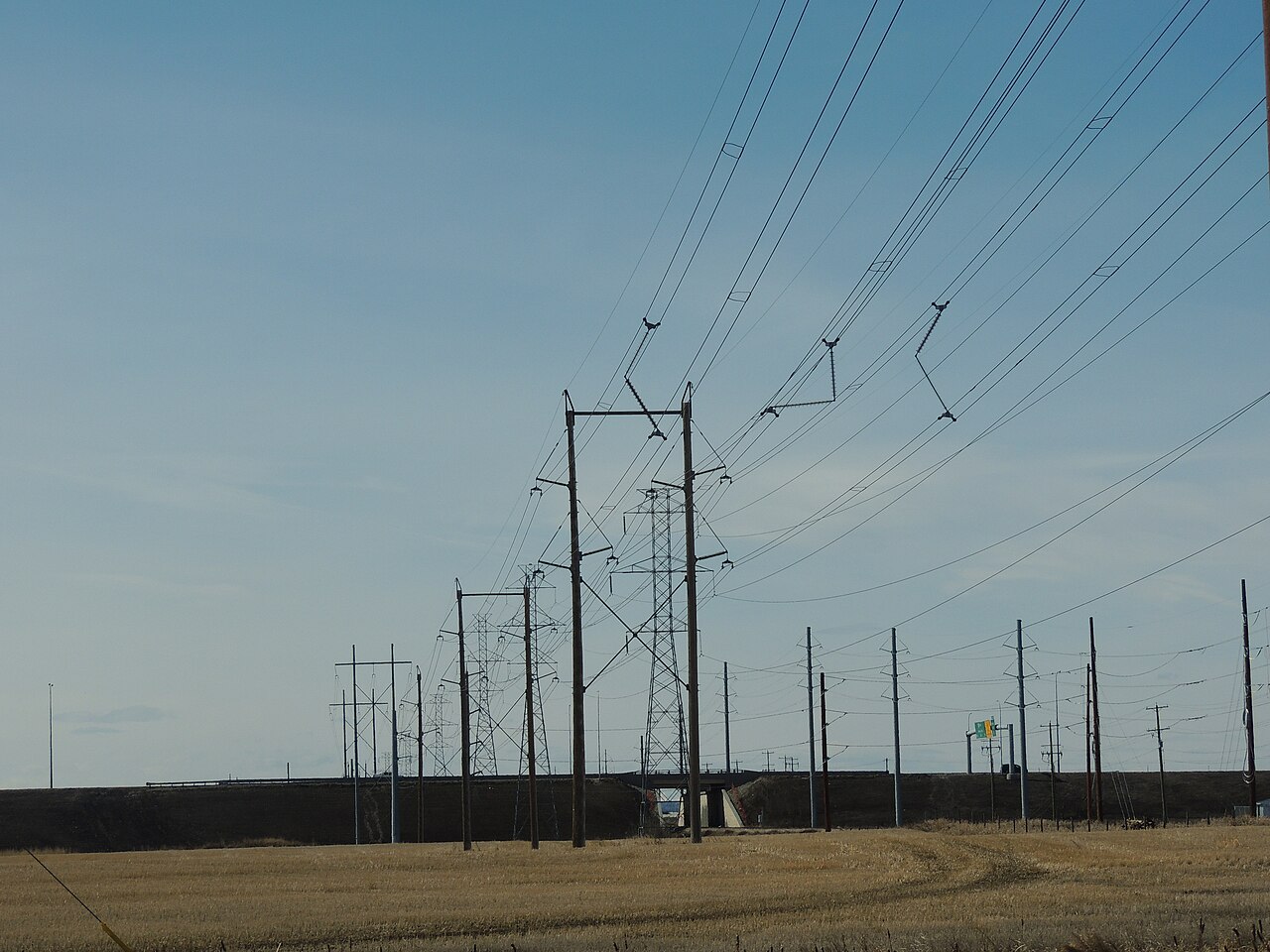
Alberta’s wholesale electricity price has averaged $33.78 a megawatt-hour so far in 2026, the lowest annual average since 2017, according to our count of every hourly price published by the Alberta Electric System Operator. That works out to about 3.4 cents a kilowatt-hour. The default rate that hundreds of thousands of Alberta homes and businesses still pay for the energy on their bills has not moved from about 12 cents since Jan. 1, 2025, and it cannot move until the end of this year.
The default rate, called the Rate of Last Resort, replaced the old floating Regulated Rate Option in 2025. The Alberta Utilities Commission approved the current prices in Decision 29204-D02-2025 on Feb. 12, 2025: 12.01 cents a kilowatt-hour for EPCOR Energy Alberta customers in Edmonton and the FortisAlberta area, 12.06 cents for ENMAX Energy customers in Calgary and 12.02 cents for Direct Energy Regulated Services customers in the ATCO Electric area. The commission’s rate table shows the same figure in every month of 2025, and the decision fixes it through Dec. 31, 2026.
The wholesale market went the other way. We downloaded the operator’s historical pool price report for every month from January 2017 to Nov. 19, 2026, and averaged the hourly prices. The pool price averaged $162.46 a megawatt-hour in 2022 and $133.63 in 2023, then fell to $62.78 in 2024, $43.68 in 2025 and $33.78 from Jan. 1 to Nov. 19 this year. Only 2017, at $22.19, was lower in the last decade. June 2026 averaged $17.36, the cheapest month since June 2017. The price hit zero in 924 hours this year, up from 713 hours in all of 2025 and 376 in 2024.
The two numbers are not the same thing, and the gap does not by itself mean anyone was overcharged. The pool price is the hour-by-hour wholesale price that generators receive. A default-rate customer instead pays one price locked in for two years, set by a formula the commission approved, and that price has to cover buying power ahead of time, the cost of matching a household’s changing use hour by hour, and a risk margin for promising a fixed price. The pricing model behind the rate was filed in late 2024, when pool prices for the year were running at nearly twice this year’s average. The fixed price also protected customers from spikes: the old floating rate for EPCOR’s Edmonton residential customers was 19.551 cents in January 2024 and fell to 10.508 cents by November 2024, according to the commission’s historic rate table.
What the gap does mean is that switching has been worth money. The Market Surveillance Administrator, the province’s electricity market watchdog, found in its Rate of Last Resort Report: 2025 (published March 25, 2026, and updated July 3, 2026) that an average residential default-rate customer in the ENMAX area could expect to save $20 to $28 a month by moving to the cheapest competitive fixed-rate contract as of March 1, 2026, up from $16 to $20 when the default rate started. The expected saving was $25 to $36 a month for customers outside apartments and $10 to $18 for apartment customers, who use less power.
Many customers have already left. The administrator estimated about 406,200 sites were still on regulated rates at the end of 2025, down 79,700 in a single year, and forecast 314,400 by the end of 2026. Regulated providers’ share of eligible customers fell to 20 per cent at the end of 2025 and was forecast to reach 15 per cent this year. The watchdog also flagged who may be left behind: 4.4 per cent of regulated sites were on load limiters in 2025, and about 29,700 sites had not left their regulated provider since having a load limiter removed. The report says these “may be vulnerable customers” who cannot switch for financial reasons, such as a retailer’s credit check or deposit.
The next price is close. Under the commission’s decision, the rates for Jan. 1, 2027, to Dec. 31, 2028, must be filed at least 30 days before Jan. 1, which means by early December, and they can be no more than 10 per cent higher or 10 per cent lower than today’s rate. For ENMAX customers that limits the 2027 price to between about 10.85 and 13.27 cents. The market administrator’s own forecast in its report was 12.82 cents for the ENMAX area in 2027 and 2028, though it noted that its forecasts for 2027 to 2032 “fell significantly” between Dec. 31, 2025, and March 1, 2026. It said current and forecast default prices are generally not expected to fall below competitive retail prices.
The energy charge is only part of a bill. The administrator calculated that while default-rate customers paid about 12 cents for energy in 2025, the lowest “marginal price” of electricity for residential default customers in the major service areas was about 20 cents a kilowatt-hour once variable delivery charges, riders and municipal fees are included. Its estimate of the 2025 annual bill for an average regulated non-apartment customer was $1,691 in the EPCOR area, $1,846 in the ENMAX area, $2,450 in the FortisAlberta area and $3,419 in the ATCO Electric area.
The records leave some questions open. The pricing model and parts of the risk-margin evidence were filed as confidential exhibits, so the public decision does not show how much of the 12 cents is margin. The market administrator found the providers’ financial performance acceptable and did not recommend reopening any default rate in 2025. The 2027 prices will not be known until they are filed. The Utilities Consumer Advocate runs a free cost comparison and takes calls at 310-4822 for anyone who wants to compare offers before the new rate takes effect. Our earlier reporting on Alberta energy costs includes Edmonton’s electricity franchise fee.
How we checked: We downloaded the Alberta Electric System Operator’s hourly pool price report one month at a time for January 2017 to Nov. 19, 2026 (86,639 hourly prices) and calculated simple annual averages; our 2024 figure of $62.78 matches the operator’s published annual average. We converted dollars a megawatt-hour to cents a kilowatt-hour by dividing by 10. We read the Alberta Utilities Commission’s Decision 29204-D02-2025, its 2025 Rate of Last Resort table and its historic Regulated Rate Option table, and the Market Surveillance Administrator’s Rate of Last Resort Report: 2025. The 2027 range is our calculation of 10 per cent either side of the current ENMAX rate. Customer counts, savings, load-limiter figures and bill estimates are the administrator’s. We did not compare individual retailers’ offers and make no claim about any company’s profits.
Follow Canada News Media
Get the day's top Canadian stories and our two daily 60-second news videos wherever you scroll.
X Threads Facebook Instagram LinkedIn TikTok YouTube Pinterest Reddit Substack Flipboard Newsletter RSS