
Calgary recorded 161 water main breaks in 2025, the fewest in any year since 1961, according to our count of the city’s own break records. The total has fallen by more than nine-tenths from a peak of 1,798 breaks in 1982. The decline sits awkwardly beside the city’s water emergency: the failures that have forced citywide restrictions came from one large feeder main, not from the thousands of smaller pipes under neighbourhood streets that this record tracks.
The City of Calgary publishes every recorded main break in its Water Main Breaks open dataset, which holds 37,559 entries dating back to 1956. We counted them by year. Breaks climbed through the 1960s and 1970s as the city grew, passed 1,000 a year in 1978, and peaked at 1,798 in 1982. They fell below 500 a year by 1998, below 300 by 2010, and below 200 for the first time in 2021, at 177. Since then the count has stayed close to that level: 201 in 2022, 207 in 2023 and 178 in 2024.
This year is running lower again. The dataset’s most recent entry is dated Aug. 23, 2026, and up to that date the city recorded 90 breaks in 2026. Over the same stretch, Jan. 1 to Aug. 23, there were 110 breaks in 2025, 126 in 2024, 136 in 2023 and 200 in 2018. Because the city adds breaks to the dataset with a delay, the 2026 figure may still rise for the summer months; the dataset was last refreshed on Nov. 15.
Corrosion is the most common factor. The city codes each break by type, and a code can list more than one: full circular breaks, splits, corrosion, fittings, joints, diagonal cracks, holes and saddles. Of the 1,014 breaks recorded from Jan. 1, 2021, to Aug. 23, 2026, 687, or about two-thirds, carried a corrosion code alone or with another type. Breaks also follow the weather. Across 2016 to 2025, January had the most breaks of any month, at 280, and September had the fewest, at 101.
The records do not tell the story of the Bearspaw South Feeder Main, the large transmission pipe whose rupture in June 2024 led to weeks of citywide water restrictions. The open dataset does not record pipe size, so it does not separate a feeder main failure from a break on a residential street, and each counts as one entry. The city’s independent review page says the review panel began work after the June 2024 break, that a second feeder main break happened while the panel’s work was under way, and that the panel reported to council in January 2026, which accepted its findings. The panel examined operations and maintenance, risk management, planning and engineering, budget and financing, and governance. The province has also published a separate municipal inspection report on the city’s management of the feeder main.
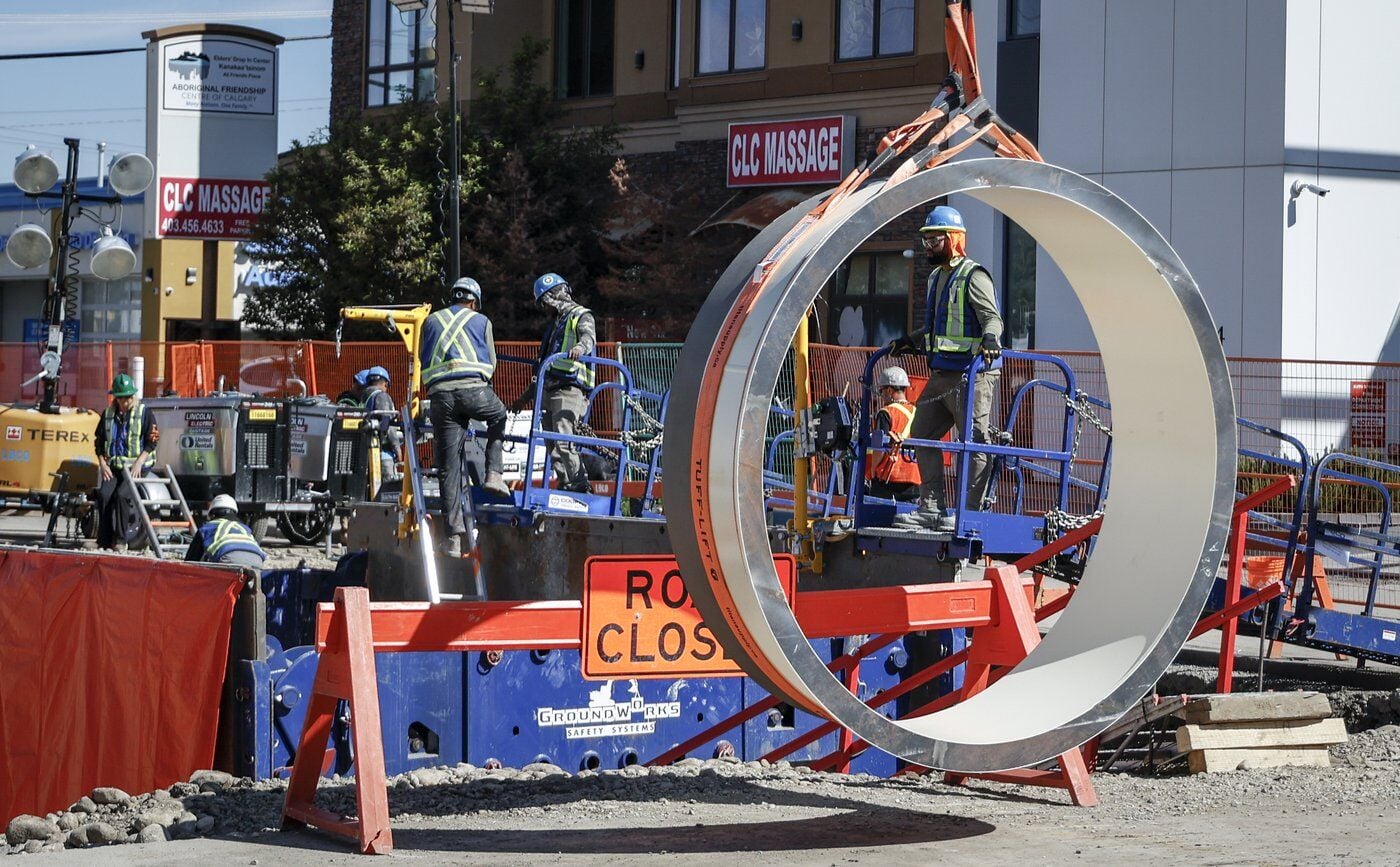
Residents are living with the result now. Stage 4 outdoor water restrictions began Nov. 4 while crews connect the new Bearspaw South Feeder Main, and the city has asked Calgary and its regional customers to keep daily use under 500 million litres, as we reported on Nov. 12. Repairs on a nearby pipe segment have also cut water pressure in five northwest communities.
The dataset does not say why breaks on smaller mains fell, and it cannot show what the city spent to prevent them. It also does not record how long each break left homes without water, what each repair cost, or whether a break caused property damage. Some entries are marked “retired”, which appears to describe pipe since taken out of service; we counted all entries regardless of status. A falling number of small breaks is not evidence about the condition of the large feeder mains, which fail far less often but with much larger consequences.
How we checked: We queried the City of Calgary’s Water Main Breaks dataset (dpcu-jr23) through its public open data interface on Nov. 20, 2026, and counted every entry by calendar year from 1956 to 2026, by month for 2016 to 2025, and by break-type code from 2021 on. A break is counted as corrosion-related when its code includes the letter C, which the city’s data dictionary defines as corrosion. For the 2026 comparison we used the same Jan. 1 to Aug. 23 window for every year because Aug. 23 is the latest break date in the data. We read the city’s independent review page and the provincial inspection listing but did not rely on media summaries of either report.
Follow Canada News Media
Get the day's top Canadian stories and our two daily 60-second news videos wherever you scroll.
X Threads Facebook Instagram LinkedIn TikTok YouTube Pinterest Reddit Substack Flipboard Newsletter RSS