
The Horne copper smelter in Rouyn-Noranda, Que., reported releasing twice as much cadmium and nearly twice as much sulphur dioxide into the air in 2024 as the year before, and it accounted for two-thirds of all the arsenic that Canadian industry reported releasing into the air, according to a Canada News Media analysis of federal pollution filings.
Glencore Canada’s Fonderie Horne reported 1,377 kilograms of cadmium released to air in 2024, up from 696 kilograms in 2023, the highest in the 10 years of data we examined. Its reported arsenic releases to air rose 23 per cent, to 14,092 kilograms from 11,462. Sulphur dioxide rose to 19,022 tonnes from 9,852, the most since at least 2015. Lead releases to air fell 8 per cent, to 54,002 kilograms from 58,911.
The filings, made each year to Environment and Climate Change Canada’s National Pollutant Release Inventory, also show how much of the country’s reported metal pollution comes from this one site. In 2024 the smelter accounted for 67 per cent of all arsenic released to air by the 194 facilities that reported it, 62 per cent of lead and 37 per cent of cadmium. Its share of arsenic has been above half in eight of the last 10 years, and its share of lead in nine of 10.
Across Canada, reported arsenic releases to air fell 55 per cent from 2015 to 2024, to 20,918 kilograms from 46,610. The smelter’s own reported arsenic fell over the same period, from 26,705 kilograms in 2015, but by less than other sources, so its share of the national total grew. Its highest year in the decade was 2021, when it reported 36,477 kilograms.
The 2024 figures were filed as Quebec was setting, and later pushing back, the smelter’s air-quality deadlines. Quebec’s environment department issued Glencore a ministerial authorization for the smelter on March 16, 2023, that required the annual average of arsenic in the air of nearby neighbourhoods to come down to 15 nanograms per cubic metre from March 16, 2027, with daily limits for metals and new sulphur dioxide limits from Sept. 1, 2027, according to the department’s summary of the authorization. The authorization also told the company to start work toward 3 nanograms per cubic metre, the arsenic standard in Quebec’s air regulation, and to file a plan to get there.
In June 2025, Glencore dropped AERIS, the project that was meant to bring the smelter to the 15-nanogram limit, and proposed instead to enclose the smelter area, the department says in its summary of the 2026 changes. A provincial law on reducing regulatory burden then required the department to amend the authorization by June 30, 2026, and the amended version went to the company on June 26. It moves the start of the annual metal limits, including the 15-nanogram arsenic limit, to March 16, 2029, the daily limits to March 16, 2030, and the sulphur dioxide limits to March 2030. The department’s summary says it did not grant the company’s request to allow exceedances of the four-minute sulphur dioxide standard, and the amended version still calls for a plan aimed at meeting the province’s air standards rather than the company’s proposed wording of “the best environmental gain.” The deadline for the next plan to meet Quebec’s air standards moved to April 30, 2032, from Dec. 31, 2027.
The two sets of numbers measure different things. The federal inventory reports the total weight of each pollutant a facility estimates it released in a year, while Quebec’s limits apply to concentrations measured at air-monitoring stations near the smelter. A rise in total releases does not by itself show that a limit was broken, and the 15-nanogram annual arsenic limit was not yet in force in 2024, although the authorization called for concentrations to be tightened gradually before then. The filings also do not explain why the cadmium and sulphur dioxide figures rose. A change in production, in the ore and recycled material processed, in how the releases were measured, or in equipment could each move the numbers, and the federal facility page that would carry the company’s comments was not reachable when we checked. The smelter’s stack figures for arsenic, lead and cadmium are based on source testing, according to the filings.
No finding of wrongdoing is made or implied here. The figures are those the company itself reported to the federal government, and the deadlines are those set by the Quebec government.
Residents can follow the smelter’s air monitoring and the authorization documents on Quebec’s Fonderie Horne page, and any facility’s yearly releases can be searched in the National Pollutant Release Inventory.
How we checked: We downloaded the National Pollutant Release Inventory’s bulk releases file and kept reporting years 2015 to 2024. For the Horne smelter (NPRI ID 3623, filed as Glencore Canada Corporation) and for all facilities together, we added releases to air in every category (stack, fugitive, storage and handling, spills, road dust and other non-point sources) for arsenic and its compounds, lead and its compounds, cadmium and its compounds, and sulphur dioxide. Shares are the smelter’s total divided by the national total; for example, 14,092 ÷ 20,918 = 67 per cent for arsenic in 2024. The number of reporting facilities varies by substance and year (194 reported arsenic to air in 2024). Facilities can revise past filings, so totals may change. Dates and limits in the authorization come from the Quebec environment department’s published summaries, linked above.
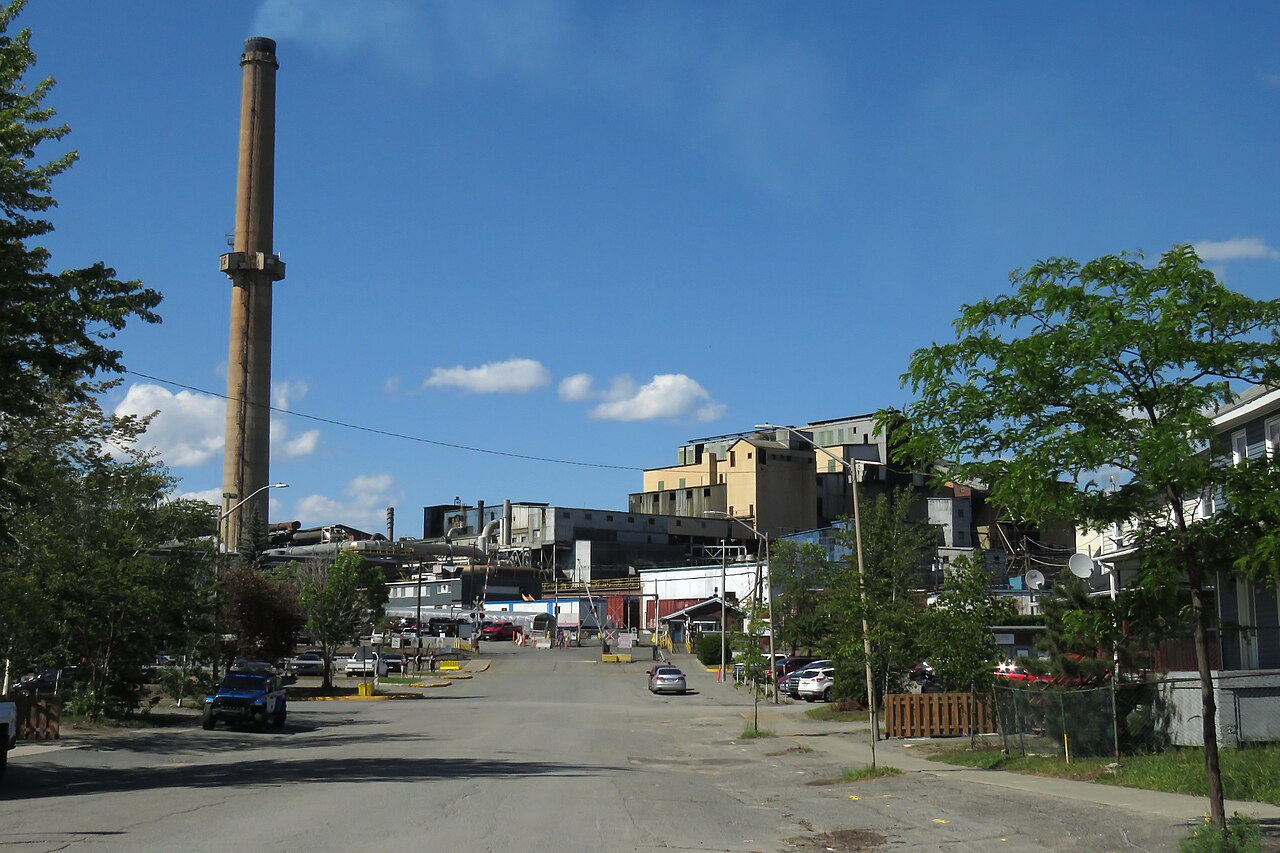
File photo: the main entrance and stack of the Fonderie Horne smelter in Rouyn-Noranda, Que., June 23, 2022 (François Ruph, CC BY-SA 4.0, via Wikimedia Commons).
Follow Canada News Media
Get the day's top Canadian stories and our two daily 60-second news videos wherever you scroll.
X Threads Facebook Instagram LinkedIn TikTok YouTube Pinterest Reddit Substack Flipboard Newsletter RSS