
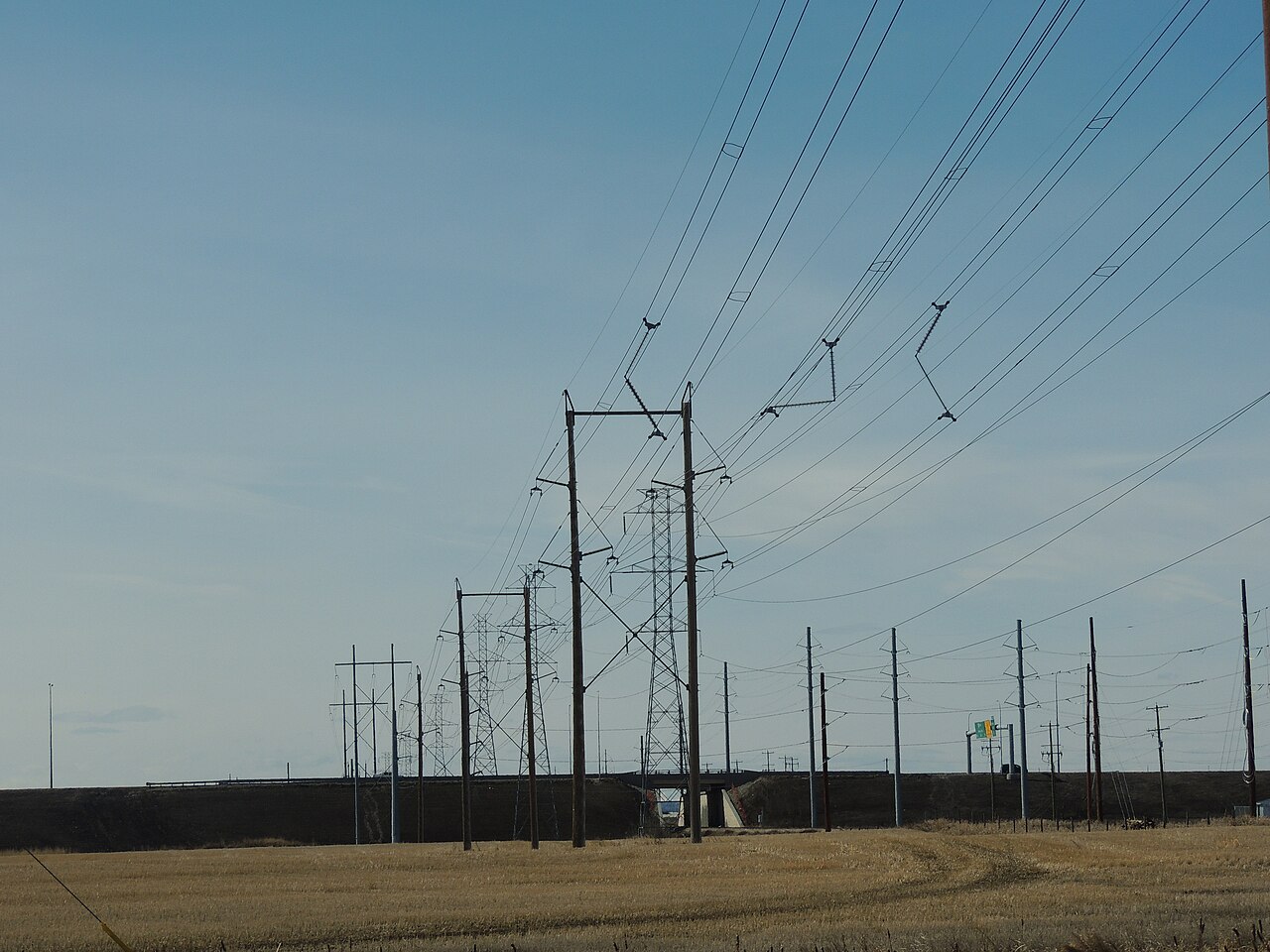
Companies that run Alberta’s electricity grid and power plants were handed $2.81 million in penalties for breaking cyber-security reliability rules in the first nine months of 2026, more than double the $1.28 million for all of 2025, according to a Canada News Media count of the Market Surveillance Administrator’s quarterly enforcement reports. Under the province’s rules, the public is not told which companies received them, whether they were paid, or what the companies did.
The Market Surveillance Administrator, known as the MSA, is the independent watchdog that enforces the rules of Alberta’s electricity and retail natural gas markets. It issues notices of specified penalty, fixed fines for confirmed breaches, under three sets of rules: the Alberta Electric System Operator’s market rules, known as ISO rules; operations and planning reliability standards; and critical infrastructure protection reliability standards, which cover the cyber and physical security of the grid’s control systems.
The MSA issued 120 critical infrastructure protection penalties from January to September 2026: 43 totalling $838,625 in the first quarter, 59 totalling $1,895,250 in the second, and 18 totalling $79,400 in the third. The second-quarter total is the largest of the seven quarters we reviewed. In all of 2025, the MSA issued 55 such penalties, worth $1,279,275, and most of that money came in a single quarter, when 26 penalties totalled $1,128,900 between July and September 2025.
The MSA does not publish details of these penalties. Its reports say that, under Alberta Utilities Commission Rule 027, penalties for critical infrastructure protection breaches are not made public, nor is any information about whether they were paid or disputed, because the matters often deal with cyber security and detailed public reporting could itself create a security risk. The MSA reports only the number of matters and the total dollars each quarter. That means Albertans, who pay for the grid through their power bills, can see that the money is rising but not which companies, systems or rules were involved.
Across all three sets of rules, the MSA issued 278 penalties worth $3,346,900 in the first nine months of 2026, already more than the 241 penalties worth $2,659,775 in all of 2025. The cyber and physical security penalties made up 84 per cent of the 2026 dollars. Penalties under the operations and planning reliability standards, which are published with company names, came to $482,625 from 72 notices so far this year, against $265,500 from 44 in 2025. Market rule penalties went the other way: 86 notices worth $51,000 so far in 2026, compared with 142 worth $1,115,000 in 2025, a year that included $783,000 in market rule penalties in a single quarter.
The MSA’s latest report, for July to September and dated Nov. 5, 2026, also flagged a growing backlog in a related process. Companies that cannot meet a market rule or reliability standard can ask for a waiver or variance. The MSA counted 361 such requests from 2017 to mid-2026, 308 under market rules and 53 under reliability standards, and found that 57 were still active, with some unresolved for longer than six years. It said that while a request is pending, a company that is not in compliance stays out of compliance, and it recommended timelines for decisions and a regular public report on requests. In the same report, the MSA summarized an Aug. 28, 2026, investigation in which it found that the Alberta Electric System Operator did not adequately monitor generators’ compliance with frequency response rules, including 64 instances in 2022 and 2023 that met the operator’s own criteria for referral but were not referred to the MSA. The MSA made four recommendations to the operator.
The quarterly totals do not show whether the rise in cyber-security penalties reflects more breaches, more audits, older cases being closed, or larger fines per case, and the MSA’s reports do not say. The number of open critical infrastructure protection matters carried into the next quarter fell to 78 at the end of September, from 107 at the end of June. No company is named or accused here beyond the MSA’s own findings, which are reported as the MSA published them.
If you find reporting like this useful, consider supporting Canada News Media, an independently owned Canadian newsroom.
How we checked: We downloaded the MSA’s seven most recent quarterly enforcement reports from its documents page: Q1 2025, Q2 2025, Q3 2025, Q4 2025, Q1 2026, Q2 2026 and Q3 2026. From each, we took the number of notices of specified penalty and the dollar total the MSA reported for ISO rules, operations and planning reliability standards, and critical infrastructure protection reliability standards, and added them by year. The waiver and variance figures and the summary of the frequency response investigation come from the Q3 2026 report. Totals are in Canadian dollars as reported; percentages are rounded. No right of reply was needed because the story reports the regulator’s own published figures and findings and makes no new allegation against any person or organization.
Follow Canada News Media
Get the day's top Canadian stories and our two daily 60-second news videos wherever you scroll.
X Threads Facebook Instagram LinkedIn TikTok YouTube Pinterest Reddit Substack Flipboard Newsletter RSS