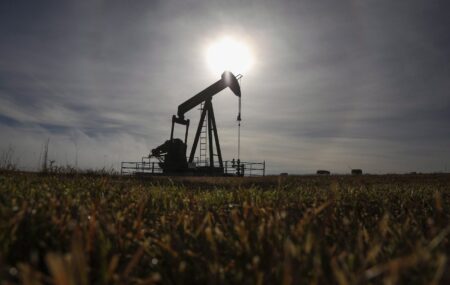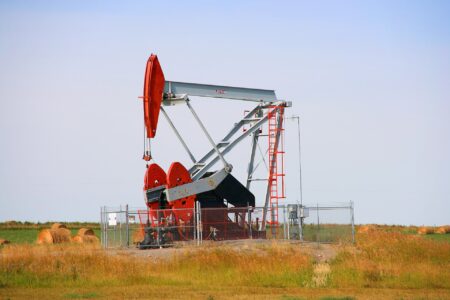



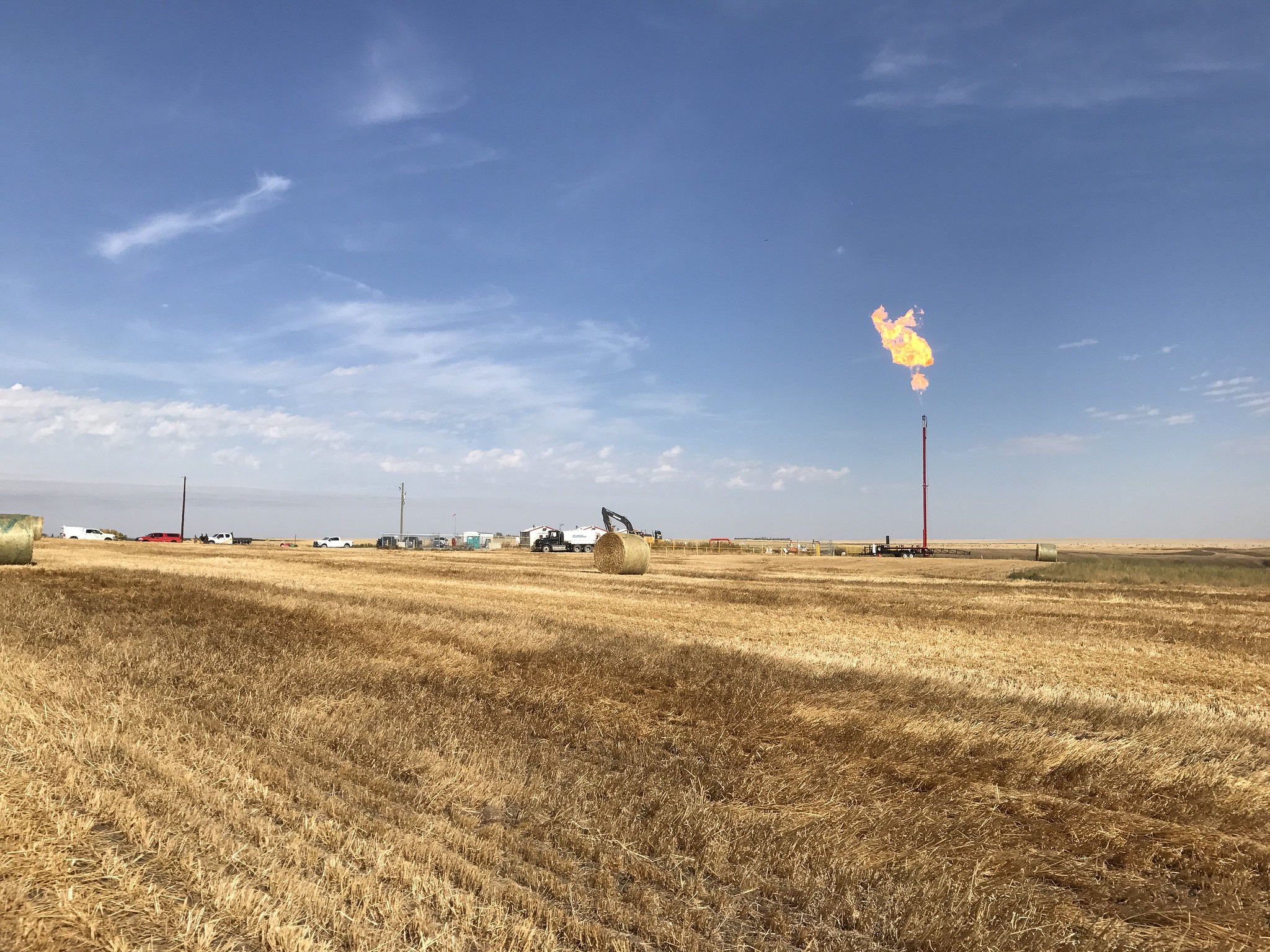
Alberta gas flaring at oil and bitumen batteries rose to 643.9 million cubic metres from January through September 2026, up 9.4 per cent from the same months of 2025, a Canada News Media count of Alberta Energy Regulator monthly data shows.
Flaring is the burning of surplus gas, much of it produced along with oil and bitumen. Reuters reported the increase Tuesday, putting the nine-month volume at 644 million cubic metres and saying the province is on track for an annual rise of about 10 per cent.
The regulator’s files show that most of the gain came after April. Flaring from January through April was about level with a year earlier, at 261.1 million cubic metres compared with 260 million. From May through September it reached 382.8 million, up 16.5 per cent from 328.5 million.
September was the biggest month in the 21 months of files reviewed, going back to January 2025. Batteries flared 82.6 million cubic metres, 27 per cent more than the 65.1 million reported for September 2025.
Alberta used to cap this type of flaring at 670 million cubic metres a year. Reuters has reported that the regulator quietly removed the limit in June 2025 after directives from provincial officials, and that companies had gone over it two years in a row.
The nine-month total for 2026 is 26.1 million cubic metres below that former limit. The smallest month so far this year, February, came to 59.8 million. Figures for October were not among the files reviewed.
The rise follows a decline last year. The regulator’s annual emissions report, dated November 2026 and covering 2025, shows solution gas flaring, the burning of gas that comes up with oil and bitumen, fell 13.9 per cent to 787.8 million cubic metres. That was still above the 670-million figure of the old cap.
Counting gas plants and other facilities covered by the report, total flaring fell 8.1 per cent to 1.41 billion cubic metres from 1.53 billion in 2024. Gas plants were the only major category to increase, by 4.5 per cent. The report excludes oil sands mines and some pipelines.
Venting, the release of unburned gas, dropped 13.1 per cent to 238.6 million cubic metres. The share of solution gas that producers captured and used, rather than flared or vented, rose to 97.1 per cent from 96.5 per cent.
The report says the 2025 drop in flaring likely reflects better operations, more gas conservation and stronger financial reasons to cut emissions. It notes that from 2023 to 2025, flaring from certain grouped facilities was brought into Alberta’s industrial carbon pricing system, known as TIER, which raised the cost of burning gas.
For this year, a spokesperson for the regulator told Reuters that growth in overall oil and gas activity likely accounts for the higher volumes. Reuters reported that Alberta’s oil output was up two per cent in the first nine months. A spokesperson for Environment Minister Grant Hunter told the news agency that the old limit no longer reflected the province’s current approach to managing flaring, and said Alberta relies on industrial carbon pricing to encourage emissions cuts.
Amanda Bryant of the Pembina Institute, an environmental think tank, told Reuters the pattern shows companies are able to flare less but need rules that require it.
The volumes matter for Albertans because flaring releases carbon dioxide as well as soot and other particles that can harm health, Reuters reported. Burning gas is generally better for the climate than venting it, because vented gas releases methane. The province said this month that its methane emissions are down 62 per cent, a figure the annual report also gives, measured from 2014.
New federal methane rules that begin to take effect in 2028 would allow flaring only for health and safety reasons or where an engineering study finds no other option, according to Reuters. Ottawa and Alberta are negotiating an agreement that could let provincial rules apply instead. The province has also moved to encourage more oil production, including through a two per cent royalty offer for new oil sands projects.
To arrive at the 2026 figures, Canada News Media added the gas flared column for every battery record in the regulator’s monthly ST60 files for January 2025 through September 2026. Each monthly file reviewed was run late in the following month, including the September 2026 file on Oct. 23. The files can differ from later revised data. The 2025 monthly sum, 780.6 million cubic metres, is close to but not the same as the 787.8 million in the annual report, which uses data extracted in July 2026. The monthly count covers batteries only and does not include gas plants.
Sources: Alberta Energy Regulator ST60 monthly battery data and ST60B-2026 emissions report; Reuters, via BOE Report.
If you find reporting like this useful, consider supporting Canada News Media, an independently owned Canadian newsroom.
Follow Canada News Media
Get the day's top Canadian stories and our two daily 60-second news videos wherever you scroll.
X Threads Facebook Instagram LinkedIn TikTok YouTube Pinterest Reddit Substack Flipboard Newsletter RSS