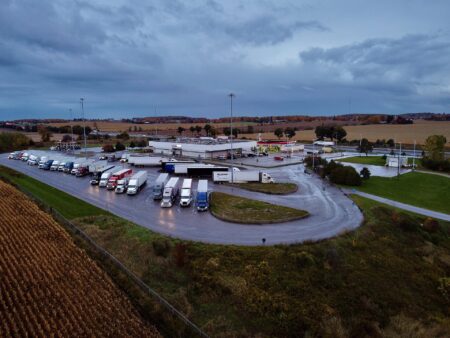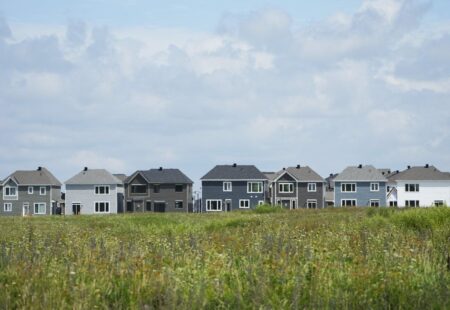




An area of just 318 square kilometres, roughly half the size of the city of Toronto, produced a quarter of Canada’s gross domestic product in 2021, according to experimental estimates Statistics Canada released Wednesday, Nov. 25.
The agency estimated GDP for grid squares measuring one kilometre on each side, then added them up from the most productive to the least. It took 20,901 square kilometres to reach 90 per cent of GDP, a combined area smaller than Vancouver Island.
Set against the 8,788,703 square kilometres of land counted in the 2021 census, the top 318 squares equal about 0.004 per cent of the country, or one square kilometre in every 27,600, according to a Canada News Media calculation. The area producing 90 per cent equals about 0.24 per cent, or one in about 420.
The concentration is steep even among the most productive places. The densest 318 squares averaged about 25 times as much GDP per square kilometre as the next 20,583 squares, which added another 65 percentage points to reach 90 per cent. That comparison is also our calculation, made by dividing each group’s share of GDP by its area. The remaining 10 per cent comes from everywhere else.
The top squares are not bunched in one place. Statistics Canada said the average distance between all pairs of the 318 squares that make up a quarter of GDP is 1,512 kilometres.
The agency said Canada’s economy might be best described as an archipelago, with large, sparsely populated areas separating islands of relatively intense economic activity.
The release summary does not list where each of the leading squares is. The figures are for 2021, a year when the pandemic was still affecting how and where Canadians worked, and the agency describes the estimates as experimental. It said the detail is meant to meet growing demand for information that can be tailored to local needs.
The research article, “Mapping Canada’s economy one square kilometre at a time,” is one of five in the November issue of the agency’s Economic and Social Reports.
More recent national figures show a slower picture. Canada’s economy was flat for a second month in August as payrolls shrank, and our analysis of payroll data found large employers accounted for seven in 10 new payroll jobs since 2019.
Sources: Statistics Canada, The Daily, Economic and Social Reports, Nov. 25, 2026; 2021 Census, table 98-10-0001-01. Area shares and per-square-kilometre comparison calculated by Canada News Media.
If you find reporting like this useful, consider supporting Canada News Media, an independently owned Canadian newsroom.
Follow Canada News Media
Get the day's top Canadian stories and our two daily 60-second news videos wherever you scroll.
X Threads Facebook Instagram LinkedIn TikTok YouTube Pinterest Reddit Substack Flipboard Newsletter RSS