


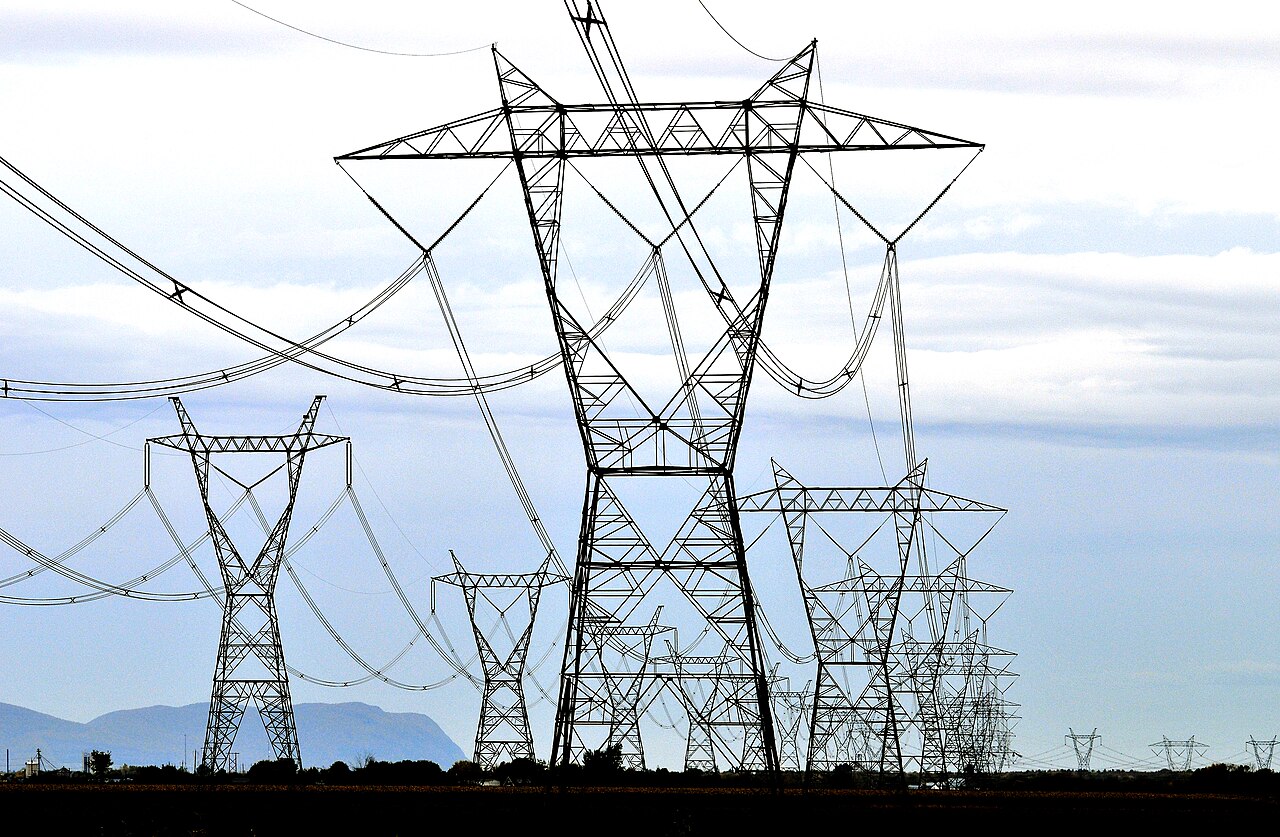
MONTREAL: Hydro-Québec will pay eligible farmers more for transmission lines on their land under an agreement with the Union des producteurs agricoles (UPA) announced Nov. 25, which also creates a fund of up to $25 million for the next generation of farmers.
Compensation for the easements needed to build and operate the lines rises by the equivalent of 25 per cent of the market value of the affected land, the utility and the farm union said in a joint release issued in French. They said the increase recognizes effects that are hard to measure, such as lost use and permanent constraints on the land.
Hydro-Québec will also take into account in its payments each additional transmission line built next to an existing one. Owners of woodlots will get better compensation too, including for pylons in forested areas.
Of the new fund, $5 million is paid on signing. Hydro-Québec will add up to $20 million more by 2041, at a rate of $11,000 for each kilometre of new transmission line built on farmland under eligible projects. The UPA will manage the money, to be spent on initiatives the two sides have yet to agree on.
At that rate, about 1,818 kilometres of eligible new line on farmland would be needed to pay out the full $20 million, according to a Canada News Media calculation. For scale, Hydro-Québec plans to spend $50 billion to add 5,000 kilometres of transmission lines across the province by 2035, La Presse reported. The two figures cover different periods, and the 5,000 kilometres are not limited to farmland.
La Presse also reported that the new agreement took effect Nov. 25 and that compensation for acquiring easements reaches 260 per cent of the market value of the space used, with other payments possible. The previous framework agreement was signed in 2014.
The renewed deal calls for more effective measures to protect soil, crops, biosecurity, drainage and farm infrastructure during work, and extends Hydro-Québec’s commitment to restore land if damage remains afterward. It caps farmers’ civil liability related to the presence of the utility’s infrastructure at $2 million.
Hydro-Québec also committed to using pylons that take up less space where possible. The agreement provides for more information sharing about planned lines and maintenance, and more support for farmers, including agronomic supervision at key stages of work.
“By working together to renew this agreement, we are showing that it is possible to move energy projects forward while respecting the realities of farming,” Hydro-Québec chief executive Claudine Bouchard said in the release (translated from French).
UPA president Martin Caron said the renewal recognizes the importance of protecting the province’s food supply and responds to growing pressure on farmland by limiting the effect on agricultural territory (translated from French).
The agreement does not cover wind turbines on farmland, which have been a point of disagreement involving the UPA and Quebec’s farmland protection commission, La Presse reported.
New transmission lines will be needed as electricity demand rises sharply in the coming years, the release said. The utility warned earlier this month of power deficits as early as 2029, and later reported a $230-million drop in profit amid record-low runoff. The UPA has also been active in the debate over rail corridors across farm country, including with a study proposing a cheaper Quebec-Toronto rail option.
If you find reporting like this useful, consider supporting Canada News Media, an independently owned Canadian newsroom.
Sources: Hydro-Québec and UPA joint release, Nov. 25, 2026; La Presse.
Follow Canada News Media
Get the day's top Canadian stories and our two daily 60-second news videos wherever you scroll.
X Threads Facebook Instagram LinkedIn TikTok YouTube Pinterest Reddit Substack Flipboard Newsletter RSS