


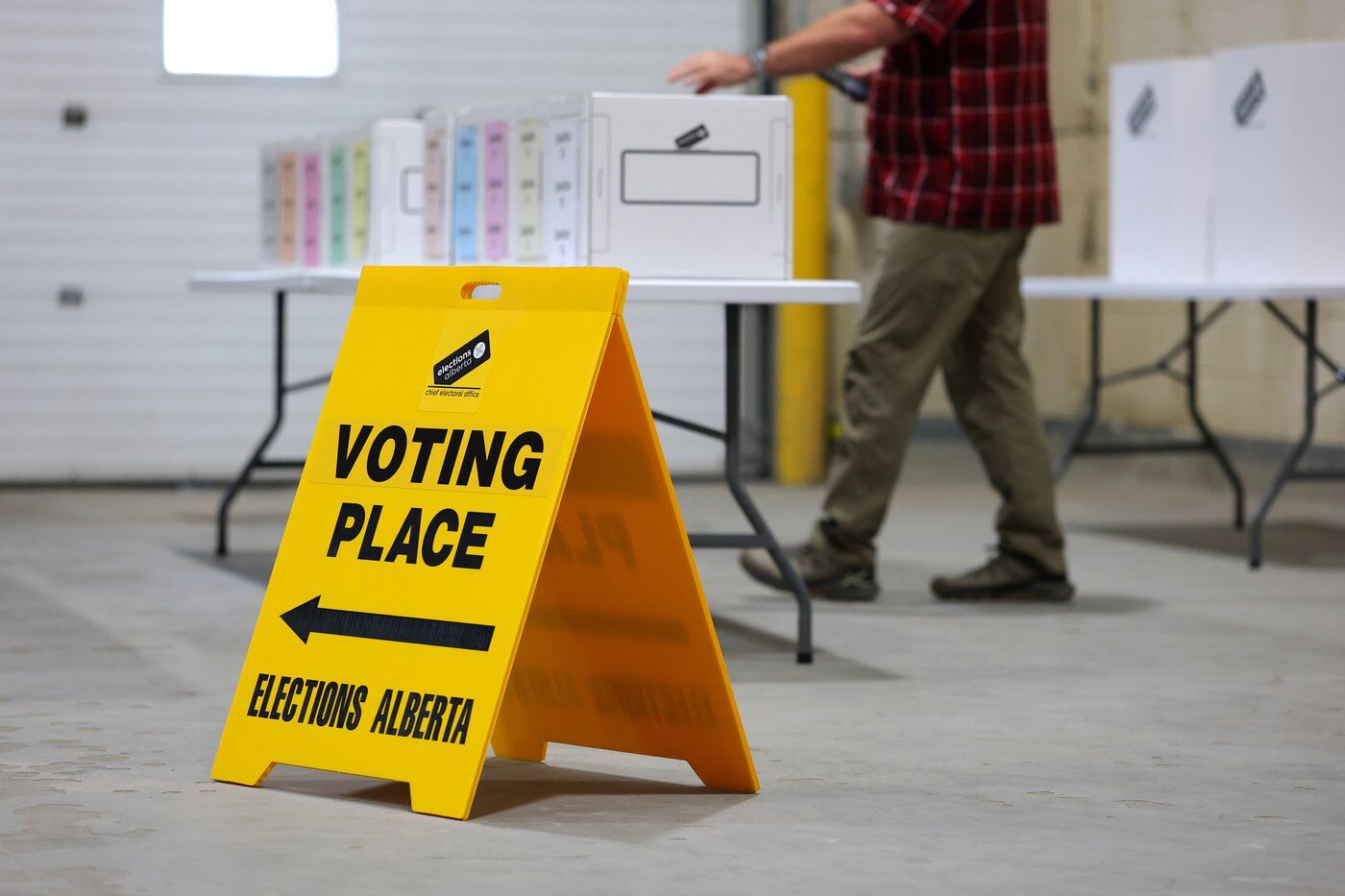
Two polls taken this fall suggest roughly one in five Albertans would vote to start the process of leaving Canada in the Oct. 19 referendum, though pollsters say turnout and a confusing question could still shape the result.
An Ipsos poll conducted Sept. 18 to 22 found 70 per cent of Albertans plan to vote to remain a province of Canada, 20 per cent would vote to commence the separation process and 10 per cent are undecided, according to Global News. The survey included 600 Alberta residents and has a margin of error of plus or minus 4.9 percentage points, 19 times out of 20.
A Research Co. poll of 750 likely Alberta voters, conducted Aug. 24 to 26, found 74 per cent would vote for Alberta to remain in Canada and 22 per cent would support a binding referendum on separation. The pollster said support for Alberta independence sat at 26 per cent, down five points from January. The margin of error was plus or minus 3.6 percentage points.
The numbers are lower than those recorded in the spring. An Angus Reid Institute survey of 800 Alberta adults, conducted May 22 to 24, found 60 per cent would vote no and 35 per cent would vote yes on the official question. The polls used different samples and wording, so they are not a perfect comparison, but the direction across the three is consistent.
The ballot question asks whether Alberta should remain a province of Canada or whether the provincial government should “commence the legal process required under the Canadian Constitution to hold a binding provincial referendum on whether or not Alberta should separate from Canada.”
Angus Reid found 51 per cent of respondents considered the 37-word question confusing, including 38 per cent of United Conservative Party voters. When the group asked a simpler stay-or-leave question, 67 per cent chose to stay and 30 per cent chose to leave.
That matters because a yes vote would not itself separate Alberta. It would direct the government to begin the constitutional process toward a later, binding vote.
The Ipsos poll found the groups most open to separation are men at 25 per cent, Gen Z at 28 per cent and rural Albertans at 28 per cent. Support for remaining was highest among baby boomers at 80 per cent, university graduates at 80 per cent, women at 79 per cent and Edmonton residents at 79 per cent.
For readers aged 18 to 40, the Gen Z figure is worth noting. It is the highest separation number in any group Ipsos reported, though the sample for any single age group is small and carries a larger margin of error than the topline.
Ipsos senior vice-president Gregory Jack said the yes side is more motivated than the no side, and that voter turnout will be critical to the outcome.
Early signs point to strong interest. Elections Alberta ballot requests reached 673,000 in late September, as Canada News Media reported. The poll also found 62 per cent of Albertans plan to vote on all 10 ballot questions and 76 per cent know multiple questions are on the ballot.
The Oct. 5 election of a Parti Quebecois government in Quebec has added a national-unity dimension. McGill University professor Daniel Beland told Al Jazeera that a pro-independence party winning in Quebec two weeks before an Alberta vote could signal to the Trump administration that national unity remains a major issue in Canada.
Research Co. found Stephen Harper and Prime Minister Mark Carney tied at 51 per cent when Albertans were asked whom they trust on separation. Campaign figures Cameron Davies and Marty Belanger scored 10 per cent and 11 per cent.
Poll results are snapshots, and none of the surveys is a forecast. Undecided voters, the motivation gap and the unusually long ballot are the main unknowns. Advance polls and voting rules are laid out in Canada News Media’s guide to how and where to vote.
Only two of the polls cited here were verified against the pollsters’ own published releases. The Ipsos figures come from Global News coverage, and this story is developing.
If you find reporting like this useful, consider supporting Canada News Media, an independent Canadian newsroom with no corporate parent.
Via Global News (Ipsos poll), with data from Research Co. and the Angus Reid Institute.
Follow Canada News Media
Get the day's top Canadian stories and our two daily 60-second news videos wherever you scroll.
X Threads Facebook Instagram LinkedIn TikTok YouTube Pinterest Reddit Substack Flipboard Newsletter RSS