



Waterloo, Ont.-based BlackBerry Ltd. raised its full-year revenue forecast Thursday after its QNX automotive software division posted record quarterly sales, extending a turnaround that has taken the one-time smartphone maker deep into the global auto industry’s supply chain.
The company reported second-quarter revenue of $163.3 million US, up 26 per cent from a year earlier and well ahead of the $145.6 million analysts had expected, according to Reuters. QNX, which sells the real-time operating system used to run infotainment, digital cockpits and safety systems in vehicles, brought in $80.3 million of that total, a 27 per cent year-over-year gain and the segment’s third consecutive quarter of 20-per-cent-plus growth, BlackBerry said.
“We’re supporting all the different domains of the car. That’s one of the reasons why we’re seeing some of the explosive growth,” chief executive John Giamatteo said, according to Reuters.
BlackBerry raised its full-year revenue guidance to a range of $616 million to $636 million US, up from a prior forecast of $594 million to $621 million, and pointed to a new design win with Coretura, a joint venture between Sweden’s Volvo Group and Germany’s Daimler Truck, as a driver of future growth. The company said the deal is the largest in QNX’s history and could add more than $100 million to its royalty backlog, the technology news outlet BetaKit reported.
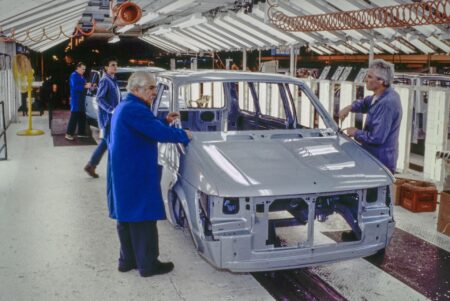
The result underscores how central QNX has become to BlackBerry’s business, now generating just over half of total company revenue and helping produce a sixth consecutive quarter of positive net income under generally accepted accounting principles. As of a company announcement in December, QNX software was embedded in more than 275 million vehicles worldwide, with automakers including Audi, General Motors, Hyundai and Mercedes-Benz among its customers, according to Reuters and BlackBerry’s own release.
The Coretura deal points to a broader shift in the industry BlackBerry is now betting on: automakers consolidating the dozens of separate computers once scattered through a vehicle onto fewer, more powerful ones running software like QNX, a trend the industry calls the software-defined vehicle. Truck manufacturers, which face similar demands for advanced driver-assistance and telematics systems as passenger carmakers, represent a newer growth avenue for the company beyond its established car business.
For Waterloo Region, long known as a hub for Canadian technology talent, BlackBerry’s rebound carries symbolic weight. The company’s stock has roughly doubled this year even after Thursday’s earnings, and shares have climbed from around $5 to as high as $16.37 since Giamatteo took over as chief executive in late 2023, a period in which the company shed its handset business entirely to focus on automotive and cybersecurity software. Analysts at TipRanks currently rate the stock a buy with a $13 price target.
BlackBerry projected third-quarter revenue of $143 million to $154 million US, versus analyst estimates of roughly $149.6 million, suggesting the company expects growth to continue at a similar pace into the holiday quarter. With automakers still years away from finishing the shift to centralized vehicle computing, QNX’s expanding footprint gives one of Canada’s best-known tech brands a foothold in an industry transition that is reshaping how cars, and now heavy trucks, are built.
Follow Canada News Media
Get the day's top Canadian stories and our two daily 60-second news videos wherever you scroll.
X Threads Facebook Instagram LinkedIn TikTok YouTube Pinterest Reddit Substack Flipboard Newsletter RSS