

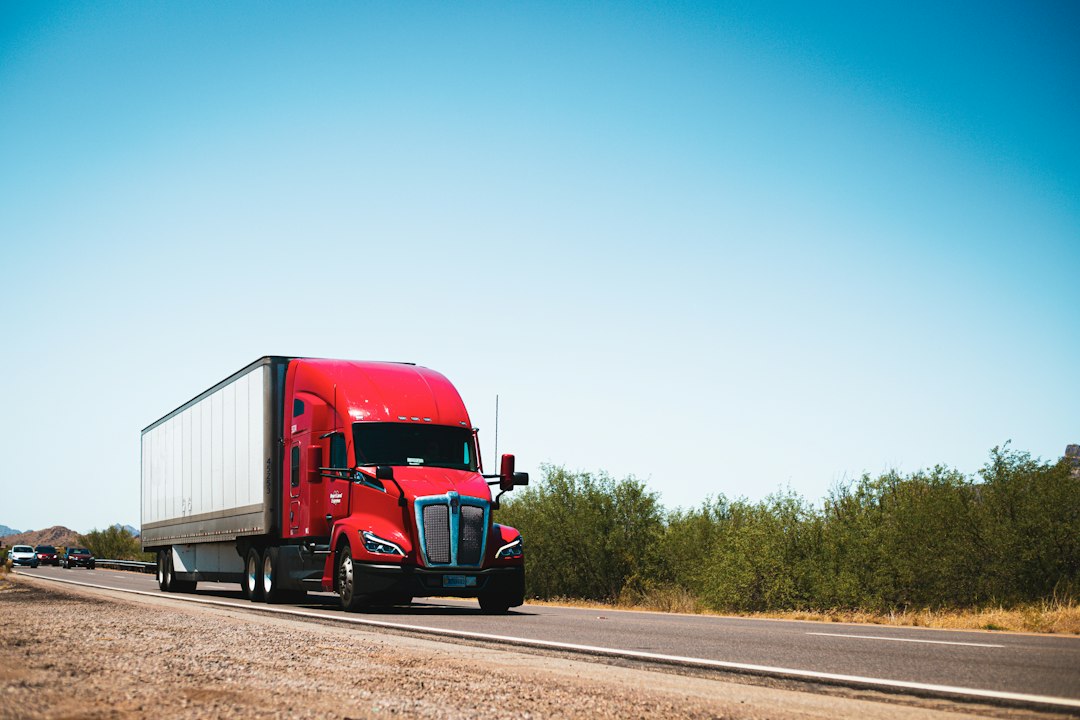
Toronto-based Waabi says its self-driving transport trucks are ready for commercial deployment and expects to put them on Texas highways in early 2027, once partner Volvo Autonomous Solutions finishes final safety validation.
Waabi chief operating officer Lior Ron said at the Nrth Festival in Toronto on Sept. 25 that the company’s autonomous driving system is “highly, highly, highly mature” and could be deployed today, according to BetaKit. “The system is highly, highly, highly mature in the initial deployment area in Texas,” Ron said. “It feels like a Waymo, the truck smoothly navigates all of that.”
Volvo is expected to finish validating the integrated system by the end of 2026, BetaKit reported, with Waabi targeting an early 2027 commercial start in Texas and expansion across the U.S. Sun Belt by the end of 2027. The company projects it will be running across North America within four to five years.
Waabi was founded in Toronto in 2021 by Raquel Urtasun, a University of Toronto professor and former chief scientist at Uber’s self-driving unit. The company builds an AI “virtual driver” that it licenses to truck makers rather than manufacturing its own vehicles, a strategy meant to let it scale faster than rivals that build hardware in-house.
That strategy was tested in June, when Waabi and Volvo announced what they called a breakthrough in “zero-shot generalization.” Waabi’s driving system transferred from one truck platform to Volvo’s VNL Autonomous model without new training data or engineering work, despite differences in the vehicles’ size, sensors and controls. Volvo Autonomous Solutions president Nils Jaeger said the demonstration showed the platform “is designed to integrate different vehicle models and virtual drivers,” while Urtasun called it the first industry demonstration of a virtual driver generalizing across vehicle types “without requiring a single training example.”
The Texas push builds on infrastructure Waabi has had in place for several years. The company has hauled freight between Dallas and Houston with a safety driver aboard since 2023 through a partnership with Uber Freight, and it operates a terminal in Lancaster, south of Dallas, built specifically for driverless operations.
Waabi is also well capitalized for the expansion. It closed a $750-million-U.S. Series C round in January, part of a $1-billion-U.S. raise that BetaKit called the largest tech fundraise in Canadian history, with backers including Uber and Nvidia.
For Canada’s AI sector, Waabi’s progress is a test of whether homegrown AI research, much of it seeded by the University of Toronto’s AI research cluster, can produce companies that scale globally without relocating their headquarters. Ottawa has made retaining that kind of company a stated goal of its national AI strategy, and Waabi’s Toronto base paired with a growing Texas commercial footprint is close to the model the government points to as success. Whether Volvo’s validation holds to its end-of-2026 timeline will be the first real test of whether that promise turns into trucks moving freight with no one behind the wheel.
Follow Canada News Media
Get the day's top Canadian stories and our two daily 60-second news videos wherever you scroll.
X Threads Facebook Instagram LinkedIn TikTok YouTube Pinterest Reddit Substack Flipboard Newsletter RSS