



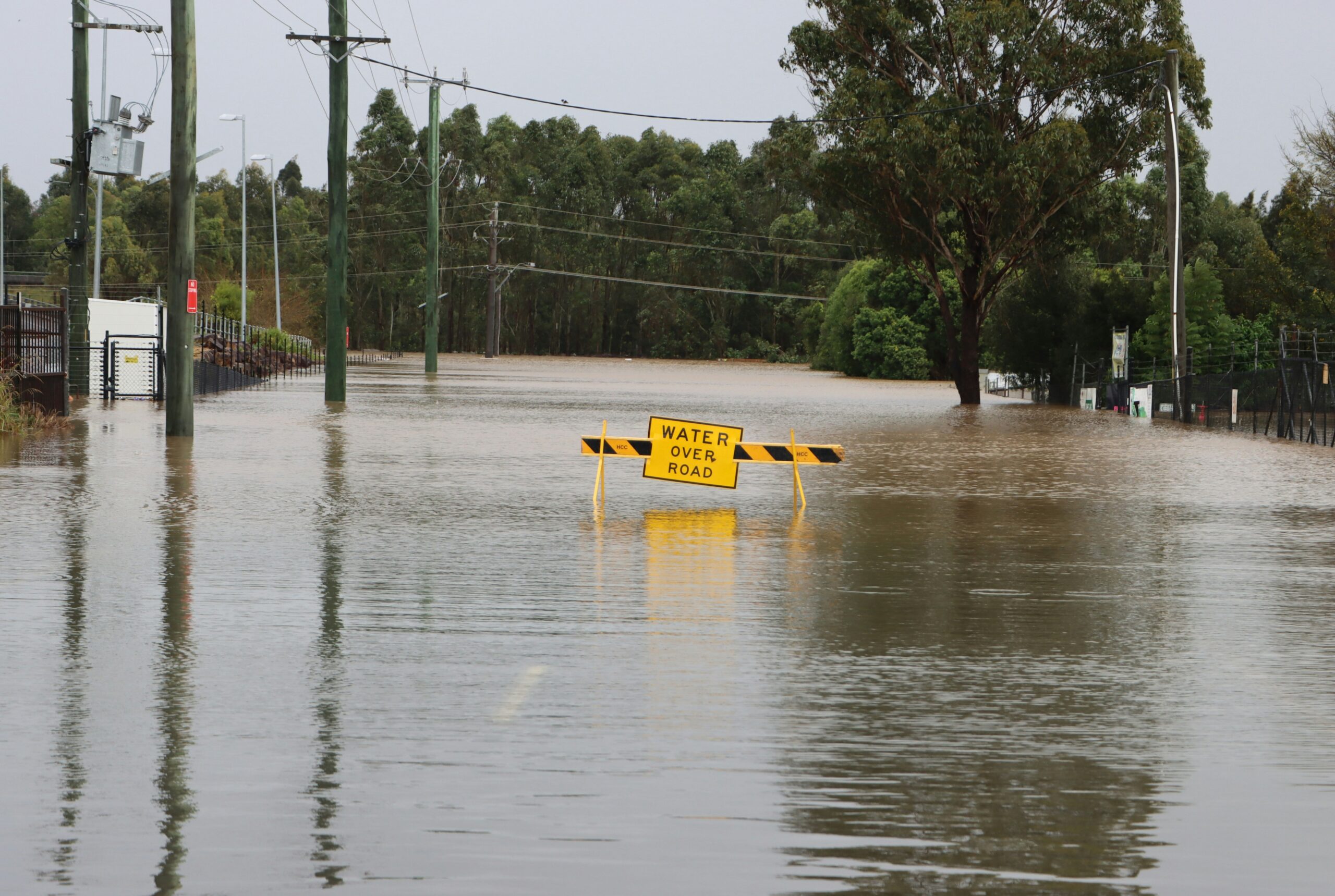
Nova Scotia has lifted the state of local emergency for Inverness and Victoria counties, leaving Richmond County as the only part of Cape Breton Island still under the order three days after torrential rain washed out roads and bridges across the region.
The province’s emergency information service posted the change at 6 p.m. Tuesday. Travel is not prohibited in the areas where the order has been lifted, the notice said, but residents are encouraged to assess road conditions and check the 511 Nova Scotia service before heading out. Municipal officials in all three counties had declared local emergencies on Saturday because of flooding and widespread damage to roads, bridges and other critical infrastructure.
The change came at the end of a day in which schools across the three counties stayed closed. The Strait Regional Centre for Education closed all of its school buildings in Richmond and Inverness counties Tuesday, and the Cape Breton-Victoria Regional Centre for Education cancelled classes at every school in Victoria County, CTV News reported. Three Conseil scolaire acadien provincial sites, Ecole Beau-Port, Ecole NDA and Bureau du Nord, were also closed, along with the Nova Scotia Community College’s Strait Area Campus and Wagmatcook Learning Centre. Service Nova Scotia closed the Port Hawkesbury Access Nova Scotia office and the Baddeck registry of motor vehicles office for the day.
A slow-moving storm dropped more than 200 millimetres of rain on the island and parts of the northern mainland in less than two days, The Canadian Press reported. Environment and Climate Change Canada recorded more than 100 millimetres in several parts of Cape Breton, including 130 millimetres at Ingonish Beach and 105 millimetres at Sydney, according to Global News.
The flooding has been linked to one death. RCMP said they located the body of a 46-year-old woman from Cleveland, in Richmond County, on Saturday, several hours after her abandoned vehicle was found near a flooded bridge. Police said Sunday the death is not believed to be suspicious and that they would not release further information. Premier Tim Houston said on X that his thoughts were with her loved ones. Emergency Management Minister Kim Masland said in a statement Monday that “when tragedy takes the life of a fellow Nova Scotian, it is felt across our province.”
The damage to the island’s road network is still being tallied. Toby Koffman, communications director for the Department of Public Works, said in a statement Monday that more than 120 roads were closed or damaged at the peak of the flooding and that about 44 remained closed, with dozens reopening overnight. Two of eight damaged bridges will need to be replaced, Koffman said, and more than 200 culverts were washed away, ranging from driveways to major roads. He said it would be some time before the province could estimate the total cost of the damage.
Public Works Minister Fred Tilley told The Canadian Press that hundreds of provincial employees and local contractors were working to restore the entire road network within days. “We are hoping to get all those folks that may be stranded access to the road network very soon,” Tilley said. He said the province had prepared for the storm but that “there’s not much infrastructure that can handle that in Nova Scotia,” describing it as “another one of these one in 100 year storms that has wreaked havoc.” Building for climate change, he said, is “always top of mind when we’re rebuilding.”
Lois Landry, warden of Richmond County, told The Canadian Press she has lived on Cape Breton Island all of her 58 years and has never seen flooding on this scale. A rainfall gauge in the Saint George’s Channel area measured 230 millimetres before it broke, she said. “We’re used to hurricanes on the East Coast, that’s not new to us,” Landry said. “But there was wind coupled with rain we haven’t seen the likes of, really, ever.” During the worst of the flooding, she said, a Zodiac rescue boat operated by a local fire department and a provincial helicopter were used to carry out daily wellness checks on residents who had been cut off entirely.
Some effects of the storm are still being felt in areas no longer under an emergency order. The Municipality of Inverness County issued a mandatory water conservation order for users of the Judique water system, saying heavy rainfall had sharply increased turbidity at the Judique dam and forced the treatment plant to shut down temporarily so sediment could settle. A municipal support line for western Cape Breton residents reporting non-emergency issues opened Monday and operates from 8 a.m. to 8 p.m. at 902-625-7888. Officials say fire and ambulance crews continue to respond to 911 calls.
Sources: Emergency Info Nova Scotia (Sept. 8, 2026 update), The Canadian Press, CTV News and Global News.
Follow Canada News Media
Get the day's top Canadian stories and our two daily 60-second news videos wherever you scroll.
X Threads Facebook Instagram LinkedIn TikTok YouTube Pinterest Reddit Substack Flipboard Newsletter RSS