


Kate Van Buskirk has spent 18 years in a Canadian national team singlet, and she has a particular way of describing what she wears to race in. It is not an outfit and it is not a look. It is equipment.
The Brampton, Ont., native, who retired from elite competition and now works as a track and field analyst, told CBC Sports that she refers to her uniform as her “equipment,” and that the bottoms she competes in are simply “bunners.” The framing is deliberate. “It should be about performance, not appearance,” she told the broadcaster.
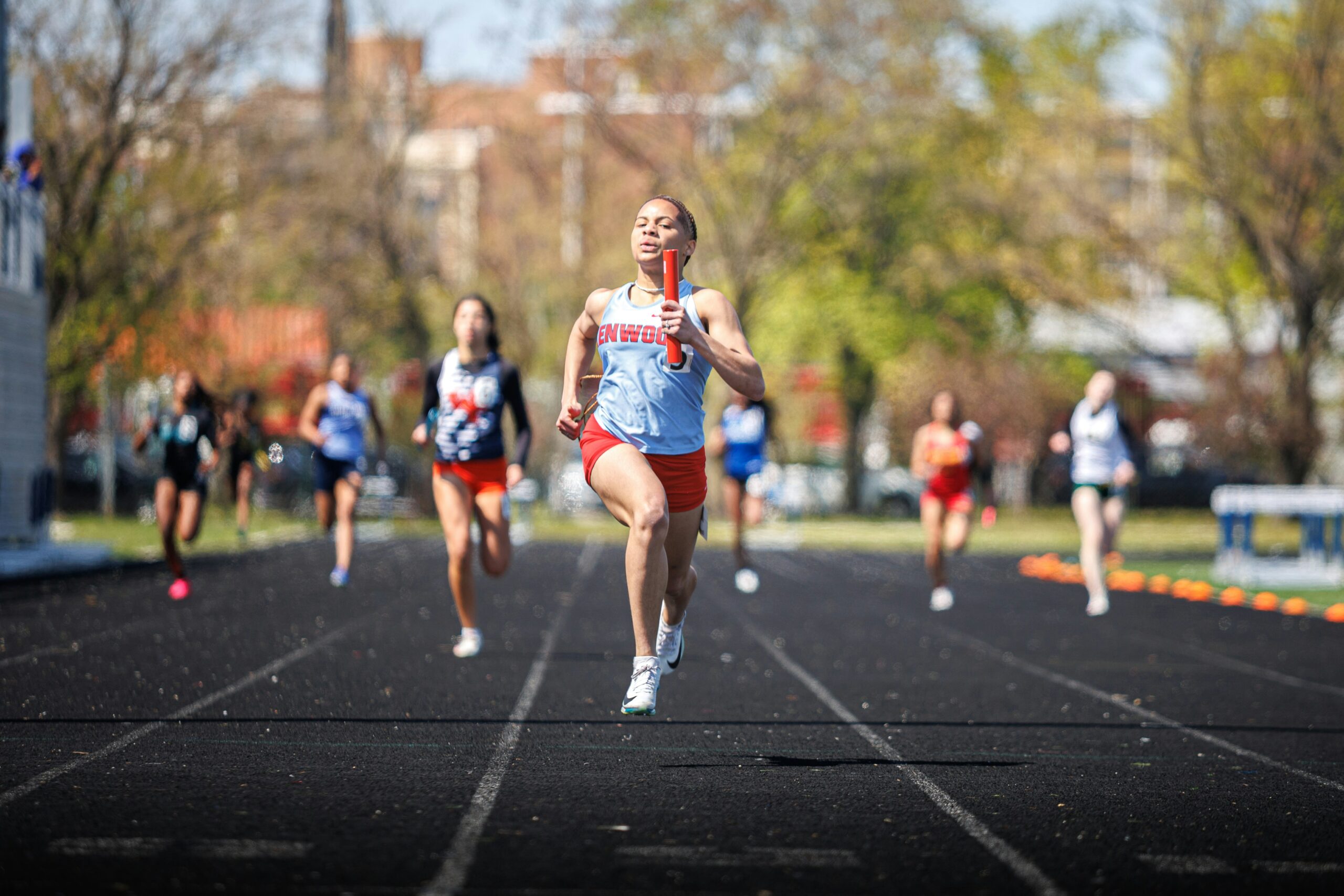
Van Buskirk was speaking as part of a wider conversation among Olympians about how women’s athletics is filmed and photographed, a conversation that has gained new institutional weight this year. In June, the European Broadcasting Union published a set of guidelines for broadcasters covering women’s athletics, developed with European Athletics and titled Raising the Bar: Guidelines for respectful media coverage in women’s athletics. According to the EBU’s announcement, the document uses visual examples of camera work and broadcast direction to show how coverage can prioritize technical skill while, in the union’s words, upholding the professionalism and dignity of women in sport.
The guidelines are backed by a group of Olympians that includes British pole vaulter Holly Bradshaw, Serbian long jumper Ivana Spanovic and Croatian high jumper Blanka Vlasic. They are now available to any broadcaster covering the sport.
“Women’s sport deserves to be seen, covered, and valued on equal terms and we’re committed to making that a reality across our rights portfolio with our Members and partners,” Glen Killane, executive director of EBU Sport, said in the release. “These guidelines mark an important step forward and set a clear expectation that coverage of women’s athletics needs to reflect technical ability and compelling storytelling.”
Dobromir Karamarinov, president of European Athletics, tied the project to his organization’s Race For Respect initiative. “At European Athletics, we are committed to ensuring that our sport is presented in a way that respects and empowers all athletes, regardless of gender, race, religion, sexual orientation, or socioeconomic background,” he said in the same release, adding that the only way forward is through collaboration, dialogue and mutual understanding among stakeholders.
For Van Buskirk, the issue is not abstract. She made her Olympic debut in the women’s 5,000 metres at the Tokyo Games in 2021, running the second-fastest time of her career on the sport’s biggest stage. She told CBC Sports that the aftermath of that race produced what she considers the most “egregious” example of how she has been captured on camera, with images of her “sprawled out” on the track circulating online, shot from angles she found invasive.
The numbers suggest she is not an outlier. A report from The Representation Project examining coverage of those same Tokyo Games found women were sexualized nearly 10 times more often than male athletes, a finding that arrived despite Olympic broadcasters having urged camera operators beforehand to pursue “sport appeal, not sex appeal.”
Van Buskirk’s own record makes the point about what should be on screen. She won 1,500-metre bronze for Canada at the 2014 Commonwealth Games in Glasgow, set a Canadian indoor mile record of 4:26.92 in early 2018, and ran 14:59.80 in Irvine, Calif., in May 2021 to dip under the Olympic entry standard in the 5,000. She did all of it while managing spondyloarthropathy, a genetic rheumatic condition, and she moved to the marathon in 2024, winning the women’s field in her debut over the distance.
That is a career built on splits, comebacks and a lot of unglamorous work, which is roughly the argument the new guidelines are making to the people holding the cameras.
Follow Canada News Media
Get the day's top Canadian stories and our two daily 60-second news videos wherever you scroll.
X Threads Facebook Instagram LinkedIn TikTok YouTube Pinterest Reddit Substack Flipboard Newsletter RSS