

European Commission President Ursula von der Leyen invited Canada on Wednesday to become the first “associate member” of the European Union, a category that does not exist anywhere in the bloc’s treaties.
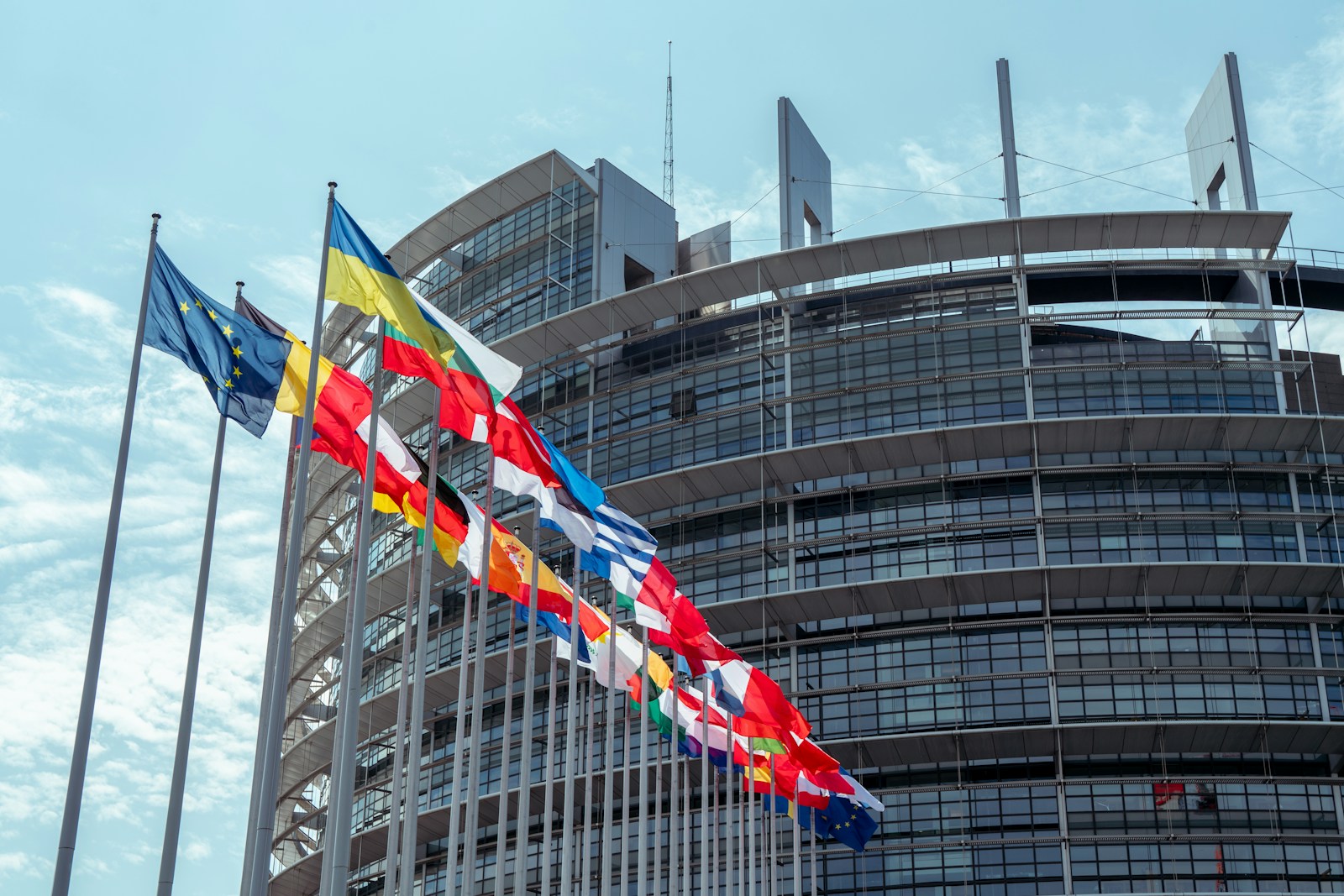
She made the offer during her 2026 State of the European Union address in Strasbourg, delivered to the European Parliament with Prime Minister Mark Carney seated in the chamber. According to Euronews, von der Leyen invited Canada to become “the first associate member of the European Union,” and said the two sides would “move from CETA to an Alliance for the Future to create a common prosperity and economic security space.”
The practical content is still being drafted. Officials on both sides are examining how Canadian goods, services and workers might move more freely in sectors including defence, energy, artificial intelligence, critical minerals and semiconductors, and how supply chains in those sectors could be integrated. None of it has been written down as a legal text, and neither side has said whether Canada would hold voting rights in any EU institution.
What has gone unmentioned alongside the announcement is that the phrase von der Leyen used already has a worked-out meaning in Brussels, and it is narrower than it sounds. German Chancellor Friedrich Merz proposed an “associate membership” in May for Ukraine, setting out in a letter to EU leaders that the status would give Kyiv access to the European Council, the European Commission and the European Parliament without voting rights and without a dedicated portfolio. That is the only version of associate membership anyone in the bloc has put on paper. If Canada is offered the same architecture, it is a seat in the room rather than a vote in it.
There is precedent for that trade-off. Norway participates in the single market through the European Economic Area and Switzerland has access through a series of bilateral agreements, and neither has a say in writing the rules it adopts. Canada would be the first non-European country asked to take that bargain.
The harder obstacle is one the announcement passes over. The agreement von der Leyen proposes to move beyond, the Comprehensive Economic and Trade Agreement, has never fully entered into force. CETA has been provisionally applied since Sept. 21, 2017, but as a mixed agreement it requires ratification by every member state, and EU ratification records show 10 have still not ratified: Belgium, Bulgaria, Cyprus, France, Greece, Hungary, Ireland, Italy, Poland and Slovenia. Nine years after the deal took provisional effect, roughly a third of the union has not signed off on the arrangement Canada already has.
Anything deeper than CETA would almost certainly be a mixed agreement as well, which sends it back through those same national legislatures, and in Belgium’s case through regional parliaments. Wallonia’s regional assembly came close to blocking CETA outright in October 2016. That is the mechanism an Alliance for the Future would have to survive, and nothing announced Wednesday changes it.
The offer also answers a question this outlet examined on Sept. 14, when Carney ruled out EU membership and the treaty text had already closed that door. Article 49 of the Treaty on European Union limits membership applications to European states, and Canada is not one. Brussels did not reinterpret that provision on Wednesday. It proposed a category outside it.
Von der Leyen framed the move in political rather than legal terms. “Europe and Canada believe in democracy. That power does not belong to the strongest, the richest, or the loudest, but to all of us,” she told MEPs, according to Euronews. “Democracies have the freedom to choose with whom to work.”
Carney has been careful with his own language. “We’re not looking to become a member of the European Union,” he said before travelling, describing the goal instead as a unique alliance between Canada and the EU. Conservative Leader Pierre Poilievre has criticized talk of Canadian membership in the bloc.
Carney addresses the 720 members of the European Parliament on Thursday. Four things are worth listening for: whether he uses the phrase associate member himself, whether either side attaches a timeline, whether the arrangement is described as a treaty or a political declaration, and whether anyone says out loud what Canada would give up in return for frictionless access to a market of roughly 450 million people.
via Euronews