
Article content continued
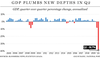
Almost every single component of the economy used to calculate GDP was at its lowest point over April, May and June — driven largely by widespread lockdowns in April.
Economic output rebounded in May by 4.8 per cent, and the agency says June posted an increase of 6.5 per cent.

The agency’s preliminary estimate for July indicates a three-per-cent increase in real GDP.
The second quarter of 2020 was largely expected to be the worst three-month stretch for the economy this year before the country begins what is expected to be a long, bumpy road to a recovery.
Even with the gains in June, economic output is about nine per cent below pre-pandemic levels, Statistics Canada says.
On Thursday, Bank of Canada governor Tiff Macklem told an international gathering of central bankers that not all small and medium-sized businesses are going to be able to reopen even as restrictions to contain COVID-19 are rolled back.
That will be especially the case in sectors such as restaurants and hospitality, where people are in close proximity.
“We are seeing now some very impressive rebound numbers as the economy reopens,” Macklem said on a virtual panel hosted by the Federal Reserve Bank of Kansas City.
“That’s a really good thing, but not all parts of the economy are going to be able to reopen for some time, and so we expect that after this first phase, it’s going to be a pretty long, bumpy phase.”
We expect that after this first phase, it’s going to be a pretty long, bumpy phase
Tiff Macklem, Bank of Canada Governor
The record decline in output over the last quarter, which was the worst posting for the economy over six decades of comparable data, was fuelled by record drops in spending as businesses stayed closed, Canadians ordered to stay home and millions out of work.