


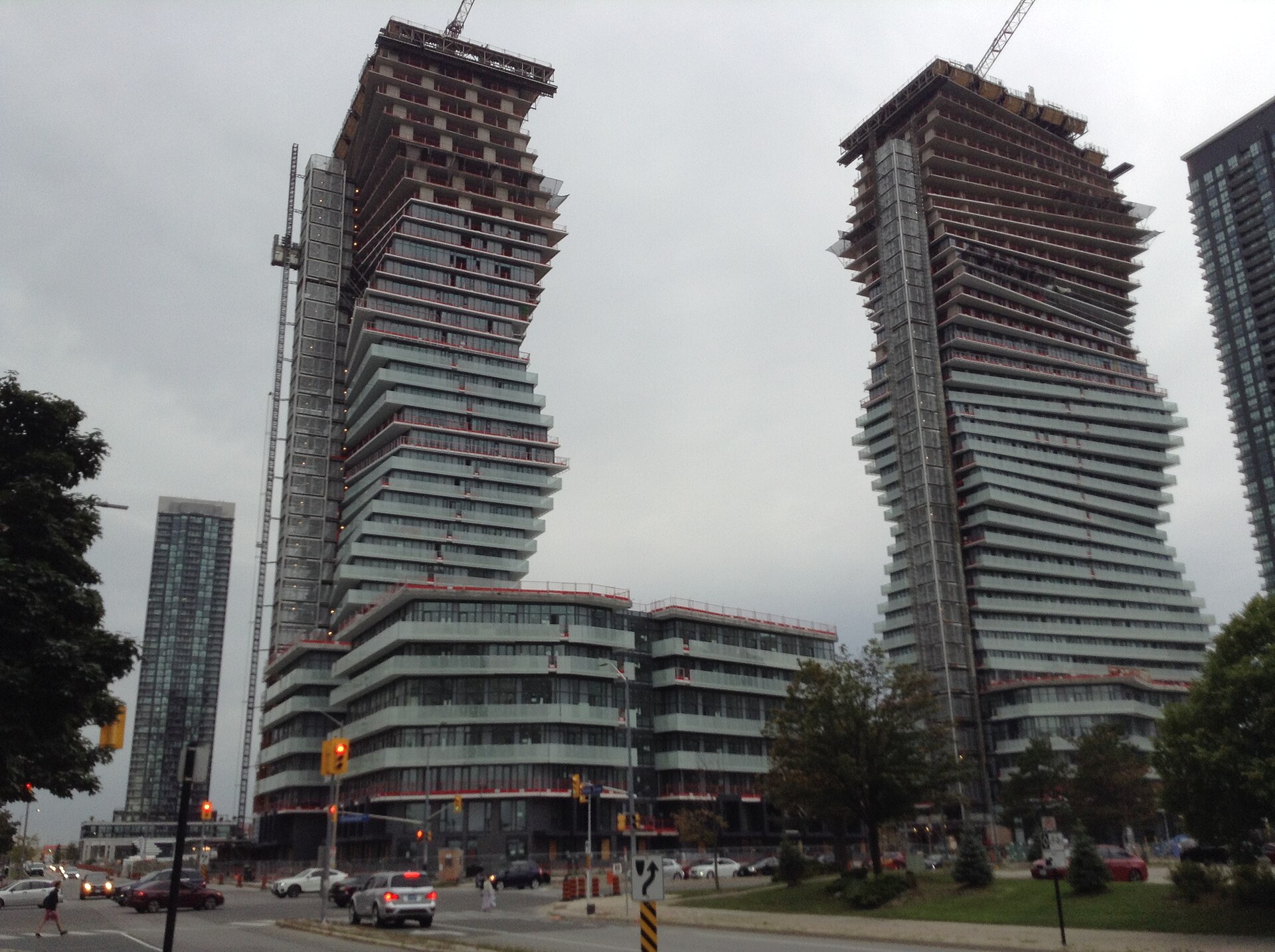
Twenty-five of the 65 cities whose Housing Accelerator Fund progress Canada Mortgage and Housing Corporation has published from their second annual reports were behind the building-permit forecasts they gave Ottawa, and every one of the 25 has received its third payment from the fund, according to the summaries CMHC posts for each city. Mississauga, one of the largest recipients, had permitted 4,310 new units against a Year 2 forecast of 8,653, or 50 per cent, and has been paid $84.7 million of the $113 million it is eligible for.
The Housing Accelerator Fund, launched in 2023, pays municipalities in four advances to change planning rules and speed up housing, in return for a three-year Housing Supply Growth Target and yearly forecasts of permitted units. The summaries measure progress in net new units with building permits, not housing starts. Whitby, Ont., was furthest behind, at 30 per cent of its Year 2 forecast: 1,115 permitted units against a forecast of 3,767 and a three-year target of 5,935. Its summary says it has received three advances of about $6.25 million each from total eligibility of $24,990,434.50. Grand Falls-Windsor, N.L., was at 42 per cent (44 units against a forecast of 104), Mississauga and Barrie, Ont., at 50 per cent (Barrie had 2,753 units against 5,461), Guelph, Ont., at 55 per cent (1,256 against 2,303) and Ajax, Ont., at 59 per cent (1,309 against 2,216). Comox, B.C., Stratford, P.E.I., Richmond, B.C., Squamish, B.C., and Stony Plain, Alta., were between 61 and 69 per cent.
The rest of the 25 were closer. Campbell River, B.C., was at 73 per cent; Kingston, Ont., at 78; Kelowna, B.C., at 79; Mount Pearl, N.L., Waterloo, Ont., and Hamilton at 83; Ottawa and St. Catharines, Ont., at 84; Thunder Bay, Ont., at 86; New Westminster, B.C., at 88; Brampton, Ont., at 92; East Hants, N.S., at 93; North Vancouver at 95; and Richmond Hill, Ont., at 97. The other 40 cities with a second-year figure, including Vancouver, Edmonton, Winnipeg, Halifax, Surrey, Regina, Saskatoon and London, Ont., were above 100 per cent of their Year 2 forecast. Thirteen of the 25 cities behind forecast are in Ontario, and seven are in British Columbia.
CMHC’s own wording differs from city to city. In 12 summaries, including Whitby, Grand Falls-Windsor, Mississauga, Barrie, Guelph, Ajax and Hamilton, CMHC writes that while the city’s action plan initiatives are on track, “the permitted units are falling short of forecast,” and that the municipality is implementing mitigating actions “to incentivize permitting as best as possible despite challenging economic conditions.” For Ottawa and St. Catharines, both at 84 per cent, CMHC says it is “satisfied that the city is meeting its commitments under the HAF agreement.” For Stratford and North Vancouver, it notes delayed initiatives and says it is satisfied that mitigating actions are being taken.
Every one of the 25 summaries says the city “recently received its third installment,” which CMHC describes as “reflecting the progress it has made on its commitments to date.” The summaries say payments after the first are “conditional on compliance with a community’s Housing Action Plan and commitments,” which include the planning changes each city promised as well as the unit targets. They do not say how permit shortfalls will be weighed when the fourth and final advance is calculated, and they do not show any payment being reduced or withheld. The status dates on the summaries run from January to July 2026, so the figures are not current; Year 3 reports are due to CMHC now.
The City of Mississauga, which Canada News Media asked about its figures, replied before the deadline and did not dispute them. It said the numbers CMHC published are based on data the city provided through its annual HAF reporting, and that it is compiling Year 3 data to send to CMHC at the end of November 2026. The city said the main reason for the gap is the slowdown in the housing market, with population-adjusted housing starts in the Toronto area at their lowest rate since 1996, excluding 2025, citing CMHC’s 2026 Housing Supply Report. Condominiums made up 82 per cent of all housing permits in Mississauga in 2022, the city said, but “new condominium construction has collapsed amid weak presales, poor investor demand and high resale supply,” and most new apartment starts are now likely to be rentals. It said missing-middle housing, such as multiplexes, has trended closer to forecast.
Mississauga listed the steps it has taken. It said it voluntarily cut development charges by 100 per cent for rental units of one bedroom plus den or larger and by 50 per cent for all other residential units, which it said could unlock 20,400 homes by 2029. Its Affordable Rental Housing Community Improvement Plan is providing incentives to 527 affordable and below-market rental units across nine developments that together hold 2,492 new purpose-built rental apartments, and another 510 affordable or below-market units are on a waitlist pending more funding. The city said it has incentivized more than 1,000 additional residential units and fourplexes, with 500 more expected to qualify by the end of 2027, has pre-zoned protected major transit station areas for an estimated 114,000 homes, and has streamlined approvals and widened the planning commissioner’s delegated authority. “It is unclear when permit forecasts will be reached as it is entirely market dependent and beyond the City’s direct control,” the city said. It said it has fulfilled all of its HAF action plan commitments, has received three payments totalling $84,748,598.25, and expects the fourth to be calculated after CMHC reviews its annual report, by the first quarter of 2027. The amount matches the three advances of $28,249,532.75 shown in CMHC’s summary.
The city’s explanation fits the wider market. CMHC data show Toronto-area housing starts at their lowest since 1996, and Canada News Media reported in September that 141,480 approved homes were sitting unbuilt across the country. The City of Guelph told Canada News Media on Nov. 6 that it approved 2,065 building permits from 2024 to 2026, that about 9,000 approved units were awaiting permits, that CMHC had not reduced or held back any payment, and that its action plan would be fully complete by the end of the year.
CMHC did not respond by the deadline. Canada News Media sent the corporation’s media relations office questions on Nov. 16, with a deadline of Nov. 18 at 5 p.m. ET, asking whether the figures are current, whether any advance has been reduced, delayed or withheld because permits fell short, what happens to a city that misses its three-year target, whether any targets or forecasts have been lowered since the agreements were signed, and whether CMHC expects the cities now behind to catch up. An earlier request on Nov. 4 about Guelph, Barrie and Peterborough also went unanswered. We will update this story if CMHC responds.
The records do not show that any city misused fund money, and a city below its forecast is not in breach of its agreement on that basis alone. CMHC has paid fund bonuses before on gains the Parliamentary Budget Officer could not confirm, as Canada News Media reported in Edmonton’s case, and the fund has survived local policy reversals, such as Calgary’s rezoning repeal. Residents can read their own city’s summary, including its targets, forecasts, payments and promised initiatives, on CMHC’s Housing Accelerator Fund progress page.
If you find reporting like this useful, consider supporting Canada News Media, an independently owned Canadian newsroom.
How we checked: We downloaded all 97 city Action Plan summaries linked from CMHC’s Housing Accelerator Fund progress page (first on Nov. 13 and again on Nov. 18, when we re-read the nine summaries that had been replaced and found no changes to the figures), extracted the text and recorded, for each, the “Year 2 Progress (Cumulative)” forecast and actual permitted units, the per cent of forecast and of the three-year target, the funding schedule and CMHC’s assessment sentence. Sixty-five summaries report progress as of the second annual report; the other 32 report only first-year results or use other wording and are not counted. Examples: the summaries for Mississauga, Whitby and Barrie. The City of Mississauga’s statement was emailed by its media office on Nov. 18; Guelph’s on Nov. 6. Our earlier reporting on Toronto-area housing starts is linked above.
Follow Canada News Media
Get the day's top Canadian stories and our two daily 60-second news videos wherever you scroll.
X Threads Facebook Instagram LinkedIn TikTok YouTube Pinterest Reddit Substack Flipboard Newsletter RSS