

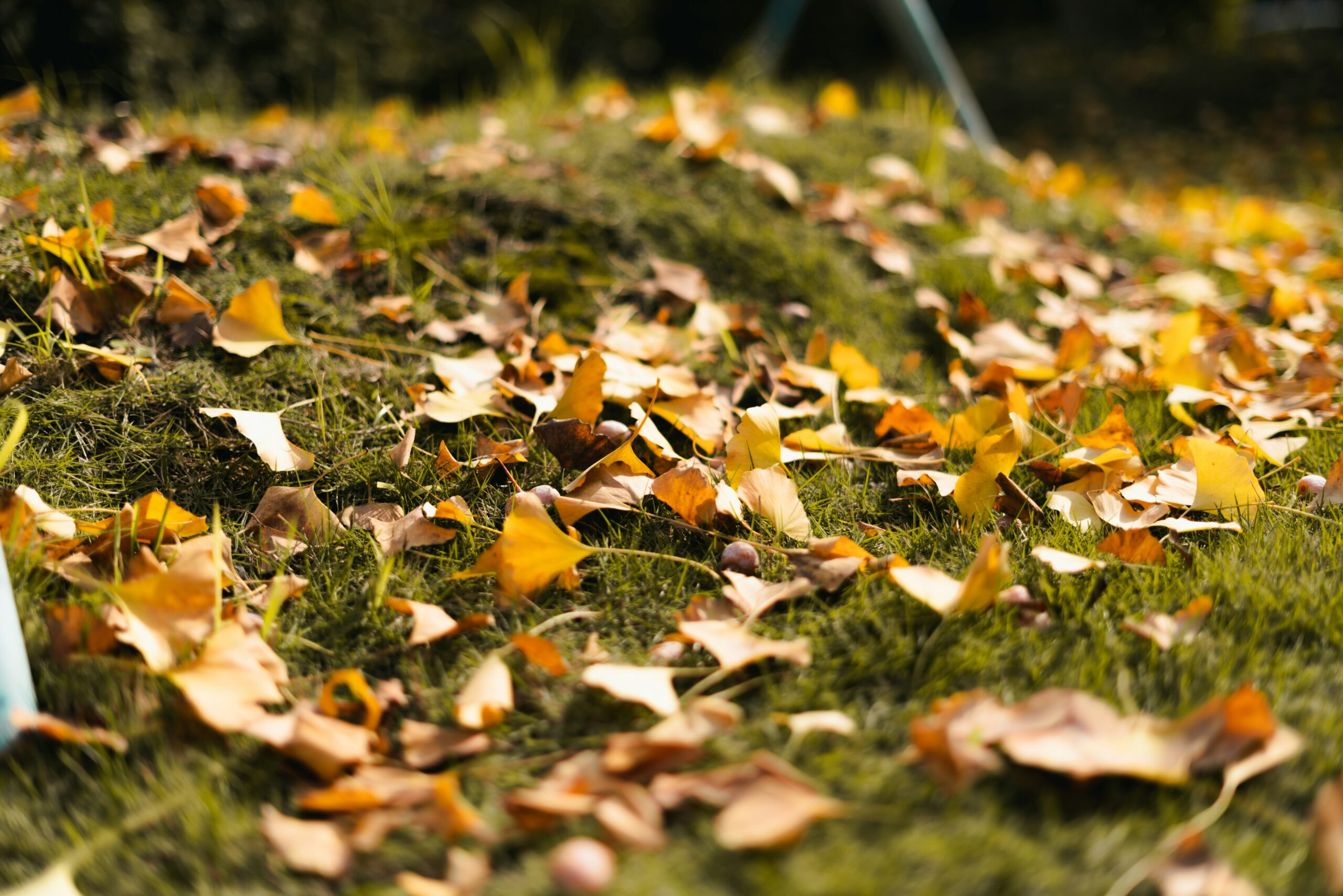
You do not have to rake. The fastest way to deal with fallen leaves on a Canadian lawn is to raise the mower deck to its highest setting, take the bagger off and mow over the leaves until they are shredded into pieces small enough that you can still see grass through the layer they leave behind. Done right, the shredded leaves break down over the winter, feed the soil and cost you nothing to haul away.
Timing is the part most people get wrong, and mid-September is when it starts to matter. Leaves begin dropping across most of the country now, and mulching only works while the layer on the ground is thin. Weed Man Canada, in a company guide on raking versus mulching, notes that the method fails if leaves are allowed to accumulate thickly: a deep layer still traps moisture and smothers grass even after it is chopped, and wet, compacted leaves will clog a mulching mower outright. The practical implication is that this is a weekly chore through October, not a single afternoon in November.
The research behind the practice is more supportive than most homeowners realize. Turfgrass researchers at Michigan State University ran a series of experiments on mulching tree leaves directly into established lawns and found that even a six-inch layer of maple and oak leaves could be mulched into turf with no apparent adverse effects, according to a summary published by University of Illinois Extension. Follow-up studies found the decomposing leaf pieces returned nutrients to the turf and produced a quicker green-up the following spring, and that the residue helped block weed seeds from germinating by covering thin spots and bare soil. Separate MSU work published in HortTechnology linked several years of leaf mulching to a reduction in common dandelion populations in Kentucky bluegrass.
Here is how to do it.
1. Wait for a dry day. Damp leaves clump, smear and clog the deck instead of shredding. The Canadian Centre for Occupational Health and Safety also advises against mowing wet grass at all, both because it is a slipping hazard and because it is more likely to clog the machine. Late morning, after any dew has burned off, is usually the window.
2. Clear the yard before you start. CCOHS recommends walking the work area first and removing rocks, bottles and other debris that the blade could throw, and keeping children and pets well away. A mower can throw an object in any direction, and leaves hide exactly the kind of debris you are looking for.
3. Check the mower. Make sure the blade is sharp and secured, replace worn or thin blades, and confirm the rear drag shield and discharge deflector are in place and working. A dull blade tears leaves into strips rather than cutting them into the small particles that break down quickly.
4. Raise the deck and remove the bag. Set the cutting height to its highest position and take off the grass catcher so the clippings and leaf pieces stay on the lawn. If your mower has a mulching blade or a mulching plug, use it. Many manufacturers sell a mulching conversion kit for standard mowers.
5. Mow the leaves, then mow them again. One pass is rarely enough. Illinois Extension advises making a second pass at a 90-degree angle to the first, in a crisscross pattern, when the layer is deep. Move slowly into heavy patches rather than driving through them, which is what stalls the engine.
6. Check the result against the grass test. The Toronto Master Gardeners use a simple benchmark: after shredding, the layer of leaf pieces on the lawn should be thin enough that you can see the grass through it. If you cannot, you have too much material on the turf. Rake the excess off and move it to garden beds.
7. Never reach under a running mower. If the deck clogs, shut the engine off, wait for the blade to stop completely, and disconnect the spark plug wire on a gas mower or remove the safety key on a battery model before going anywhere near the underside. CCOHS is explicit on this point: use a stick, not your hands, to clear packed material, and do not unclog the discharge chute while the motor is running.
8. Put the surplus to work. Leaves you rake off the lawn are the cheapest mulch available. The Toronto Master Gardeners suggest roughly two inches of leaves in garden beds, which approximates the depth found in a natural woodland, and note that most perennials will push through three inches of shredded leaves or small whole leaves without trouble.
Two closing notes. First, mulching is not an all-or-nothing choice. Illinois Extension points out that you can alternate, mulching some weeks and bagging others, and use the collected material in beds and the vegetable garden. Second, resist the urge to strip the beds bare the moment the snow goes. The Toronto Master Gardeners advise holding off on spring cleanup until temperatures are consistently above 10 C, because many butterflies and solitary bees overwinter in leaf litter and only emerge once it has been warm for a stretch of days.
The payoff is straightforward: fewer yard waste bags at the curb, less time bent over a rake, and a lawn that comes back a little greener in April.
Sources: University of Illinois Extension, “Instead of Raking Leaves, Try Mulching Them into the Turf”, summarizing Michigan State University turfgrass research (Kowalewski et al., HortTechnology, 2009; Kowalewski et al., Applied Turfgrass Science, 2010; Nikolai et al., 1998); Canadian Centre for Occupational Health and Safety, “Landscaping: Rotary Power Lawn Mowers”; Toronto Master Gardeners, “Using Leaves as a Winter Mulch”; Weed Man Canada, “Raking vs. Mulching Fall Leaves”.
Follow Canada News Media
Get the day's top Canadian stories and our two daily 60-second news videos wherever you scroll.