

Just 21 per cent of U.S. adults rate national economic conditions as excellent or good, and 65 per cent say President Donald Trump’s policies have made them worse, according to a Pew Research Center survey released Oct. 8, 2026, less than four weeks before the Nov. 3 midterm elections.
The sharpest concern is at the pump. Pew found 74 per cent of Americans are very concerned about the price of gasoline and energy, up from 60 per cent in July and 43 per cent in January.
Pew surveyed 5,062 U.S. adults from Sept. 28 to Oct. 4 through its American Trends Panel. In its report, the centre said the 21 per cent rating is down from 24 per cent in July and 28 per cent in January, and called it one of the lowest assessments of the economy in either of Trump’s two terms. Another 37 per cent rated conditions as fair and 42 per cent as poor. The excerpts of the report reviewed by Canada News Media did not include a margin of error.
Pew said the recent decline is driven by a shift among Republicans. Among Republicans and Republican-leaning independents, 36 per cent rated the economy excellent or good, down from 41 per cent in July, while 23 per cent rated it poor, up from 19 per cent. Among Democrats and Democratic-leaning independents, nine per cent rated it excellent or good and 56 per cent rated it poor.
On Trump’s economic policies, 19 per cent said they had improved conditions and 15 per cent said they had made little difference. Among Republicans, 39 per cent said the policies had improved the economy, down from 47 per cent last fall and 57 per cent in January, while 35 per cent said they had made it worse, up from 18 per cent in January. Among Democrats, 91 per cent said they had made conditions worse.
Other cost worries were also widespread. Pew found 73 per cent are very concerned about food and consumer goods prices, 69 per cent about health-care costs and 66 per cent about housing costs. About 48 per cent are very concerned that people who want to work cannot find jobs, up from 44 per cent in July and 29 per cent in October 2022.
The worry about energy prices crosses party lines, though not equally. Pew found 81 per cent of Democrats and 65 per cent of Republicans are very concerned about gasoline and energy prices.
Looking ahead, 26 per cent expect the economy to be better a year from now, 34 per cent expect it to be about the same and 39 per cent expect it to be worse.
In a companion Pew report on registered voters, 84 per cent said the economy is very important to their midterm vote, including 82 per cent of Republican supporters and 88 per cent of Democratic supporters. Future of democracy ranked second at 73 per cent, followed by health care at 68 per cent and immigration at 59 per cent. Among Democrats, the share calling the economy very important rose from 65 per cent in 2022 to 88 per cent. Among Republicans, it fell from 92 per cent to 82 per cent.
Newsweek reported that consumer prices rose 3.4 per cent in the 12 months to August, citing Bureau of Labor Statistics data, with energy up 16.3 per cent and gasoline up 27.4 per cent. Newsweek attributed the increase partly to the Iran war’s disruption of oil supplies through the Strait of Hormuz and partly to tariffs, citing the Federal Reserve.
Trump addressed fuel prices at a rally in San Antonio, Texas, on Oct. 7. “We’ll be out of there soon and you watch those oil prices come down like a rock,” he said of the U.S. military involvement in Iran, according to Newsweek.
The White House has disputed the premise of consumer sentiment surveys. Kevin Hassett, the White House economic adviser, told CNN that “the actions speak way louder than words” and that Americans are “really optimistic about the future,” according to The National Desk. The outlet reported that Hassett argued such polls overweight Democrats.
Joanne Hsu, director of the University of Michigan consumer survey, said sentiment has taken a “pretty substantial slide” since the start of the year, driven largely by gas price concerns, The National Desk reported. The final October reading of that survey is due Oct. 23.
Todd Belt, a political scientist at George Washington University, said there is little time for policy changes to reach voters before the election. “You can’t do any sort of economic policy that’s going to work that quickly,” he said, according to The National Desk. The outlet reported that political forecasters generally expect Democrats to win the House.
The Canadian connection runs through trade. Pew found 56 per cent of Americans say U.S. tariff policies have been mostly negative, 22 per cent say they have been equally positive and negative, and 20 per cent say mostly positive. Republican views have shifted: 40 per cent now call the tariffs mostly positive, down from 52 per cent in August 2025. The Pew findings reviewed here concern U.S. tariff policy generally and do not single out Canada.
Canada’s economy is also under pressure. Canada News Media reported on Oct. 9 that the U.S. added 29,000 jobs in September while Canada lost 68,000.
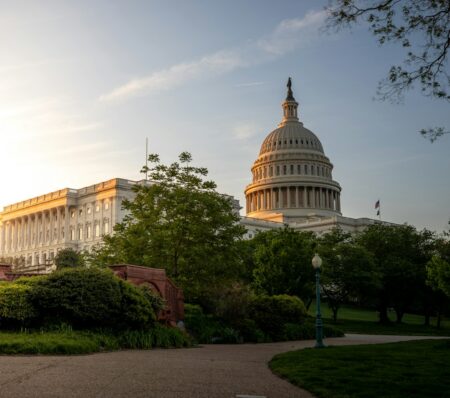
The Nov. 3 elections will decide control of Congress, which sets U.S. trade and tariff law.
If you find reporting like this useful, consider supporting Canada News Media, an independent Canadian newsroom with no corporate parent.
Via Pew Research Center, Newsweek and The National Desk.
Follow Canada News Media
Get the day's top Canadian stories and our two daily 60-second news videos wherever you scroll.