

Sarnia, Ont., Mayor Mike Bradley says nobody told him that U.S. Coast Guard surveillance sail drones are operating in the Great Lakes region, and he is calling on Ottawa to push back, CBC reported Oct. 27.
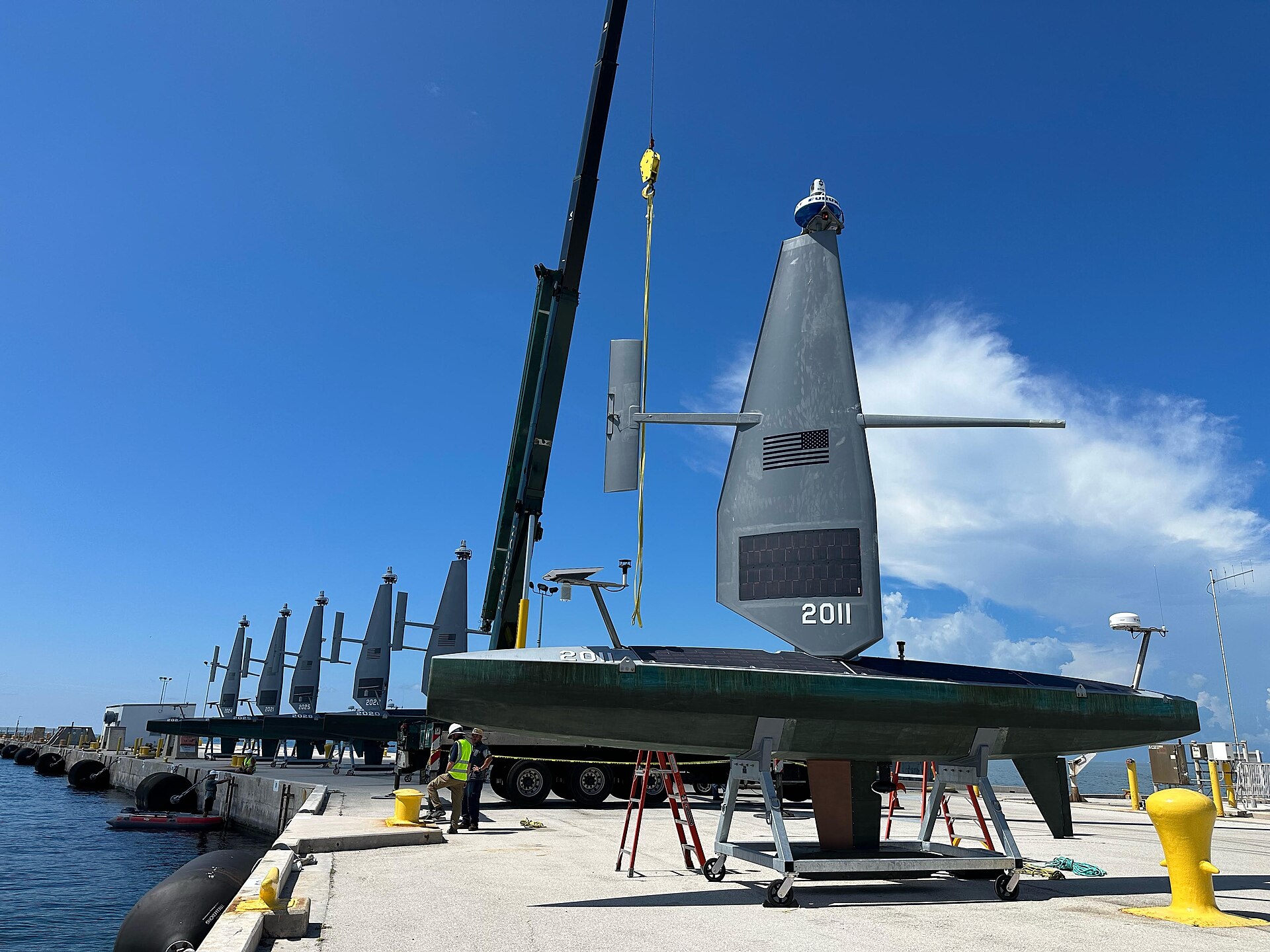
Bradley told CBC he first spotted an unusual, unmanned vessel in the St. Clair River and thought it looked “like something from Mars.” He then learned it was one of several surveillance sail drones tied to a U.S. Coast Guard program.
“We have thousands of boaters on the river St. Clair, Lake Huron, Lake Erie, and now they’re going to be photographed and watched,” he said. He added that although officials call the program benign, he does not trust it will not be used for other purposes as the relationship with the United States deteriorates.
The vessels are Saildrone Voyager unmanned surface vehicles, each fitted with 360-degree high-resolution cameras, radar and automatic identification systems, according to CBC. They are owned and operated by Saildrone, a private U.S. company with a US$15.5-million contract with the Coast Guard.
The Coast Guard announced the Voyager project in May. Saildrone has said 16 of the vessels will support northern border security with round-the-clock maritime awareness across the Great Lakes and off the U.S. Northeast coast. CBC reported the Coast Guard now has two on Lake Erie as part of the program, and that they will be pulled from the water once ice forms.
Lt. j.g. Samuel Rodriguez Garcia of the Coast Guard told CBC the drones are “just out there for awareness.” He said their cameras are monitored around the clock by Coast Guard staff, who can also move the drones manually, and that the footage is not recorded. U.S. and Canadian agencies, including law enforcement, could get access to the technology through proper channels, he said.
The Canadian Coast Guard told CBC Windsor it works closely with its U.S. counterpart but has no involvement in the sail drone program. CBC said Public Safety Canada redirected its questions to the Canada Border Services Agency, which did not respond to Bradley’s concerns and said the RCMP is responsible for enforcing Canadian law between ports of entry, including on the water. Saildrone did not respond to CBC’s requests for comment.
Petra Molnar, a York University researcher, told CBC the arrangement is “very troubling” from a privacy and accountability standpoint. She said little is known publicly about data retention or who can access what is collected, and that recreational boaters could be swept up in a system built for border enforcement.
Bradley, the mayor of the largest city on Lake Huron, said being kept in the dark is unacceptable. “If the Canadian government knew and agreed to it, that, to me, is a big issue,” he said, adding that Canadian cities and mayors should have been told. He called on Ottawa to “show some backbone.”
The disclosure comes as the two countries remain in a trade dispute. Canada News Media has reported that the U.S. and Canada are working on a deal to ease steel and auto tariffs, and earlier that White House adviser Kevin Hassett said a deal is very close.
Source: CBC News (Oct. 27, 2026); Saildrone and U.S. Coast Guard program announcements (May 2026).
If you find reporting like this useful, consider supporting Canada News Media, an independent Canadian newsroom with no corporate parent.
Follow Canada News Media
Get the day's top Canadian stories and our two daily 60-second news videos wherever you scroll.
X Threads Facebook Instagram LinkedIn TikTok YouTube Pinterest Reddit Substack Flipboard Newsletter RSS