
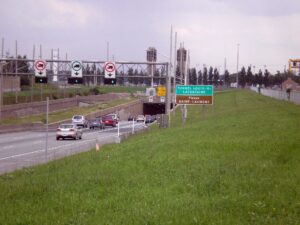

Every day, about 40,000 vehicles cross the Georgia and Dunsmuir viaducts into downtown Vancouver, according to CBC News. Few drivers know that the eastern ends of those concrete ramps sit on the ground where the city’s first concentrated Black neighbourhood once stood, or that Vancouver promised more than a decade ago to tear them down.
With a civic election set for Oct. 17, the viaducts are back on the agenda. A coalition of businesses and residents, including the Hogan’s Alley Society, is pressing the next mayor and council to finally act on a removal plan that city council first approved in 2015, CBC reported on Sept. 29. For Black Vancouverites, the question is not only about traffic or land values. It is about whether a city that erased a community will finish the work of giving some of it back.
A neighbourhood built in a segregated city
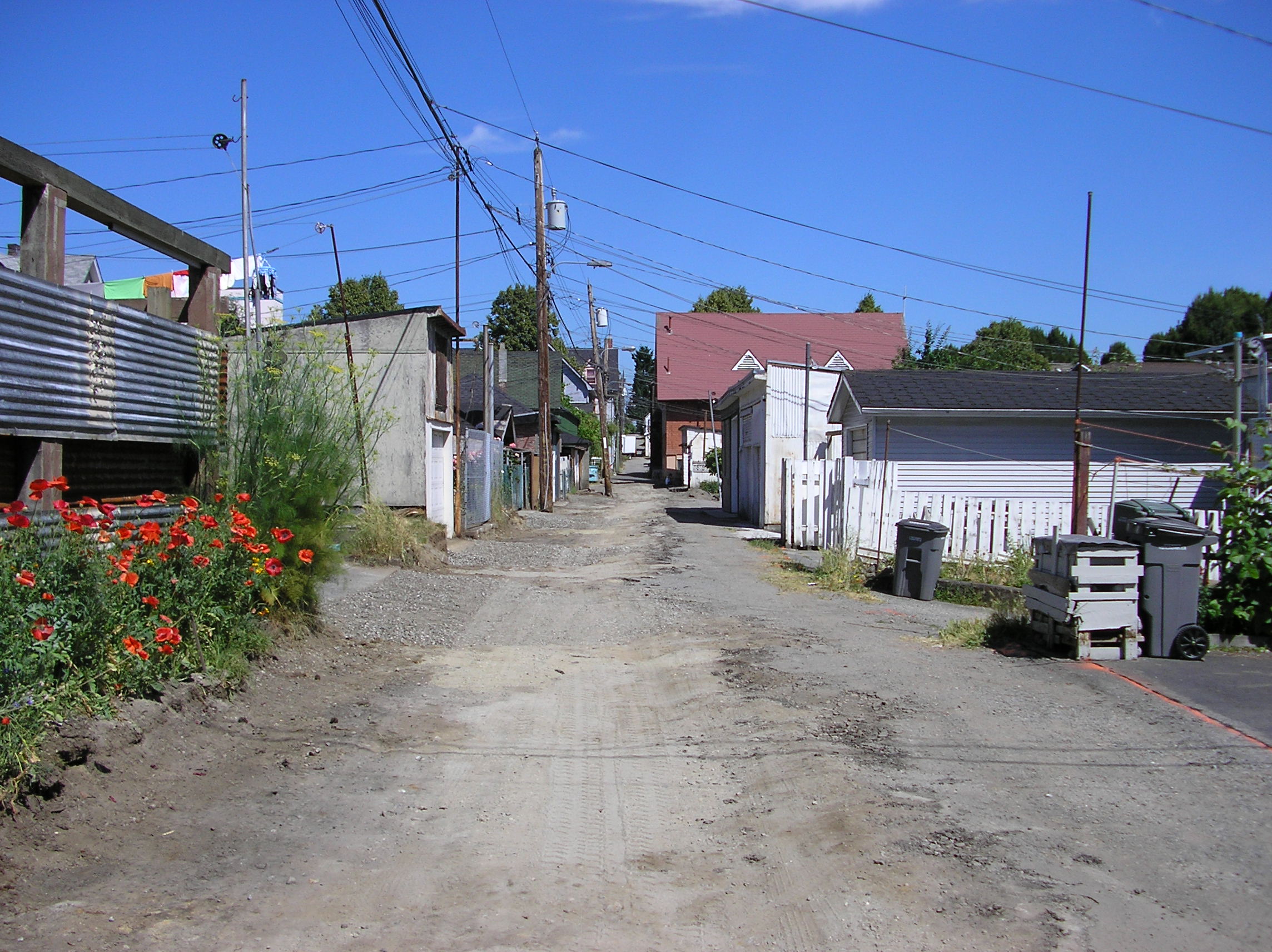
Black settlement in British Columbia dates to 1858, when colonial governor James Douglas welcomed Black Californians to the colony, the Canadian Press reported in 2021. By around 1900, part of the Strathcona district east of downtown had become the nucleus of Vancouver’s Black community, according to The Globe and Mail. It took its unofficial name from Hogan’s Alley, a dirt laneway at its heart. CBC News has described the area as centred between Prior and Union streets and Main and Jackson streets.
At its peak, the neighbourhood was home to as many as 800 Black residents, among them immigrants from the western United States and railway porters who worked for the nearby Great Northern Railway, according to the Globe. The African Methodist Episcopal Fountain Chapel, founded in 1923, anchored its spiritual life, and the Brotherhood of Sleeping Car Porters kept residential quarters there, CBC reported. Nora Hendrix, a vaudeville performer and choir singer who was the grandmother of Jimi Hendrix, cooked at Vie’s Chicken and Steak House, a restaurant that drew touring musicians and late-night crowds.
The neighbourhood was never only Black. Italian, Chinese, Japanese, First Nations and Jewish residents also lived there, many of them shut out of other districts by racist housing practices, Hogan’s Alley Society board member Lama Mugabo told the Canadian Press. June Francis, then co-chair of the society’s board, told the Globe in 2022 that Black residents were kept out of other parts of the city through restrictive covenants on land titles and discrimination by landlords and real estate agents.
Neglect first, then the bulldozers
The destruction of Hogan’s Alley did not begin with demolition. According to the Vancouver Heritage Society, as cited by the Canadian Press, the city’s rezoning of Strathcona made it difficult for residents to obtain mortgages or loans to repair their homes, while newspapers portrayed the area as a centre of squalor and crime. Francis told the Globe that the city failed to maintain roads and sidewalks in the area. A neighbourhood starved of investment was then described as blighted, and the description became the justification.
In the 1960s, Vancouver planned a network of freeways through downtown under the banner of urban renewal. Vancouver later retreated from that plan in the face of public opposition, and most of Strathcona survived, but Hogan’s Alley did not. The city began bulldozing houses in 1967, and the Georgia and Dunsmuir viaducts opened in 1972, according to the Canadian Press. The wider freeway was never built. The viaducts, as CBC News noted this week, are a rare surviving piece of a plan Vancouver abandoned.
Ottawa had a hand in it too. In June 2020, Canada Mortgage and Housing Corporation acknowledged its role in funding the forced resettlement of Black people, most notably from Halifax’s Africville and from Hogan’s Alley, as it pledged to re-examine its practices for racial bias, Global News and The Canadian Press reported. The Globe described that statement as an apology for the federal housing agency’s part in the neighbourhood’s destruction.
A promise on paper
The path toward redress has been long and largely procedural. City council voted 5-4 in 2015 to remove the viaducts, CBC reported at the time. The Northeast False Creek Plan, approved in 2018, called the Hogan’s Alley block “a significant opportunity to re-establish a focal point for the Black community in Vancouver.” In September 2022, the Globe reported that the society and the city had reached an agreement toward a community land trust and a mixed-use building with affordable and market rental housing, a cultural centre and small-business space.
But the land trust depends on the viaducts coming down, and the viaducts depend on money that has not materialized. In 2018 the city estimated the full Northeast False Creek plan at $1.73 billion, CBC reported. The plan was designed to be paid for largely through development on nearby sites, and the city said in a statement to CBC that construction costs have since “escalated dramatically” while that development has stalled. In 2022, city staff told council that demolition would begin no earlier than 2027, Daily Hive reported.
Petros Kusmu, a board member with the Hogan’s Alley Society, told CBC that the area is an opportunity to work with and uplift its historic Black, Indigenous and Chinese communities. Two mayoral candidates who responded to CBC, the Greens’ Pete Fry and the Vancouver Liberals’ Kareem Allam, both said they support removal but that the plan’s financing would need to be reworked. CBC said it did not hear back from the ABC, TEAM and VOTE campaigns by deadline.
The history here is not in dispute. A Black community was built in a part of Vancouver where its members could find housing, was left underserved, and was then cleared with public money for a highway that was never finished. Black Vancouverites have spent decades pressing for redress. What remains open, as voters head to the polls, is whether the people they elect will treat that history as a reason to act, or as one more line in a plan left on the shelf.
If you find reporting like this useful, consider supporting Canada News Media, an independent Canadian newsroom with no corporate parent.
Sources: CBC News, “Group seeks to make long-delayed removal of Vancouver’s viaducts an election issue,” Sept. 29, 2026 (cbc.ca); CBC News, “Why the Vancouver viaducts are a symbolically important place for an anti-Black racism protest,” June 15, 2020 (cbc.ca); The Canadian Press via CBC, “Society pitches new life for Hogan’s Alley after Vancouver viaducts come down,” Feb. 9, 2021 (cbc.ca); The Globe and Mail, “Vancouver signs deal to turn former site of Hogan’s Alley into community land trust,” Sept. 8, 2022 (theglobeandmail.com); CBC News, “Vancouver viaducts to be removed, votes council,” 2015 (cbc.ca); Global News / The Canadian Press, “Canada’s housing agency admits lack of diversity, vows review through racial lens,” June 2020 (globalnews.ca); Daily Hive, April 22, 2022 (dailyhive.com). Image: Hogan’s Alley, Vancouver, 2006, by Mike W. (SqueakyMarmot on Flickr), CC BY-SA 2.0, via Wikimedia Commons.
Follow Canada News Media
Get the day's top Canadian stories and our two daily 60-second news videos wherever you scroll.
X Threads Facebook Instagram LinkedIn TikTok YouTube Pinterest Reddit Substack Flipboard Newsletter RSS